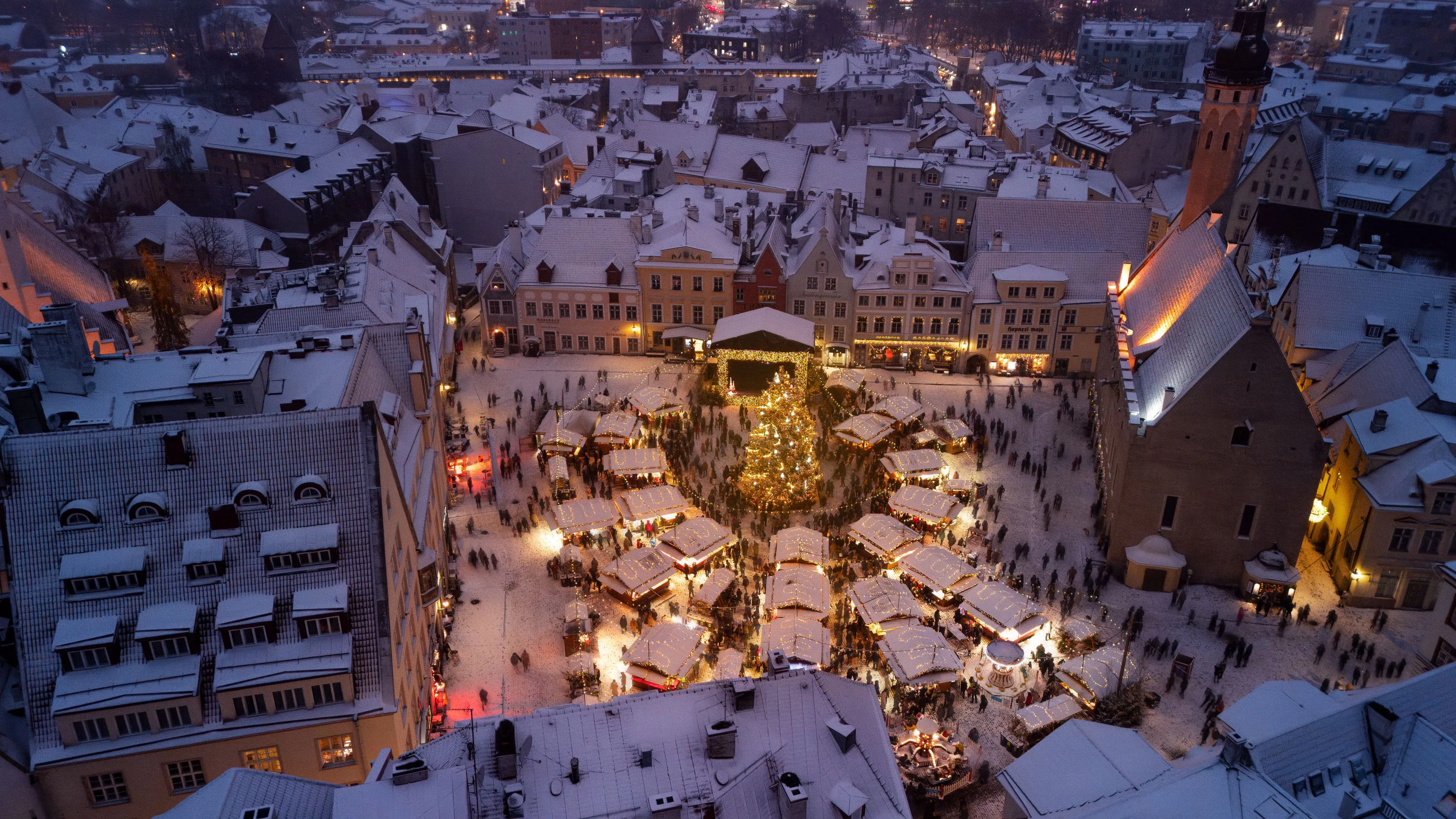
The best places to visit in Europe in winter are Rovaniemi, Tromsø, Vienna, Prague, Strasbourg and Colmar, Zermatt, Innsbruck, Budapest, Tallinn, Reykjavík, Seville, and Tenerife. Between them they cover almost every kind of winter trip.
- Rovaniemi, Finland: best for a real winter wonderland.
- Tromsø, Norway: best for the Northern Lights and Arctic adventures.
- Vienna, Austria: best for Christmas markets, cafés, and culture.
- Prague, Czechia: best for a romantic winter city break.
- Strasbourg and Colmar, France: best for Christmas atmosphere.
- Zermatt, Switzerland: best for skiing and iconic Alpine views.
- Innsbruck, Austria: best for combining a city break with the mountains.
- Budapest, Hungary: best for thermal baths and good-value winter weekends.
- Tallinn, Estonia: best for a small medieval winter city.
- Reykjavík, Iceland: best for geothermal pools and dramatic landscapes.
- Seville, Spain: best for a mild winter city break.
- Tenerife, Spain: best for winter sun.
Winter is one of the best times to travel around Europe because the continent does not have just one winter. You can spend one trip under the Northern Lights, another eating cake in a grand Viennese café, and another walking beside the Atlantic in a T-shirt.
Here are the best winter destinations in Europe and what each one is actually best for.
Rovaniemi, Finland: Best for a Real Winter Wonderland

Rovaniemi is one of the easiest places in Europe to choose if your idea of a winter holiday includes deep snow, frozen forests, reindeer, huskies, saunas, and a decent chance of seeing the Northern Lights.
The city sits on the Arctic Circle in Finnish Lapland. Winter here is not just a slightly colder version of autumn. Snow becomes part of everyday life, daylight is short in the middle of the season, and the whole landscape feels completely different from most European city breaks.
Why visit Rovaniemi in winter?
Rovaniemi works especially well for first-time Lapland visitors because you can combine Arctic nature with a proper city base. You can spend the morning on a husky ride, warm up over salmon soup, visit a sauna in the afternoon, and head outside the city again at night to look for the aurora.
Santa Claus Village makes Rovaniemi especially popular around Christmas and with families, but the destination is not only about Santa. The surrounding forests, frozen rivers, snowmobile routes, reindeer farms, glass cabins, and winter activities are the bigger reason to stay for several days.
Best things to do in Rovaniemi in winter
Go on a Northern Lights tour away from city lights. Try a husky or reindeer safari. Cross the Arctic Circle at Santa Claus Village. Visit Arktikum to understand Lapland and Arctic life. Book a Finnish sauna, and leave enough time for a slow evening around a fire rather than filling every hour with tours.
Best for: families, couples, bucket-list trips, Northern Lights seekers, and anyone who wants guaranteed winter atmosphere.
Tromsø, Norway: Best for the Northern Lights and Arctic Adventures

If seeing the Northern Lights is the main reason for your winter trip to Europe, Tromsø should be near the top of your list.
The city is far above the Arctic Circle and sits beneath the auroral oval, which gives the region strong conditions for aurora viewing. It also has something many remote Arctic destinations do not: enough restaurants, cafés, museums, bars, and city life to keep the trip interesting even when the weather changes.
Why choose Tromsø in winter?
Tromsø is a good balance between nature and comfort. You can take a cable car above the city, join an evening aurora chase, go dog sledding, see snowy fjords, and still return to a lively town for dinner.
The Polar Night begins in late November, when the sun stays below the horizon for several weeks. That sounds extreme, but it does not mean total darkness all day. Around midday, the sky often moves through deep blue, pink, and purple tones, creating some of the most beautiful winter light in Europe.
Best things to do in Tromsø in winter
Join a Northern Lights chase with a guide who can move according to cloud cover. Ride the Fjellheisen cable car for views over the city and surrounding islands. Try dog sledding, snowshoeing, or cross-country skiing. Visit the Arctic Cathedral, explore the waterfront, and add a sauna if you want a slower day. For more aurora bases across the region, see our guide to the best places to see the Northern Lights.
Best for: Northern Lights trips, couples, photographers, adventurous city breaks, and travelers who want Arctic nature without staying in a tiny village.
Vienna, Austria: Best for Christmas Markets, Cafes, and Culture

Vienna is one of Europe’s best winter city breaks because cold weather actually suits the city.
In December, squares fill with Christmas markets and lights. After Christmas, the city still works brilliantly thanks to its museums, palaces, classical concerts, coffee houses, wine taverns, and elegant indoor spaces.
Why visit Vienna in winter?
A lot of European capitals become harder to enjoy when the weather is cold. Vienna becomes easier. You can spend a morning at Schönbrunn Palace, stop for coffee and cake, visit the Albertina or Kunsthistorisches Museum, and end the day with a concert or dinner.
December is the most festive period, but January and February can be better if you care more about museums, restaurants, and city life than Christmas markets. You usually get a calmer version of the city once the holiday crowds leave.
Best things to do in Vienna in winter
Walk through the main Christmas markets if you visit before the holidays. Spend time inside the city’s historic cafés. Visit Schönbrunn Palace, the Belvedere, and the Kunsthistorisches Museum. Book a classical concert, try Austrian dishes such as schnitzel and tafelspitz, and do not treat coffee-and-cake stops as wasted time. In Vienna, they are part of the trip.
Best for: couples, culture lovers, food travelers, Christmas trips, first-time European city breaks, and travelers who like beautiful indoor spaces.
Prague, Czechia: Best for a Romantic Winter City Break

Prague looks good in every season, but winter gives the city more atmosphere and slightly less competition for every viewpoint, bridge, and café table.
The Old Town, Charles Bridge, Prague Castle, church towers, cobbled streets, and warm pubs all work especially well when the air is cold and the city is lit early in the evening.
Why visit Prague in winter?
Prague gives you the classic European winter-city feeling without needing a full week. It is walkable, easy to fill with architecture and food, and well suited to a long weekend.
December brings Christmas markets and a busier festive mood. January and February are colder and quieter, which can be a better choice if you want museums, cafés, beer halls, and atmospheric walks without peak-season crowds.
Best things to do in Prague in winter
Walk across Charles Bridge early in the morning, explore Prague Castle, see Old Town Square after dark, and spend time in neighborhoods such as Malá Strana and Vinohrady rather than staying only on the main tourist route. Warm up with Czech food, pastries, mulled wine, or a long lunch in a traditional pub.
Best for: couples, weekend trips, architecture, Christmas markets, photographers, and travelers who want a classic winter city without an Alpine price tag.
Strasbourg and Colmar, France: Best for Christmas Atmosphere

For a Christmas-focused trip, Strasbourg and Colmar are hard to beat.
Strasbourg is larger, livelier, and easier to use as a base. Colmar is smaller and more storybook-like, with half-timbered houses, canals, decorated façades, and nearby Alsatian villages that look almost designed for December.
Why visit Alsace in winter?
This part of France takes Christmas seriously. Markets spread across historic squares, streets are covered in lights, and local food makes sense in cold weather: tarte flambée, choucroute, cheese, gingerbread, wine, and warm spiced drinks.
The best version of the trip is not choosing Strasbourg or Colmar. Combine them. They are close enough to fit into the same itinerary, and you can add villages such as Eguisheim, Kaysersberg, or Riquewihr if you have more time.
Best things to do in Strasbourg and Colmar
Explore Strasbourg Cathedral and the streets of Grande Île, wander through Petite France, then take the train to Colmar for its canals and decorated old town. If you rent a car or book a local tour, spend a day in the smaller Alsatian villages and try regional food and wine.
Best for: Christmas lovers, couples, food travelers, photographers, and short festive trips.
Zermatt, Switzerland: Best for Skiing and Iconic Alpine Views

Zermatt is one of Europe’s dream winter destinations if your trip is built around the mountains.
The village sits beneath the Matterhorn and combines high-altitude skiing with a walkable, car-free center, mountain restaurants, scenic trains, and the kind of Alpine scenery that looks almost unreasonable in real life.
Why visit Zermatt in winter?
The obvious answer is skiing, but Zermatt can also work for non-skiers. You can ride mountain railways and cable cars, walk winter trails, eat fondue, visit viewpoints, and spend the afternoon in a spa while everyone else is still on the slopes.
The main downside is price. Switzerland is expensive, and Zermatt is one of its most famous resorts. This is not the place to choose because you found a cheap flight to Geneva. It is a destination to choose when the mountain experience itself is worth the budget.
Best things to do in Zermatt in winter
Ski or snowboard, take the Gornergrat railway for Matterhorn views, ride up toward Matterhorn Glacier Paradise, walk through the village, book a mountain lunch, and keep at least one flexible weather day if the views are a major reason for your trip.
Best for: skiers, couples, luxury winter trips, mountain lovers, and travelers planning a special occasion.
Innsbruck, Austria: Best for Combining a City Break With the Mountains

Innsbruck solves a common winter-trip problem: you want beautiful mountains, but you do not want to spend the entire holiday inside a ski resort.
The historic center is compact and pretty, while cable cars and ski areas are close enough that the Alps feel like part of the city rather than a separate trip.
Why visit Innsbruck in winter?
You can have breakfast in the old town, ride high above the city before lunch, ski in the afternoon, and be back in a restaurant or bar that evening. That makes Innsbruck especially good for groups where not everyone wants to ski every day.
It is also easy to combine with other Austrian destinations. Salzburg, Munich, or smaller Tyrolean villages can turn a short Innsbruck break into a wider winter route.
Best things to do in Innsbruck in winter
Walk through the old town and see the Golden Roof, ride the Nordkette cable cars, visit the Bergisel ski jump, ski at one of the nearby areas, and try Tyrolean comfort food. If you visit in December, add the Christmas markets around the historic center.
Best for: mixed groups, beginner ski trips, couples, active travelers, and anyone who wants both a real city and the Alps.
Budapest, Hungary: Best for Thermal Baths and Good-Value Winter Weekends

Budapest is one of those cities that makes more sense when it is cold.
You can walk beside the Danube, see the Parliament building in winter light, spend hours in a thermal bath, eat something heavy and warming, and finish the evening in a wine bar or ruin bar.
Why visit Budapest in winter?
The thermal baths are the obvious reason. Sitting in warm outdoor water while the air is cold is much more memorable than visiting in the middle of a heatwave.
Budapest can also offer better value than many western European capitals, especially if you book outside the Christmas and New Year period. It has enough museums, cafés, restaurants, architecture, and nightlife to make bad weather manageable.
Best things to do in Budapest in winter
Visit Széchenyi or Gellért Baths, walk around the Castle District, see the Parliament and the Danube riverfront, stop at the Central Market Hall, try Hungarian dishes such as goulash or paprikash, and spend an evening in the Jewish Quarter.
Best for: couples, friends, spa weekends, food and nightlife, and travelers who want a winter city break without Swiss or Scandinavian prices.
Tallinn, Estonia: Best for a Small Medieval Winter City

Tallinn is a strong winter choice if you want the atmosphere of Prague or Central Europe but in a smaller, quieter package.
The medieval Old Town is compact enough to explore without turning every day into a logistics project. In winter, its walls, towers, steep roofs, cobbled streets, and candlelit restaurants feel especially atmospheric.
Why visit Tallinn in winter?
Tallinn works best for a two- or three-night break. You can see the main historic center, eat very well, spend time in cafés, add a sauna or spa, and explore creative areas such as Telliskivi without needing a packed schedule.
Snow is never something you should assume on exact dates, but when it arrives, Tallinn is one of Europe’s prettiest winter capitals.
Best things to do in Tallinn in winter
Walk through Town Hall Square, climb to the viewpoints around Toompea, explore the city walls and old lanes, visit Telliskivi Creative City and Balti Jaam Market, and book a warm restaurant for the evening rather than trying to stay outdoors all day.
Best for: short breaks, couples, medieval cities, Christmas atmosphere, food, and travelers who prefer compact destinations.
Reykjavík, Iceland: Best for Geothermal Pools and Dramatic Landscapes

Iceland is not a winter destination you choose for easy weather. You choose it because winter makes the landscape feel even more dramatic.
Reykjavík gives you a comfortable base for geothermal pools, food, museums, and nightlife, while day trips take you toward waterfalls, black-sand beaches, lava fields, glaciers, and dark skies.
Why visit Iceland in winter?
Winter gives you long nights for Northern Lights hunting and a completely different version of Iceland’s famous landscapes. Snow, ice, wind, and low light can make even familiar places feel more cinematic.
The trade-off is flexibility. Weather can affect roads, tours, and driving conditions, so a winter Iceland itinerary should have more buffer than a summer road trip.
Best things to do around Reykjavík in winter
Spend time in a geothermal spa or local swimming pool, explore Reykjavík’s food and bar scene, book a Golden Circle or South Coast day trip, look for the Northern Lights, and avoid building an itinerary where one weather delay ruins the whole plan.
Best for: nature lovers, couples, photographers, Northern Lights trips, and travelers comfortable with changing weather.
Seville, Spain: Best for a Mild Winter City Break

Not every great European winter trip needs snow.
Seville is one of the best places to go if you want history, architecture, tapas, orange trees, and outdoor cafés without the intense heat that shapes the city in summer.
Why visit Seville in winter?
Winter makes Seville easier to explore on foot. You can spend much more of the day outside, and major sights such as the Real Alcázar, Seville Cathedral, Plaza de España, and the streets of Santa Cruz are far more pleasant when you are not planning the entire day around avoiding extreme heat.
Evenings can feel cool, and winter is not beach weather, but the city is a strong choice for travelers who want a brighter, milder break.
Best things to do in Seville in winter
Visit the Real Alcázar and cathedral, walk through Santa Cruz, spend time around Plaza de España and María Luisa Park, go for tapas in Triana, see a flamenco show, and leave enough empty time for long lunches and café stops.
Best for: food lovers, couples, culture, mild weather, and travelers who want to escape northern European winter without leaving Europe.
Tenerife, Spain: Best for Winter Sun

If your goal is to feel as little winter as possible, Tenerife is one of the safest European choices.
The Canary Islands sit far south in the Atlantic, giving Tenerife a mild climate while much of mainland Europe is cold. The south of the island is the classic choice for sunshine and resorts, while the north feels greener and more local.
Why visit Tenerife in winter?
Tenerife gives you a rare combination: beach weather on good days, volcanic landscapes, mountain drives, hiking, local towns, and a wide range of hotels and restaurants.
Do not spend the entire trip inside the resort zone unless that is exactly what you want. Teide National Park, La Laguna, Anaga Rural Park, Garachico, and the northern coast make the island much more interesting.
Best things to do in Tenerife in winter
Explore Teide National Park, hike in Anaga, visit La Laguna, drive through the north of the island, eat Canarian food, and keep a few slow beach or pool days. Weather varies across the island, so it can be sunny on the south coast while clouds sit over the mountains.
Best for: winter sun, couples, families, hiking, road trips, and travelers who want warmth without a long-haul flight.
How to Choose the Best Winter Destination in Europe

The best European winter destination depends less on a ranking and more on what you want the weather to do for your trip.
For snow and a true winter experience
Choose Rovaniemi, Tromsø, Zermatt, or Innsbruck. Rovaniemi is the strongest all-round winter-wonderland choice, Tromsø is best if the Northern Lights are the priority, and Zermatt or Innsbruck are better if you want mountains and skiing.
For Christmas markets
Choose Vienna, Strasbourg, Colmar, Prague, or Tallinn. Vienna is best for combining markets with museums and culture. Strasbourg and Colmar give you the strongest storybook Christmas atmosphere, while Prague and Tallinn work well for shorter festive breaks.
For the Northern Lights
Choose Tromsø, Rovaniemi, or Iceland. No destination can guarantee the aurora on a specific night, so plan several nights and avoid building the entire trip around one evening tour.
For skiing
Choose Zermatt if you want a famous high-end Alpine resort and spectacular scenery. Choose Innsbruck if you want skiing without giving up the restaurants, transport, and variety of a city.
For a romantic city break
Choose Prague, Vienna, Tallinn, or Budapest. Prague is the classic atmospheric choice, Vienna is more elegant, Tallinn is smaller and quieter, and Budapest adds thermal baths and nightlife.
For winter sun
Choose Tenerife for the warmest, most reliable escape on this list. Choose Seville if you want a real city break with mild days, food, architecture, and culture rather than a beach holiday.
What Is the Best Month to Visit Europe in Winter?

December is best for Christmas markets and festive atmosphere. It is also one of the busiest and most expensive winter periods in destinations such as Vienna, Strasbourg, Prague, Rovaniemi, and the Alps.
January is often better for lower crowds in major cities and for snow-focused trips. Christmas decorations start disappearing, but ski resorts, Arctic destinations, thermal baths, museums, and restaurants are in full winter mode.
February is excellent for skiing, snowy landscapes, and city breaks that are starting to get a little more daylight. It can become busy during school holidays in ski destinations, so accommodation prices depend heavily on exact dates.
If you are traveling mainly for the Northern Lights, late autumn through early spring gives you the dark skies needed to see them. Weather and cloud cover matter just as much as the month itself.
FAQ: Best Places to Visit in Europe in Winter
What is the best place in Europe to visit in winter?
Rovaniemi is one of the best choices for a classic winter trip because it combines deep snow, Arctic activities, reindeer, huskies, saunas, Santa Claus Village, and Northern Lights possibilities. For a city break, Vienna is the strongest all-round option. For winter sun, choose Tenerife.
Where in Europe is warm in winter?
The Canary Islands are among the warmest European winter escapes, and Tenerife is one of the easiest options for sunshine, beaches, hiking, and resorts. Seville is a good alternative if you prefer a cultural city break with mild weather rather than a beach holiday.
What are the best European cities to visit in December?
Vienna, Prague, Strasbourg, Colmar, Tallinn, and Budapest are all excellent in December because lights, Christmas markets, seasonal food, and historic centers make the colder weather part of the experience. For dates and a wider list, see our guide to the best Christmas markets in Europe.
Where is the best place to see snow in Europe?
For a high chance of proper winter conditions, look toward Finnish Lapland, northern Norway, and Alpine resorts at higher elevations. Rovaniemi, Tromsø, Zermatt, and the mountains around Innsbruck are strong options.
Where can I see the Northern Lights in Europe?
Tromsø in northern Norway, Rovaniemi and wider Finnish Lapland, and Iceland are among the most popular choices. The aurora depends on solar activity, darkness, clouds, and local conditions, so staying for several nights gives you a better chance than planning a one-night stop.
Is Europe worth visiting in January or February?
Yes. January and February can be better than December if you want fewer crowds in famous cities, proper snow in mountain and Arctic destinations, thermal-bath weekends, and lower prices outside ski-holiday periods. You lose some Christmas atmosphere, but you gain a calmer trip.
Plan Your Winter Trip With EasyMiles
Choosing where to go is only the first step. A winter trip can change quickly because daylight is shorter, weather matters more, places have seasonal opening hours, and one snowy day can completely change the route that makes sense.
EasyMiles creates a complete travel itinerary around your destination, dates, interests, food preferences, and preferred travel pace.
Instead of giving you the same generic list of “top attractions,” EasyMiles helps you find places that actually fit your trip and combines them into realistic days. It can help you decide what to see, where to eat, what to order, and which experiences work well together, while making it easier to adjust the plan when the weather or your plans change.
So whether you are chasing the Northern Lights in Tromsø, building a Christmas weekend in Vienna, skiing in the Alps, or escaping to Tenerife for winter sun, you can spend less time planning and more time enjoying the trip.