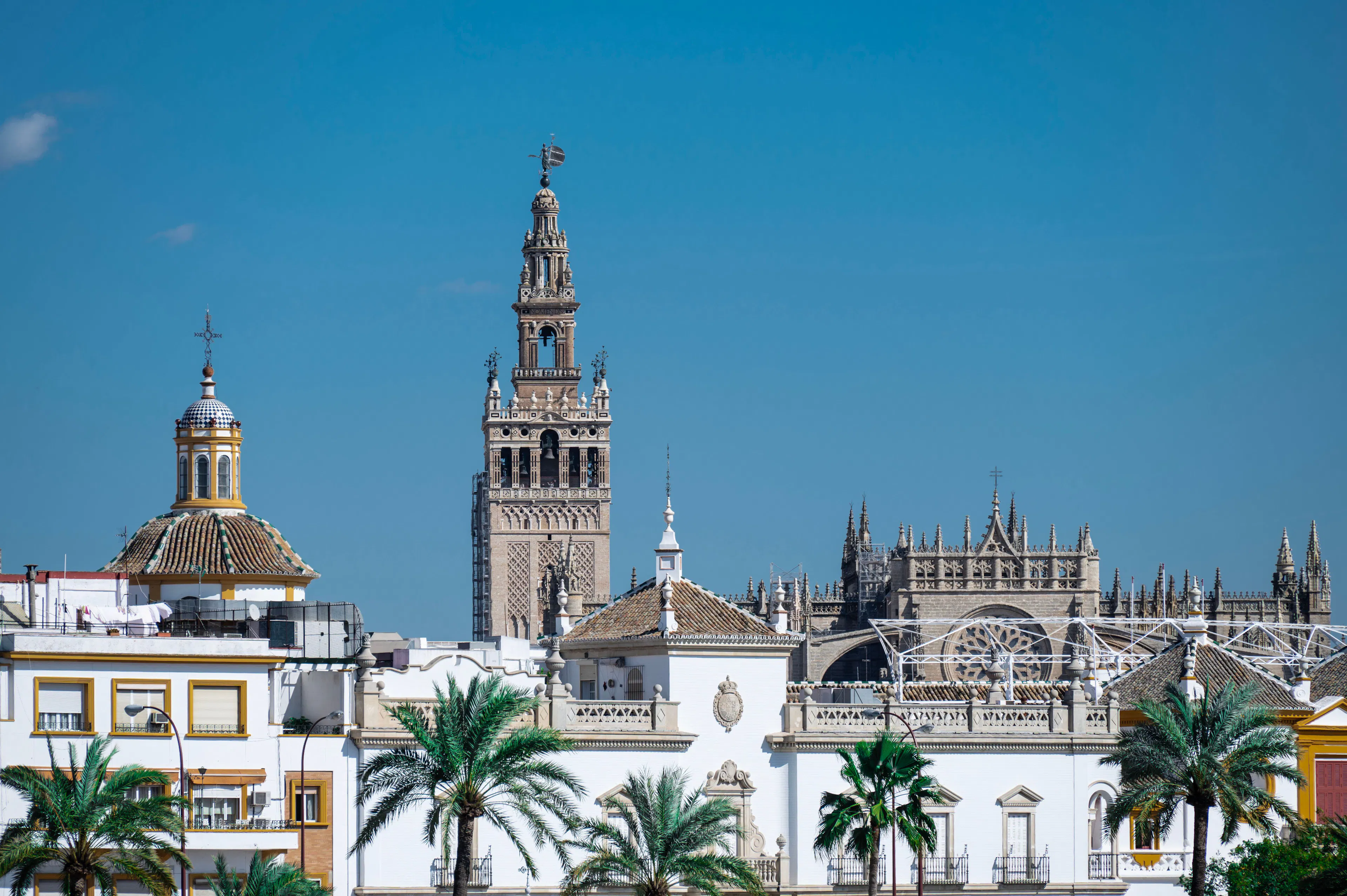
If it is your first time in Seville, four days is enough to see the city’s biggest landmarks without rushing every hour. Spend your first day around the Cathedral, Giralda and Santa Cruz; your second at the Real Alcázar, Plaza de España and María Luisa Park; your third in Triana with the market, ceramics, river views and flamenco; and your fourth exploring the more local side of the historic center, including Las Setas, a palace or art museum, Alameda and a long final tapas evening.
A simple first-time plan looks like this:
- Day 1: Seville Cathedral, Giralda, Barrio Santa Cruz, Archivo de Indias and the Guadalquivir riverfront.
- Day 2: Real Alcázar, Plaza de España, María Luisa Park and a relaxed evening in the center.
- Day 3: Triana Market, Triana streets and ceramics, Calle Betis, the river and a flamenco show.
- Day 4: Las Setas, Palacio de las Dueñas or Casa de Pilatos, Museo de Bellas Artes or Alameda de Hércules, then one last tapas crawl.
This route works well because it groups sights by area, leaves space for long lunches and late dinners, and gives you time to enjoy Seville instead of treating it like a checklist.
Day 1: Seville Cathedral, Giralda and the old city

Start your first day with the part of Seville most people come to see: the huge Gothic cathedral, the Giralda bell tower, narrow streets around Santa Cruz and the monumental center beside the Alcázar.
Morning: visit Seville Cathedral and climb the Giralda
Book a morning ticket for Seville Cathedral and the Giralda. The cathedral is one of the city’s essential first-time sights, and the Giralda gives you one of the best introductions to Seville from above. Instead of a normal staircase, much of the tower is reached by ramps, which makes the climb feel different from most European bell towers.
Give yourself around 1.5 hours for the cathedral and tower. The official cultural visit usually includes both, and the cathedral recommends buying tickets online because capacity is limited. Opening times can change around religious services, so check the official schedule for your exact date.
Late morning: walk through Barrio Santa Cruz
After the cathedral, do not immediately move to another attraction. Spend an hour simply walking through Santa Cruz, the old Jewish quarter. This is the Seville people imagine before they arrive: tiny lanes, whitewashed walls, hidden patios, orange trees and small squares that suddenly open between buildings.
Look for Plaza de Santa Cruz, Callejón del Agua, Plaza de Doña Elvira and the lanes around Hospital de los Venerables. You do not need to follow a strict route. The point is to wander.
Lunch: make your first meal a tapas lunch
For lunch, stay around the historic center but move a few streets away from the most obvious tourist terraces. Order two or three small plates and share. Good first dishes to look for include salmorejo, spinach with chickpeas, croquetas, fried fish, pork cheek and seasonal artichokes.
Afternoon: Archivo de Indias and Plaza del Triunfo
The Archivo General de Indias sits between the cathedral and the Alcázar and is part of Seville’s UNESCO World Heritage ensemble. Even if you are not planning a long museum visit, the building and its exhibitions are worth checking while you are already in the area.
Then slow down around Plaza del Triunfo. This is one of the best places to understand how compact central Seville is: the cathedral, Alcázar and archive all sit almost beside each other.
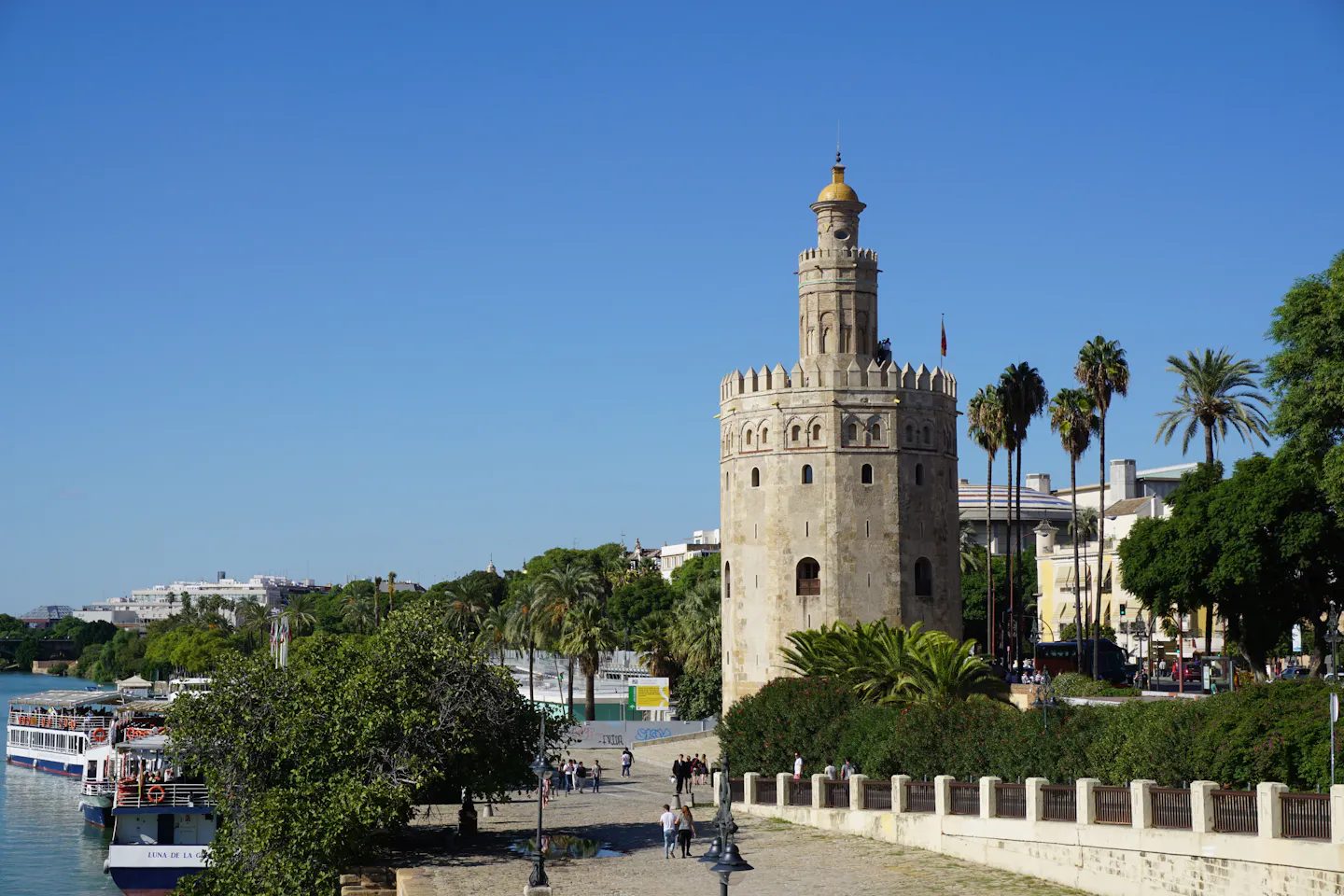
Evening: Torre del Oro and the river
Before dinner, walk toward Torre del Oro and follow the Guadalquivir riverfront. The light gets softer in the evening, locals come out for walks, and the river gives you a more open view after a day in narrow historic streets.
For dinner, head back toward El Arenal or the streets around the cathedral. Keep the first night easy. Seville eats late, and there is no prize for filling every hour.
Day 2: Real Alcázar, Plaza de España and María Luisa Park
Day two is your most visually impressive day. It combines the Real Alcázar’s tiled courtyards and gardens with the huge open space of Plaza de España and the greenery of María Luisa Park.
Morning: visit the Real Alcázar first
Book the earliest Real Alcázar entry you can reasonably make. The palace complex opens at 9:30, with longer hours from April through September, and it is one of the Seville attractions where booking ahead matters most.
Plan at least two hours. The Real Alcázar is not one room or one palace. It is a layered complex of royal rooms, patios, Mudéjar decoration, fountains and gardens shaped over centuries. The Palacio de Don Pedro and Patio de las Doncellas are obvious highlights, but leave time for the gardens too.
If you like interiors, architecture or photography, you can easily stay longer. If you prefer to keep moving, two to two and a half hours is a good target.
Lunch: eat near Prado de San Sebastián or back toward the center
After the Alcázar, stop for lunch before going to Plaza de España. Avoid turning this into a rushed museum-to-monument sprint. In Seville, a proper lunch break is part of the itinerary, especially in warm weather.
Afternoon: Plaza de España
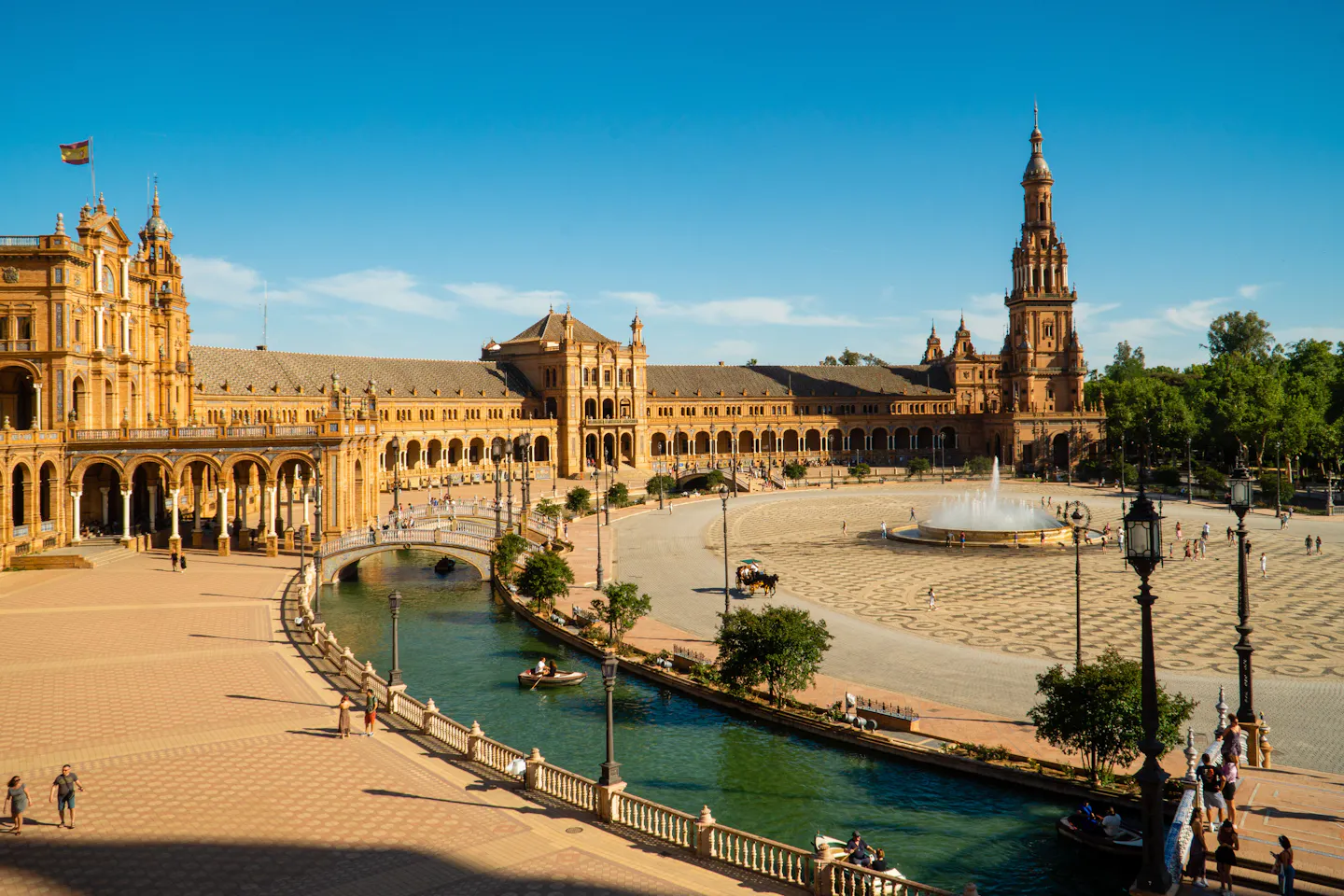
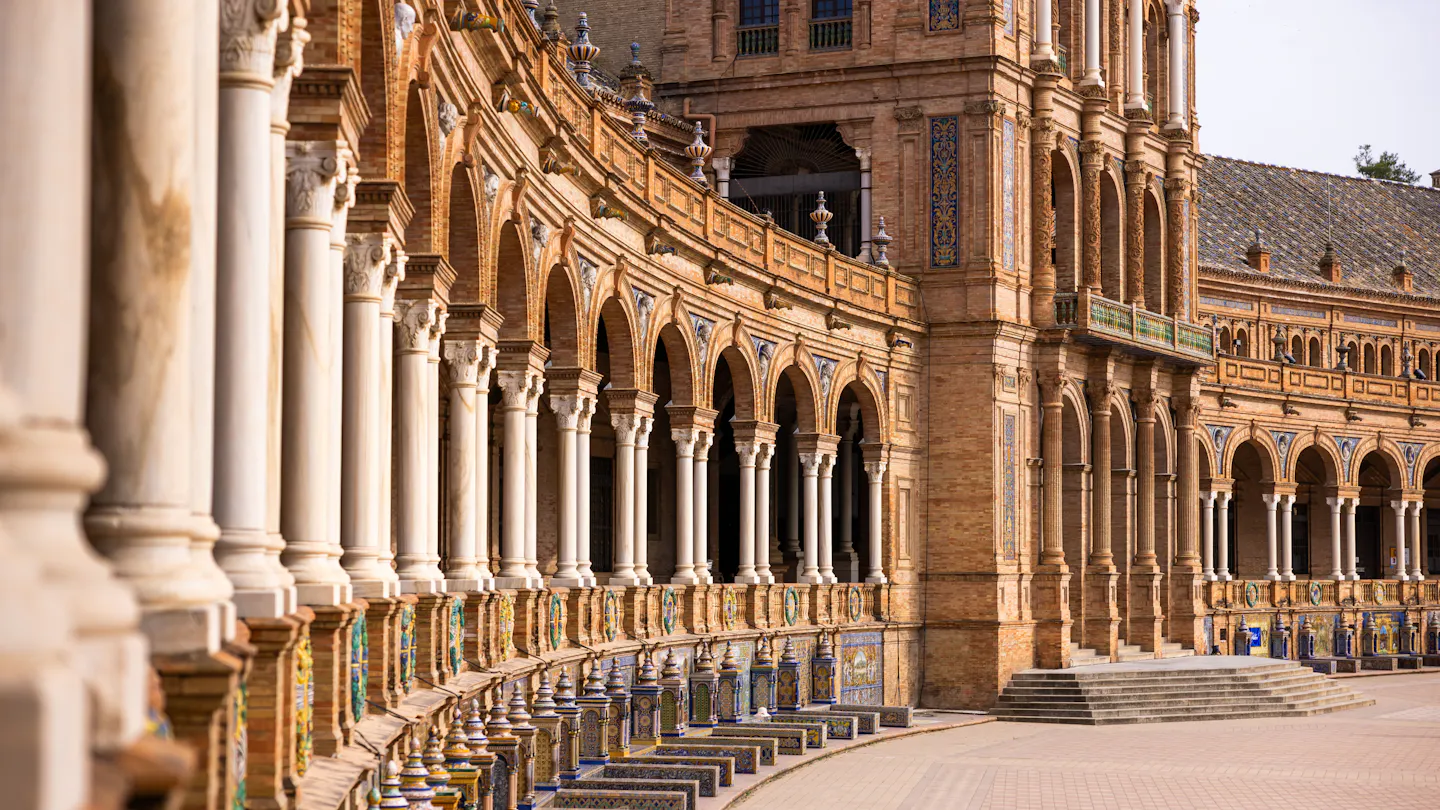
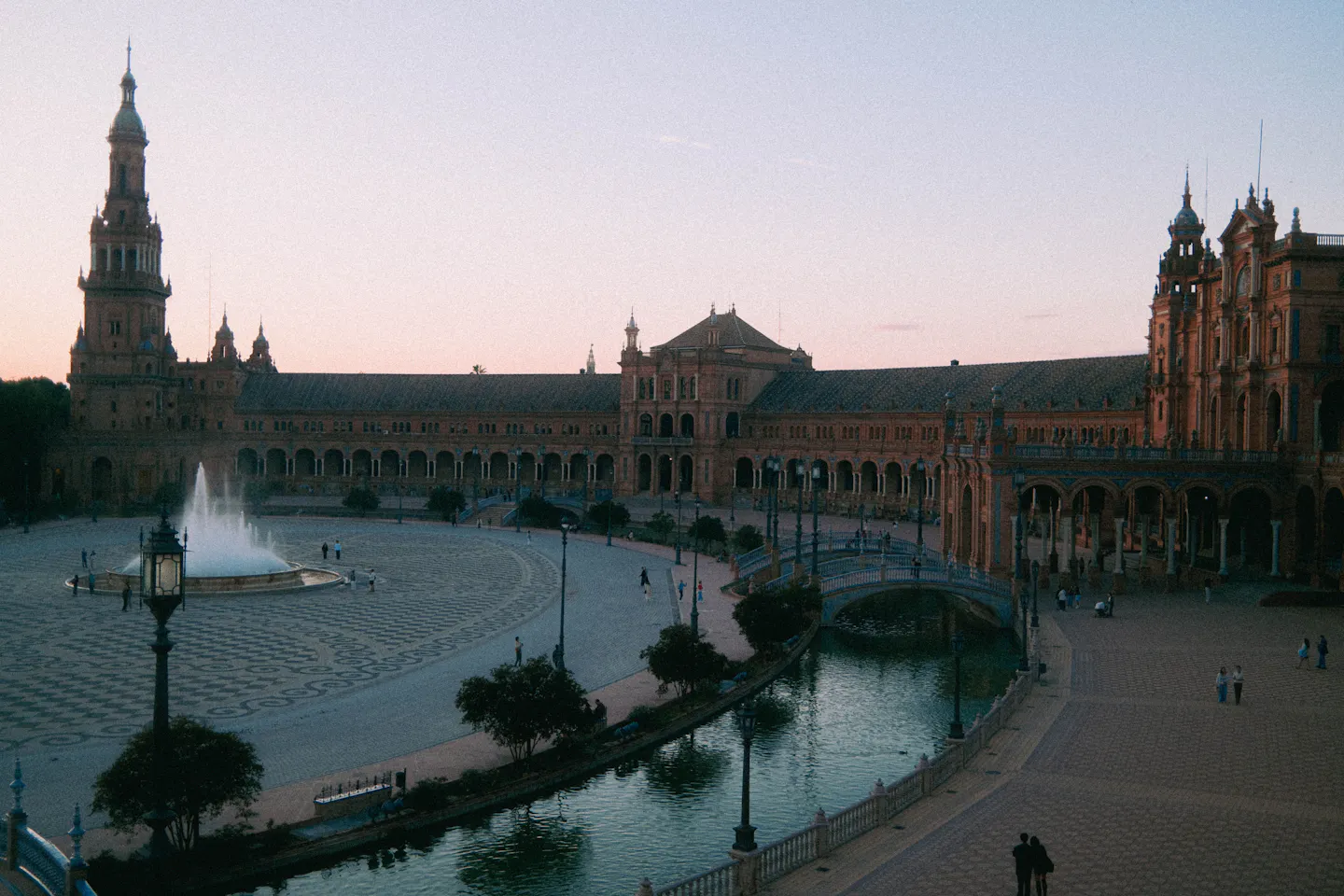
Walk through María Luisa Park toward Plaza de España. Built for the Ibero-American Exposition of 1929, the square is a huge semicircle of brick, ceramic tiles, bridges and a canal. It is one of those landmarks that still feels impressive even after you have seen it in photos.
Walk the full curve rather than only taking one photo from the center. The tiled alcoves represent Spanish provinces, and the bridges and upper galleries give you different views across the square.
Late afternoon: María Luisa Park
From Plaza de España, continue through María Luisa Park. The park is free and is one of the easiest places in Seville to slow down under trees and away from traffic. Walk toward Plaza de América, stop at fountains and shaded paths, or simply sit for a while if the afternoon is hot.
Evening: relaxed dinner or rooftop drinks
Return to the center for dinner. If you still have energy, choose a rooftop with views of the Giralda or wander around Plaza del Salvador. If you are visiting in warmer months, this is also the time when Seville starts to feel more alive after the heat of the afternoon.
Day 3: Triana, ceramics, the river and flamenco

By day three, move away from the monumental center and spend time in Triana. The neighborhood is strongly connected with Seville’s ceramic tradition and flamenco culture, and it feels different the moment you cross the river.
Morning: cross the Triana Bridge and start at the market
Walk across Puente de Isabel II, usually called the Triana Bridge, and start at Mercado de Triana. The food stalls are busiest earlier in the day, and many traditional market vendors operate mainly in the morning and early afternoon.
Grab coffee, fruit, cheese, jamón or a simple breakfast, then explore the streets around Plaza del Altozano.
Late morning: discover Triana’s ceramics
Triana has a long pottery and tile-making tradition. Visit the Centro Cerámica Triana if you want context, then walk along Calle Alfarería and Calle Antillano Campos to spot ceramic shops and traces of the neighborhood’s workshops.
This is also a good place to buy a small souvenir that actually feels connected to Seville. Just check whether a piece is locally made before assuming every colorful tile came from a local workshop.
Lunch: stay in Triana
Do not cross back for lunch. Triana is full of casual bars and restaurants, and this is a good day to order seafood, grilled fish, montaditos or more traditional tapas. Choose somewhere with a busy local lunch crowd rather than the prettiest empty terrace.
Afternoon: Calle Betis and the Guadalquivir
Walk along Calle Betis for classic views back toward central Seville. From this side of the river you can see the Torre del Oro, cathedral skyline and waterfront in one direction, while Triana’s colorful facades sit behind you.
If you want a slower afternoon, take a river cruise or simply sit with a drink near the water. If you want more sightseeing, cross back into the center and visit the Museo de Bellas Artes, one of Spain’s strongest collections of Baroque painting outside Madrid.
Evening: see flamenco
Make this your flamenco night. Seville has everything from polished tablaos to smaller performance spaces and peñas. For a first visit, book a show where the performance is the main focus rather than choosing only by dinner package.
Triana is one of the neighborhoods most closely associated with flamenco, but you will also find respected venues in Santa Cruz and around the center. If your trip falls during Seville’s Flamenco Biennial in an even-numbered year, check the official program before booking because major performances can sell out.
Day 4: Las Setas, palaces, art and a slower final day
Your last day should fill in the side of Seville that is easy to miss when you only chase the three biggest landmarks. Think local neighborhoods, smaller palaces, art, markets and one final sunset.
Morning: Palacio de las Dueñas or Casa de Pilatos
Choose one of Seville’s smaller historic palaces rather than trying to do both.
- Choose Palacio de las Dueñas if you want intimate courtyards, gardens, orange trees and a lived-in aristocratic atmosphere.
- Choose Casa de Pilatos if you are especially interested in architecture, tiles and the mix of Mudéjar and Renaissance styles.
Both are beautiful, but after visiting the Real Alcázar you will appreciate them more if you take your time instead of collecting palaces.
Late morning: Las Setas and the Encarnación area
Walk toward Plaza de la Encarnación and Las Setas de Sevilla, the giant wooden structure also known as Metropol Parasol. The neighborhood around it mixes ancient Roman remains below ground with a very modern landmark above.
You can go up to the viewpoint during the day, but sunset is usually the more memorable time. If you want that, save the ticket for later and use the morning to explore the market and surrounding streets.
Lunch: eat around Feria or Alameda
Head north toward Calle Feria or Alameda de Hércules for lunch. This area feels younger and more residential than the streets around the cathedral, with casual bars, cafes and a less sightseeing-focused atmosphere.
Afternoon option 1: Museo de Bellas Artes
If you like art, spend the afternoon at the Museo de Bellas Artes. The museum is especially strong for Sevillian and Spanish painting, including major Baroque works, and it is manageable enough to enjoy without losing your entire last day.
Afternoon option 2: La Macarena and Calle Feria
If you would rather stay outside, walk through the Feria and Macarena area. See the Basilica de la Macarena, sections of the old city walls and neighborhood streets that feel far less staged for visitors.
Final evening: sunset at Las Setas and a tapas crawl
Finish your four days with sunset from Las Setas. The viewpoint is open late, so it works well as the last major stop of the trip. Afterward, do one final tapas crawl around Encarnación, Alameda or the center.
Do not over-plan the last dinner. Pick two or three places, order a few plates at each, and let the night stretch. That is a much better ending to Seville than rushing back to the hotel after one final reservation.
Optional swap: take a half-day trip to Itálica
If you love Roman history, swap part of day four for the archaeological site of Itálica in Santiponce, just outside Seville. It was an important Roman city and is known for its amphitheater and mosaics. The site’s opening hours change by season and it is generally closed on Mondays, so check the official schedule before building your day around it.
For most first-time visitors, however, staying in Seville for all four days gives you a better balance of monuments, neighborhoods, food and slower local time.
Is 4 days enough for Seville?
Yes. Four days is an excellent amount of time for a first trip to Seville. Two days is enough for the absolute highlights, and three days covers the major sights comfortably. A fourth day lets you add Triana, smaller palaces, art, markets and long meals without feeling that every stop is competing with the next one.
Four days also gives you flexibility if one attraction is sold out, the weather is very hot, or you simply want a slower afternoon.
Where should you stay in Seville for a 4-day trip?
For a first visit, stay somewhere central enough that you can walk to most sights.
- Santa Cruz: best for first-time atmosphere and being close to the cathedral and Alcázar. It is beautiful, but some streets can feel very touristy.
- El Arenal: best for the river, restaurants and a central location without being deep inside Santa Cruz.
- Centro around Encarnación: best for restaurants, shopping, Las Setas and easy walking in different directions.
- Triana: best if you want a more neighborhood feel, river views and easy access to flamenco, while still being close to the center.
- Alameda and Feria: best for cafes, bars, nightlife and a more local atmosphere. You will walk a little farther to the cathedral area.
If this is your first and only trip to Seville, El Arenal or the central area between the cathedral and Encarnación is the easiest all-round choice.
How do you get around Seville?
Walk as much as possible. Seville’s historic center is compact, and many of the places in this itinerary are better connected on foot than by trying to navigate traffic or parking.
Use trams, buses, taxis or ride-hailing when the heat is intense, when you are carrying luggage, or when your hotel is farther from the center. You do not need a car for this four-day itinerary, and having one in the historic center can be more annoying than useful.
Comfortable shoes matter more than a transport pass. The streets are beautiful, but four full days of stone paving can catch up with you.
What should you book in advance in Seville?
For a smooth first trip, book these before you arrive:
- Real Alcázar: this is the booking to prioritize. Choose a timed entry, ideally early in the day.
- Seville Cathedral and Giralda: advance tickets reduce the chance of losing time in queues or missing your preferred slot.
- Flamenco show: book ahead if you want a specific small venue, weekend performance or festival date.
- Las Setas at sunset: useful to reserve when sunset slots are busy, especially on weekends and in peak travel periods.
- Restaurants: reserve only the places you genuinely care about. Leave room for spontaneous tapas stops.
Official opening hours can change around religious services, seasonal schedules and special events, so recheck the Real Alcázar and cathedral shortly before your trip.
When is the best time to visit Seville?
Spring and autumn are the easiest seasons for a four-day city break because you can spend more of the day outside. Spring is especially beautiful when orange blossom is in the air, but Semana Santa and Feria de Abril can make the city much busier and accommodation more expensive.
Summer can be extremely hot. If you visit then, put the Alcázar, cathedral and outdoor sightseeing early in the morning, take a long lunch or hotel break in the hottest part of the afternoon, and return outside in the evening.
Winter is quieter and can be a very good time for walking, museums and food, although daylight hours are shorter and some attractions use winter schedules.
What should you eat in Seville?
A four-day trip gives you enough meals to try more than the obvious tapas. Look for:
- Salmorejo, a thick chilled tomato soup topped with egg and jamón.
- Espinacas con garbanzos, spinach with chickpeas and warm spices.
- Carrillada, slow-cooked pork cheek, usually served in a rich sauce.
- Solomillo al whisky, pork tenderloin in a garlicky whisky sauce.
- Pescaíto frito, mixed fried fish, especially good when you want a simple shared lunch.
- Croquetas, which vary from ham to stew, mushroom, cheese or seafood.
- Montaditos, small sandwiches that work well as part of a casual tapas crawl.
- Torrijas or local pastries for something sweet, especially around Easter season.
The easiest way to eat well is to avoid ordering a huge meal every time. Have a proper lunch, then make some evenings a sequence of small stops.
FAQ: 4 days in Seville
What are the must-see attractions in Seville?
For a first visit, the must-sees are the Real Alcázar, Seville Cathedral and Giralda, Plaza de España, María Luisa Park, Barrio Santa Cruz, Triana and the Guadalquivir riverfront. Las Setas is the best modern contrast to the historic center.
Can you see Seville in 3 days instead of 4?
Yes. In three days, combine the cathedral and Alcázar on day one, Plaza de España and María Luisa Park with Triana on day two, then use day three for Las Setas, a palace or art museum and flamenco. Four days is better if you prefer slower meals and less rushing.
Is Seville walkable?
Very. Most major sights in the historic center are within walking distance of one another, and walking is part of the experience. Triana is also easy to reach on foot across the river.
Do you need a car in Seville?
No. A car is unnecessary for this itinerary. It becomes useful only if Seville is one stop on a wider Andalusia road trip and you plan to continue to smaller towns or rural areas.
Should you visit Córdoba or Granada as a day trip from Seville?
Both are possible, but with only four days on a first trip, I would keep the full itinerary in Seville unless one of those cities is a personal priority. Córdoba and Granada each deserve their own time, and using a full day for a return trip means giving up neighborhoods and slower experiences in Seville.
What is the best area for nightlife in Seville?
Alameda de Hércules and the surrounding streets are good for bars and a younger evening atmosphere. Triana works well for flamenco and riverside drinks, while the historic center is easiest if you want tapas and a short walk back to your hotel.
Plan your 4-day Seville trip with EasyMiles
Seville is easy to love and surprisingly easy to over-plan. The hard part is not finding things to do. It is putting them in the right order around opening hours, walking time, meals, weather and the pace you actually want.
EasyMiles can build the whole trip around your dates and preferences, then turn it into a day-by-day itinerary with attractions, restaurants and local recommendations that make sense together. It can help you avoid crossing the city back and forth, suggest what to do nearby, handle restaurant reservations where available, and adjust the plan if your day changes.
Instead of collecting twenty saved places and trying to fit them into four days yourself, use EasyMiles to turn them into one realistic Seville trip. Then spend your time on the important part: eating well, staying out late and actually enjoying the city.