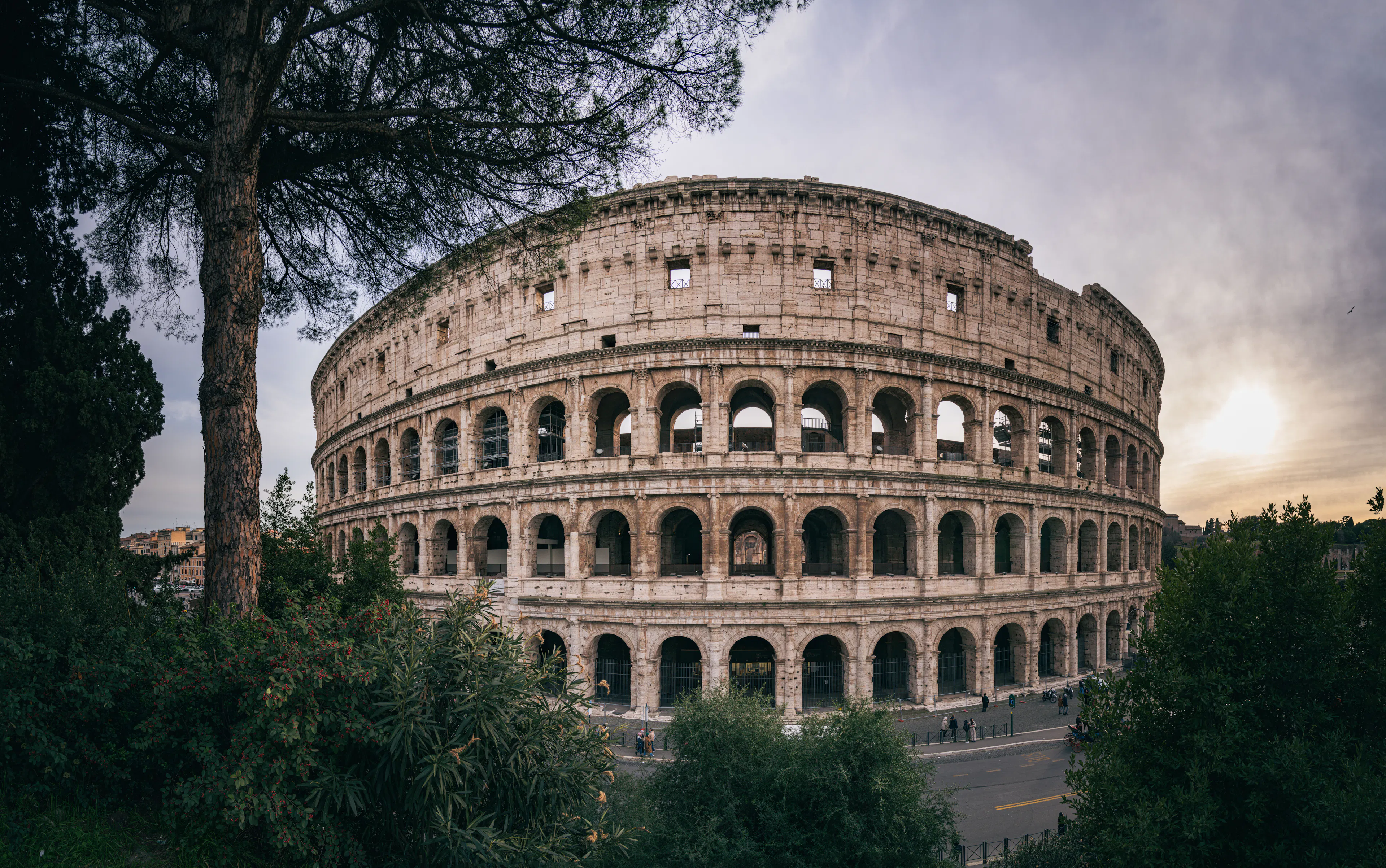
If it is your first trip to Rome, four days is enough to see the city's biggest sights without turning the whole visit into a race. The best plan is to group places by area: spend one day in Ancient Rome, one day in the historic center, one day at the Vatican, and one day enjoying Rome at a slower pace.
A simple 4-day Rome itinerary looks like this:
- Day 1: Colosseum, Roman Forum, Palatine Hill, Monti
- Day 2: Trevi Fountain, Spanish Steps, Pantheon, Piazza Navona, Campo de' Fiori
- Day 3: Vatican Museums, Sistine Chapel, St. Peter's Basilica, Castel Sant'Angelo, Prati
- Day 4: Villa Borghese, Pincio Terrace, Piazza del Popolo, Trastevere, Gianicolo Hill
This route works especially well for first-time visitors because it keeps most days geographically compact. You spend less time crossing the city and more time actually enjoying it. Rome is also a city where the walk between two major attractions can be one of the best parts of the day, so leave some room for coffee stops, side streets, churches, fountains, and long lunches.
Day 1: Ancient Rome, the Colosseum and Monti
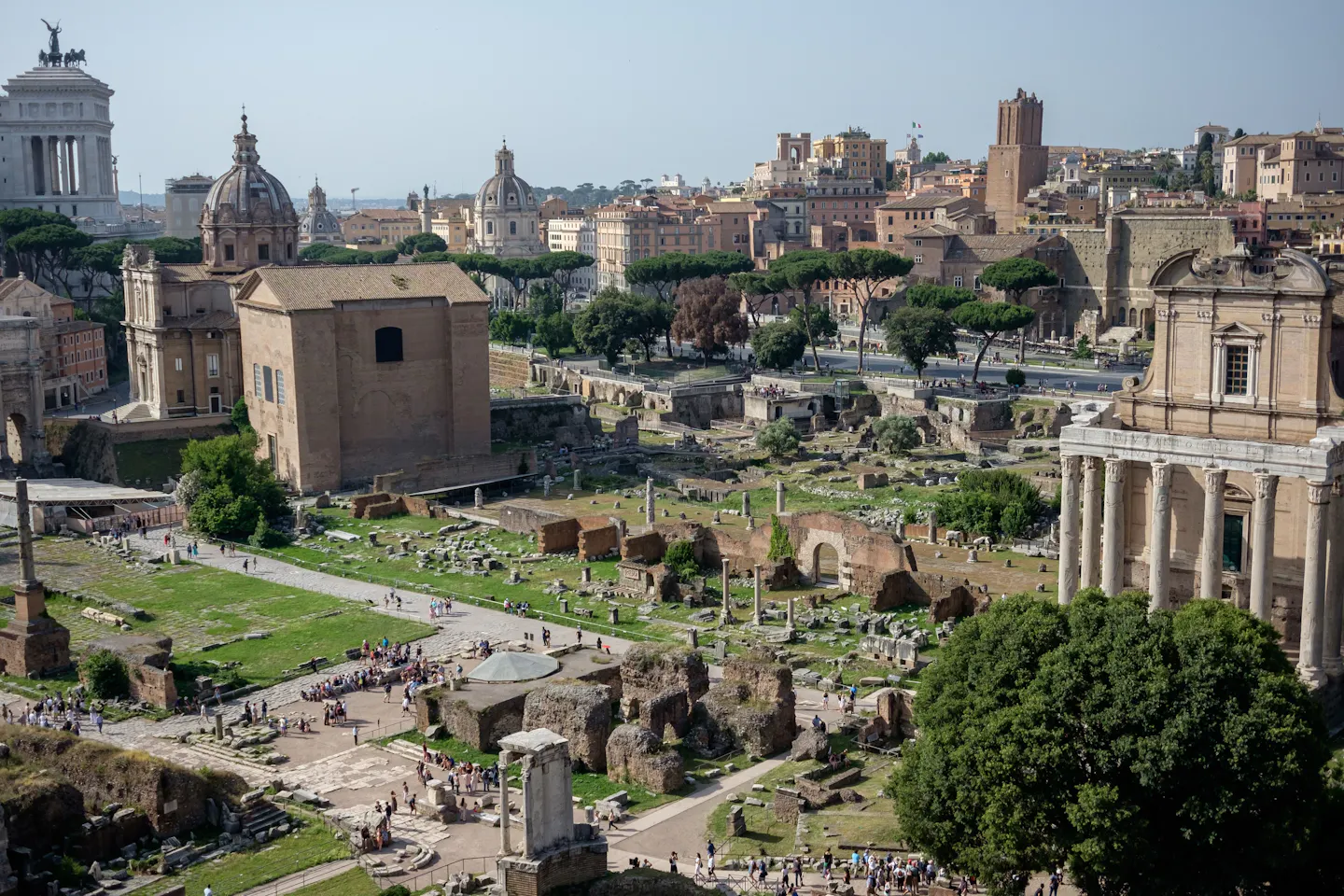
Your first day in Rome should start with the part of the city that makes the biggest first impression: the Colosseum, Roman Forum and Palatine Hill. These sights sit next to each other, so it makes sense to visit them on the same day.
Morning: start at the Colosseum
Book an early timed entry for the Colosseum if you can. The monument opens in the morning, and arriving earlier usually means cooler temperatures and a little more breathing room before the area gets busier.
For a first visit, the standard Colosseum route is enough to understand the scale of the amphitheater and see the arena from above. If you are especially interested in Roman history, look at tickets that include the arena floor, underground areas or attic, but do not feel that you need every add-on.
Current Colosseum tickets require a reserved entry time, and official online sales normally open 30 days before the visit. Buy from the official Colosseum ticket site rather than from a lookalike reseller if you want the standard ticket price.
Late morning and afternoon: Roman Forum and Palatine Hill
After the Colosseum, walk straight into the Roman Forum and Palatine Hill area. Give yourself at least two to three hours here. The Forum is not one single monument. It is a huge archaeological landscape of temples, arches, basilicas, roads and political spaces that made up the center of ancient Roman life.
Then continue uphill to Palatine Hill. It is quieter than the Forum in many areas and gives you some of the best views over the ruins. The viewpoints are also a good reason not to rush this part of the day.
Wear comfortable shoes. The ground is uneven, there is not much shade in some sections, and Ancient Rome becomes tiring very quickly if you try to speed through it.
Evening: dinner and a walk in Monti
Finish the day in Monti, the neighborhood just north of the Colosseum. It feels much more local than the monumental area around the ruins, with small streets, wine bars, casual restaurants and Piazza della Madonna dei Monti at its center.
This is a good night for classic Roman pasta. Try carbonara, cacio e pepe, amatriciana or gricia, then take a slow walk back toward the Colosseum after dark. Seeing it illuminated is worth the extra few minutes.
Day 2: Trevi Fountain, Spanish Steps and the historic center
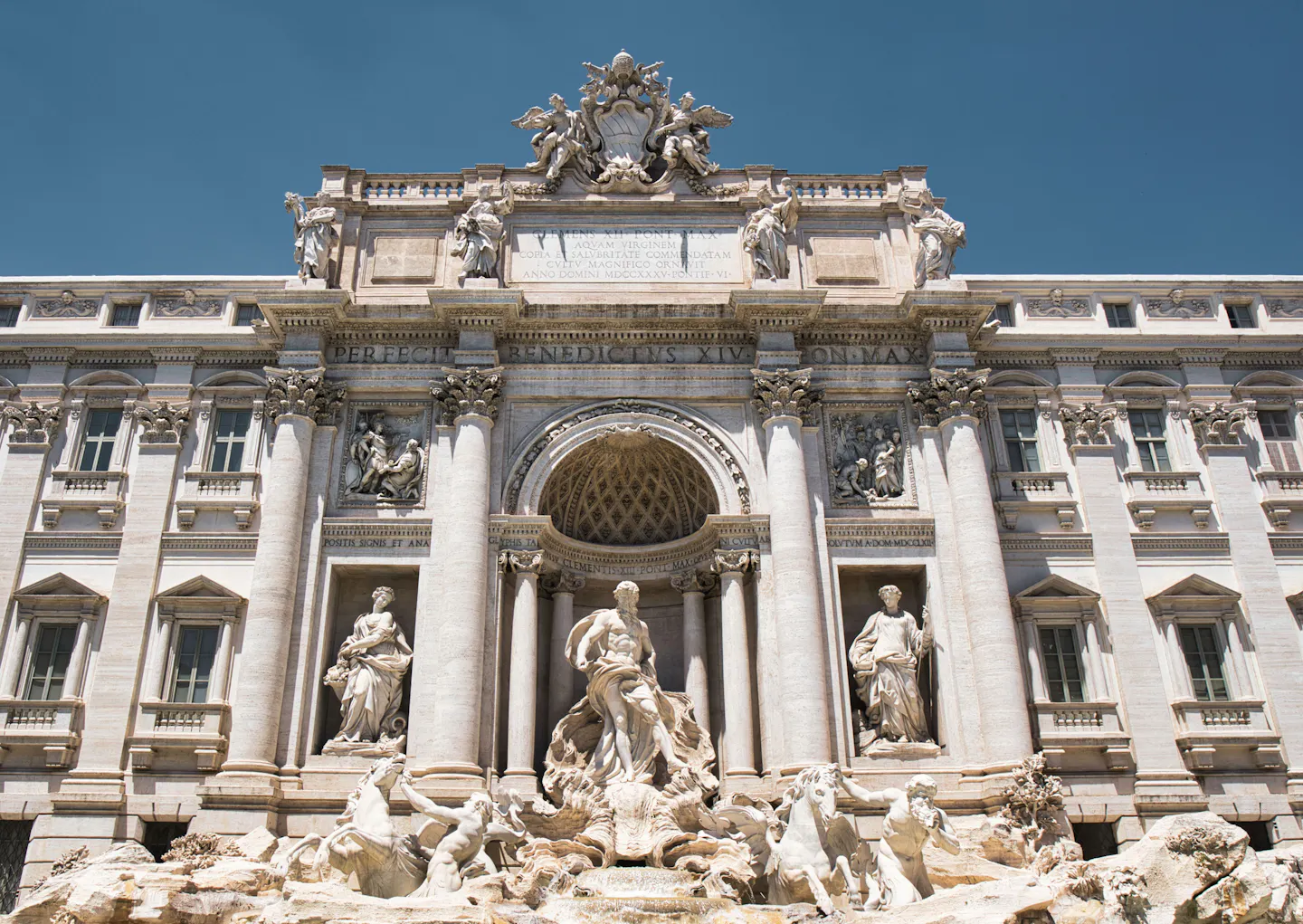
Day two is for the Rome people imagine before they arrive: fountains, piazzas, narrow streets, churches, espresso bars and famous landmarks appearing around corners. Most of today's route is walkable.
Early morning: Trevi Fountain
Start at the Trevi Fountain before the busiest part of the day. It is one of the most crowded places in Rome, so an early visit makes a real difference.
Tourists and non-residents now pay €2 to enter the inner area closest to the fountain during ticketed hours. You can still enjoy the fountain from the surrounding public area without making the close-up visit the center of your morning. If you want to go down to the basin, check the official Trevi Fountain site before you arrive because access arrangements can change.
From Trevi, walk to the Spanish Steps. The route takes only a few minutes and passes elegant shopping streets and small side lanes that are worth wandering into.
Late morning: Spanish Steps and Piazza del Popolo
Spend some time around Piazza di Spagna, then walk toward Piazza del Popolo. You can go directly along Via del Babuino or climb toward the Pincio area for a higher viewpoint.
Do not plan every ten minutes here. This part of Rome is best when you allow yourself to stop for coffee, browse a shop, walk into a church or take a longer route because a street looks interesting.
Afternoon: Pantheon and Piazza Navona
Continue into the historic center for the Pantheon. It is one of Rome's most extraordinary buildings and one of the best-preserved monuments from ancient Rome. The interior is famous for its huge unsupported concrete dome and central oculus.
The standard full-price Pantheon ticket is currently €7. Official tickets are sold through Musei Italiani and at the monument. There is no official skip-the-line ticket, so be careful with third-party offers that suggest otherwise.
From the Pantheon, walk to Piazza Navona. The square is built over the shape of an ancient stadium and is now one of the city's grandest Baroque spaces. Bernini's Fountain of the Four Rivers sits at its center.
Evening: Campo de' Fiori and the Jewish Ghetto
Walk toward Campo de' Fiori and then continue to the Jewish Ghetto. This is a good area for an early evening wander and dinner.
Look for Roman-Jewish classics such as carciofi alla giudia when artichokes are in season. If you still have energy afterward, walk across the river toward Isola Tiberina for a quieter view of the city at night.
Day 3: Vatican Museums, St. Peter's Basilica and Prati
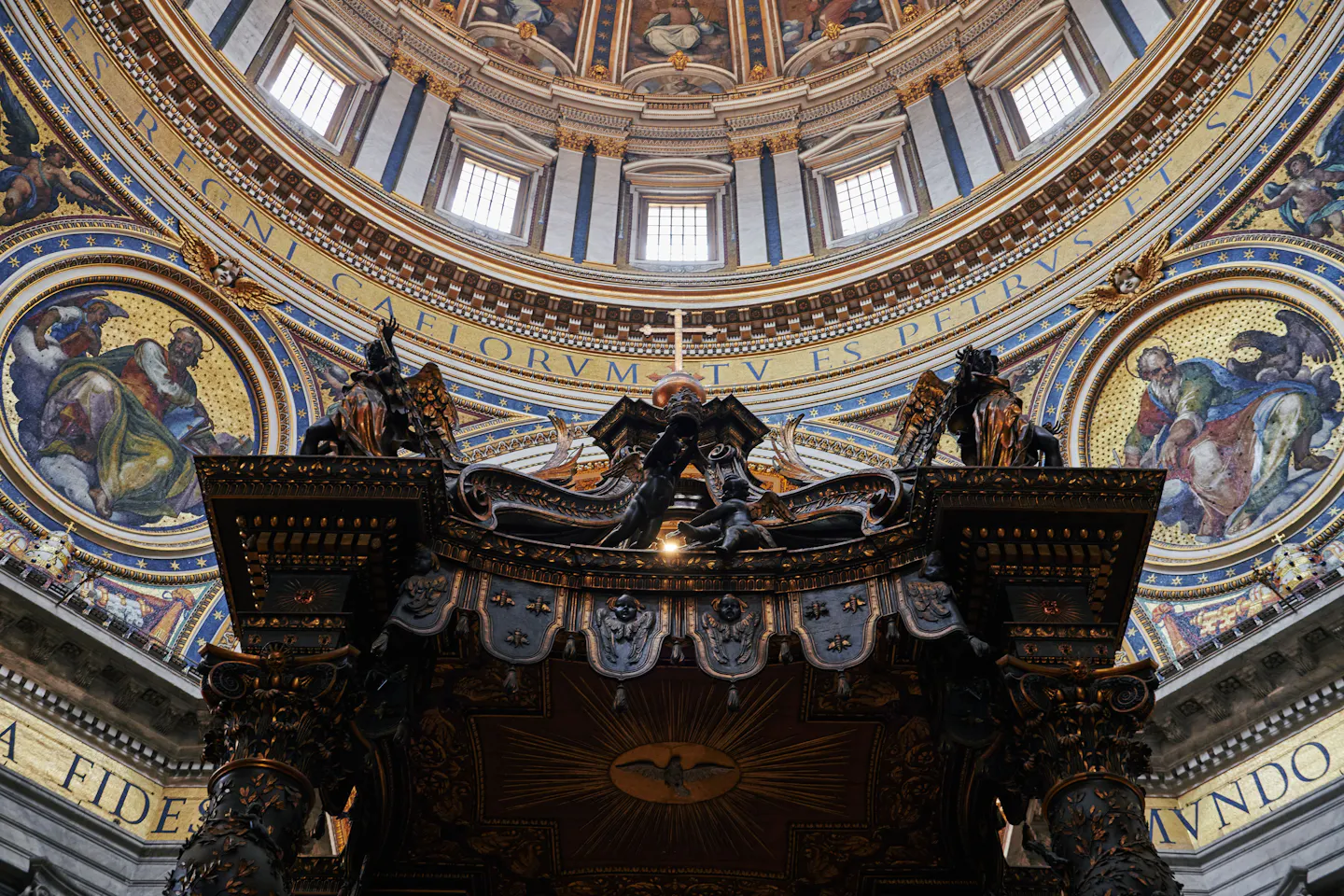
The Vatican deserves most of a day on a first trip to Rome. Trying to combine it with the Colosseum usually makes both experiences worse, so keep the Vatican as its own day.
Morning: Vatican Museums and the Sistine Chapel
Book the Vatican Museums in advance and choose an early entry if possible. The official Vatican Museums site is the safest place to buy standard admission.
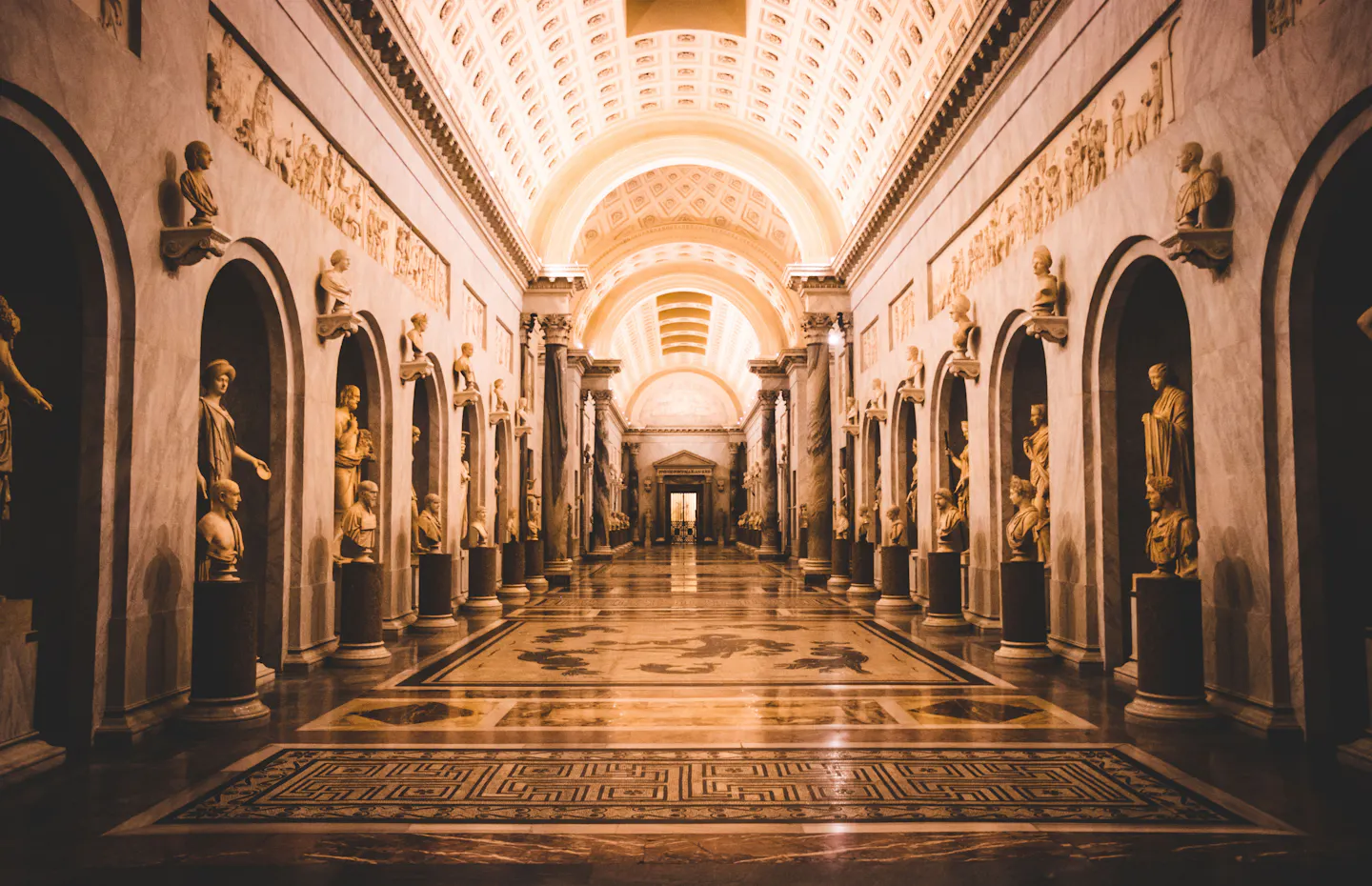
The museums are enormous. You do not need to see every gallery. For a first visit, focus on the rooms that interest you most, the Raphael Rooms if they are on your route, and the Sistine Chapel.
Plan roughly three hours for a comfortable first visit, more if you love art. The goal is not to win a museum endurance contest.
Lunch: Prati
After the museums, stop in Prati rather than eating at the first restaurant directly outside the entrance. The neighborhood has plenty of cafes, bakeries, sandwich spots and restaurants and gives you a useful break before the next major sight.
Afternoon: St. Peter's Basilica
Walk to St. Peter's Square and visit St. Peter's Basilica. Entry to the basilica itself is free, although everyone passes through security. A timed online reservation is optional and comes with an additional service fee and digital audio guide.
If you want the famous panoramic view, buy a separate ticket for the dome. The climb takes more time and energy than it looks from below, but the view over St. Peter's Square and Rome is one of the city's best.
Remember that St. Peter's is an active place of worship. Dress rules apply, and access can change during religious events.
Evening: Castel Sant'Angelo and the river
From the Vatican, walk toward Castel Sant'Angelo. Even if you do not go inside, the view from Ponte Sant'Angelo is beautiful around sunset.
Then either stay in Prati for dinner or cross the river back into the historic center. After a museum-heavy day, a relaxed dinner is a better plan than squeezing in another major attraction.
Day 4: Villa Borghese, Trastevere and the best views of Rome
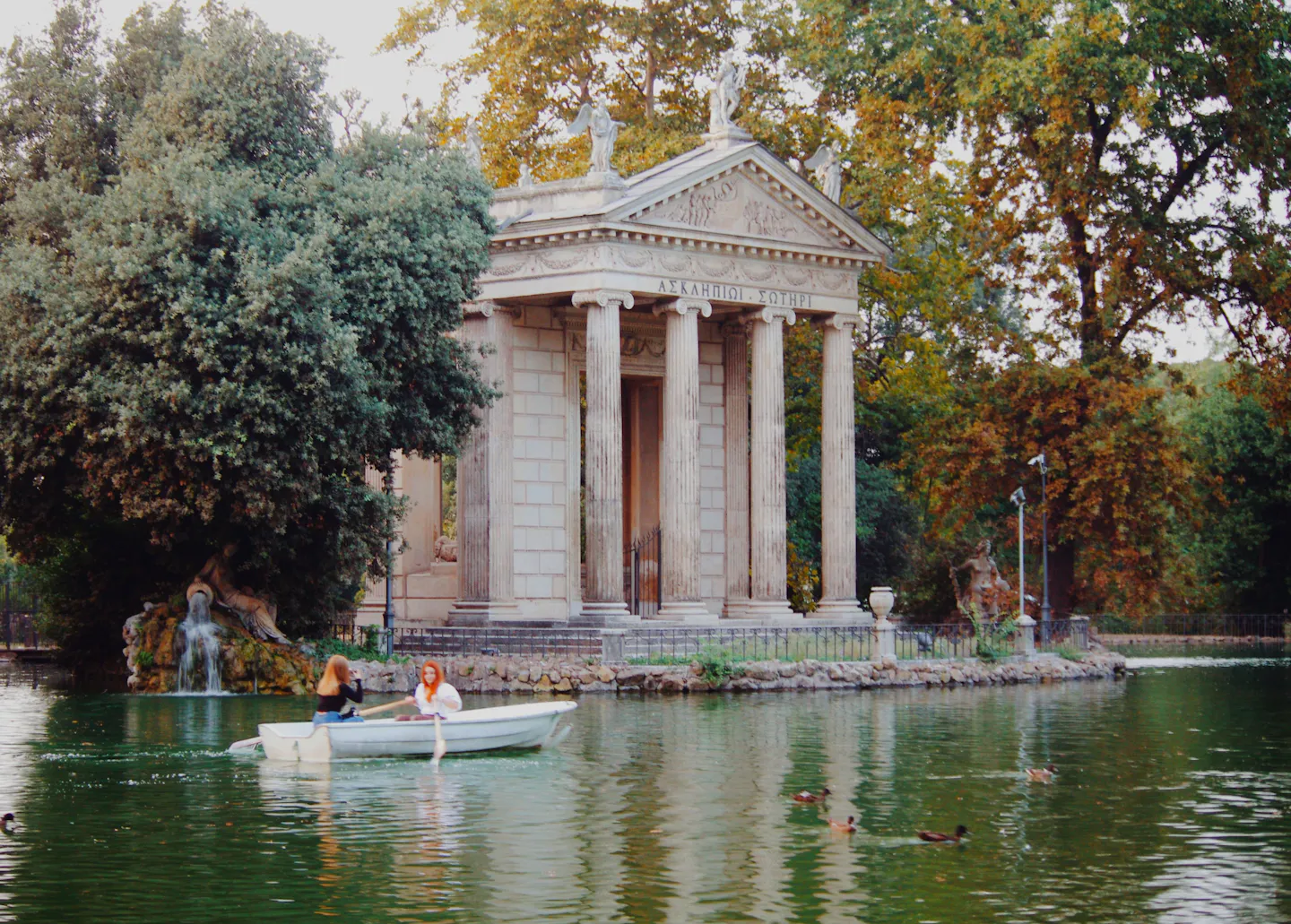
Your last day should feel different from the first three. You have already covered the major archaeological and religious sights, so use day four for parks, neighborhoods, views and a slower side of Rome.
Morning: Villa Borghese and Pincio Terrace
Start around Villa Borghese, one of the city's largest central green spaces. Walk through the park, rent a bike if you want, or simply use the morning as a break from stone streets and museum interiors.
If art is a major reason for your trip, replace part of the park walk with Galleria Borghese. The gallery is famous for Bernini sculptures, Caravaggio paintings and its compact collection, but reservations are required. Book it in advance.
Continue to Pincio Terrace for a wide view over Piazza del Popolo and the rooftops of Rome.
Afternoon: Trastevere
Cross the river and spend the afternoon in Trastevere. The neighborhood is famous, so it is not exactly a hidden gem, but it is still one of the best areas for a first-time visitor to wander without a strict checklist.
Visit Piazza di Santa Maria in Trastevere, look inside the basilica, then walk away from the busiest restaurant streets. Trastevere becomes much more enjoyable once you stop treating it as one single photogenic lane and explore the smaller streets around it.
Stop for a supplì, gelato or aperitivo. This is the day to give yourself extra time for food.
Sunset: Gianicolo Hill
End your four days in Rome on Gianicolo Hill. The walk uphill is noticeable, but the reward is one of the city's classic sunset views.
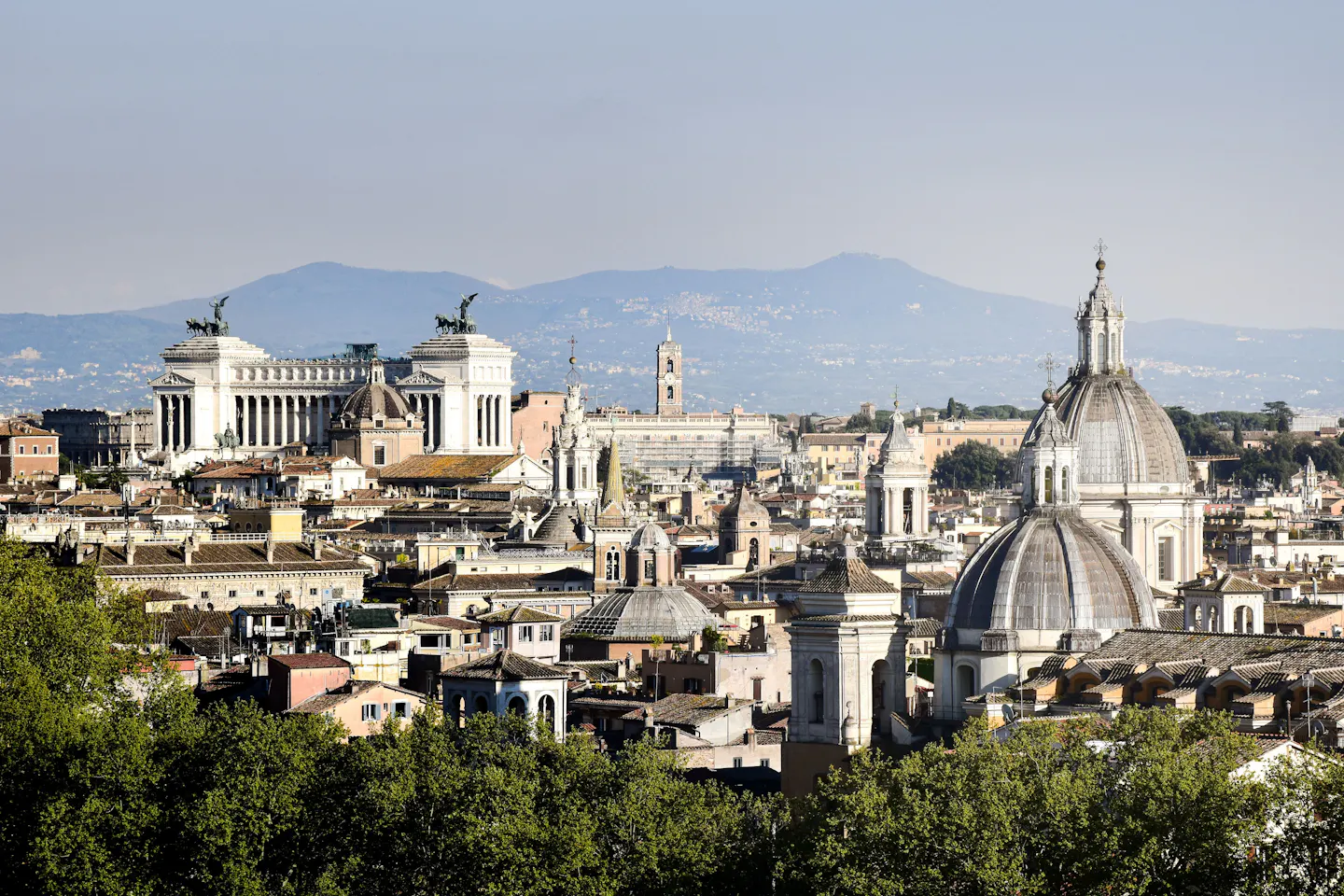
From here, Rome looks less like a checklist of monuments and more like one huge landscape of domes, bell towers, terraces and warm-colored buildings. It is a fitting place to finish a first trip.
Where should you stay in Rome for a first visit?
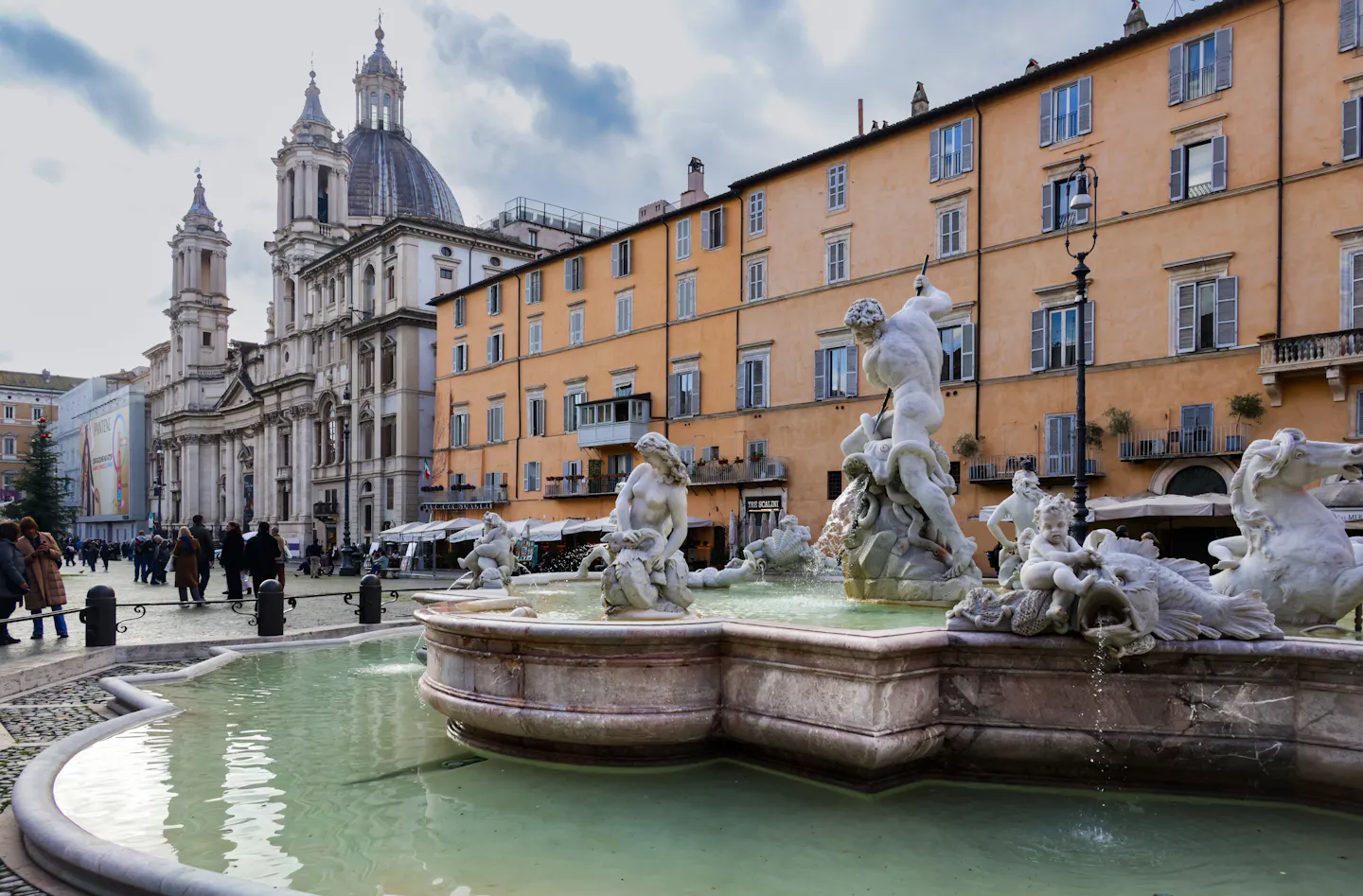
For four days, location matters more than having the biggest hotel room. Staying centrally can save a surprising amount of time.
Centro Storico: best for walking everywhere
Stay around the Pantheon, Piazza Navona or Campo de' Fiori if you want to walk to many of the major sights. It is extremely convenient, atmospheric and usually more expensive.
Monti: best for Ancient Rome and a neighborhood feel
Monti is a strong choice if you want to stay near the Colosseum while still having restaurants, bars and small streets around you. It is central without feeling quite as polished as the historic center.
Prati: best for the Vatican and a calmer base
Prati has wider streets, good restaurants and easy access to the Vatican. It often feels calmer in the evening than the most tourist-heavy parts of central Rome.
Trastevere: best for atmosphere and nightlife
Choose Trastevere if restaurants, evening atmosphere and wandering are a priority. Just check the exact hotel location because some streets can stay noisy late into the night.
How to get around Rome in 4 days
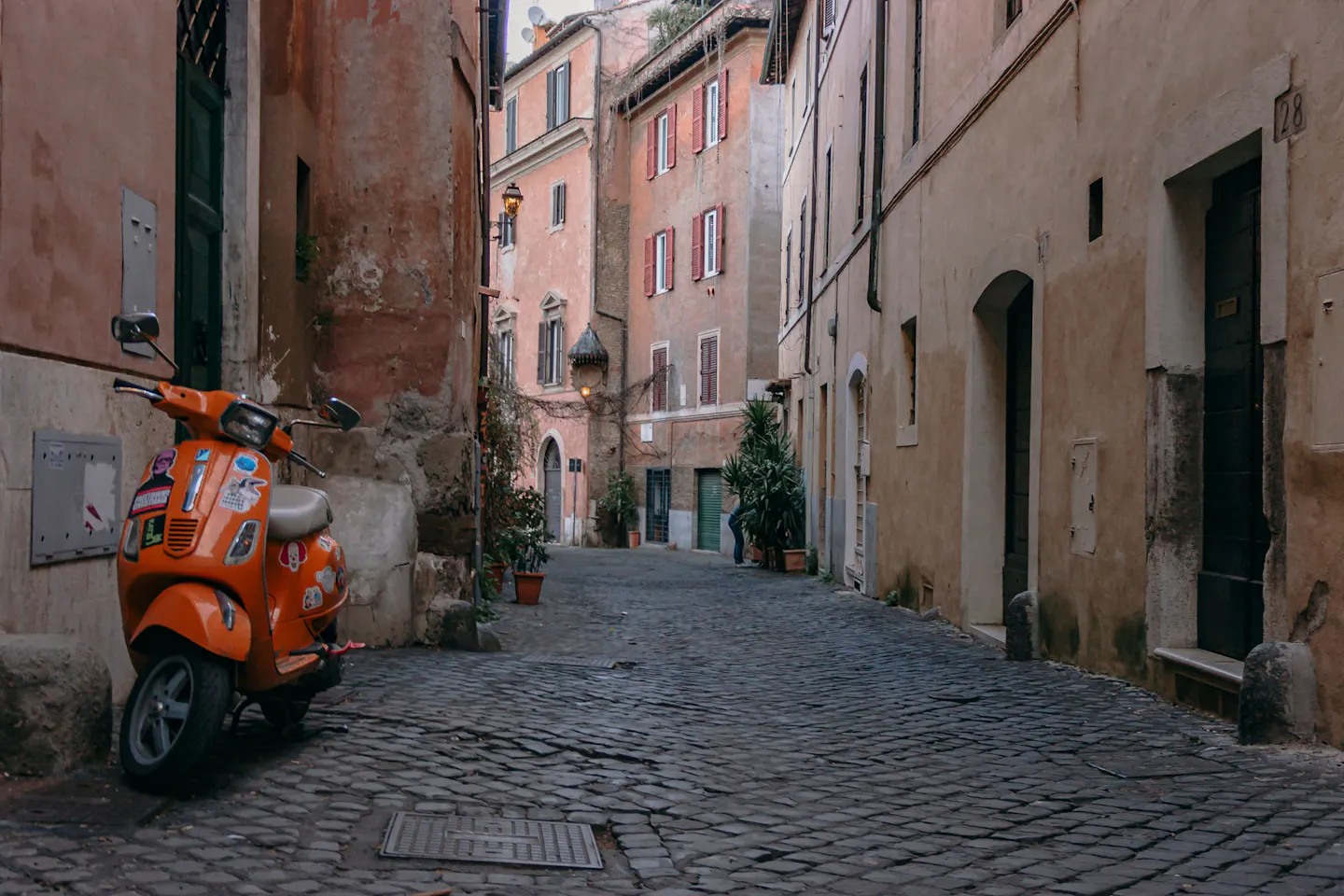
Walking is the best way to experience central Rome. Many of the places in this itinerary are closer together than they look on a map, and the streets between them are part of the experience.
Use the metro for longer cross-city trips, especially when heading toward the Vatican or moving between your hotel and Ancient Rome. Buses and trams fill the gaps, but traffic can slow them down.
A standard ATAC BIT ticket costs €1.50 and is valid for 100 minutes under the current fare system. The Roma 72-hour public transport ticket costs €22. For a four-day trip, compare the pass with pay-as-you-go travel because you may end up walking much more than you expect.
You do not need a rental car in Rome. It will usually make a short city trip more complicated, not easier.
What should you book in advance for Rome?
A few reservations make a four-day Rome itinerary much easier:
- Colosseum: reserve a timed entry. Official ticket sales normally open 30 days ahead.
- Vatican Museums: book in advance, especially for morning slots and busy travel periods.
- Galleria Borghese: reserve ahead if you include it on day four.
- Pantheon: advance booking can be convenient, although official tickets are also sold on site.
- Restaurants: reserve dinner if you have a specific popular place in mind, especially on Friday or Saturday.
For all major sights, start with the official attraction website before checking resellers. Rome has plenty of legitimate tour companies, but it also has many pages that look official when they are not.
What should you eat in Rome?

Rome is one of those cities where food should be part of the itinerary, not something you squeeze in between landmarks.
Try these at least once:
- Carbonara: pasta with egg, pecorino, guanciale and black pepper.
- Cacio e pepe: pasta, pecorino and black pepper. Very simple, very Roman.
- Amatriciana: tomato, guanciale and pecorino.
- Gricia: guanciale, pecorino and black pepper, without tomato or egg.
- Supplì: fried rice croquettes, perfect as a quick snack.
- Pizza al taglio: rectangular pizza sold by weight.
- Maritozzo: a soft sweet bun filled with whipped cream, best with coffee.
- Carciofi alla giudia: deep-fried artichoke associated with Rome's Jewish culinary tradition, especially when artichokes are in season.
A useful rule is to walk one or two streets away from the most famous landmark before choosing a restaurant. You do not need to cross half the city for every meal, but the place directly facing a major attraction is rarely the only option.
What is the best time to visit Rome?
Spring and autumn are usually the easiest seasons for a first trip because temperatures are more comfortable for long days of walking. Late spring and early autumn can still be busy, but the weather is generally easier than peak summer.
Summer brings long daylight hours but also heat and heavy crowds. If you visit in July or August, start outdoor sightseeing early, take a longer lunch break, and avoid planning the Roman Forum in the hottest part of the afternoon.
Winter is cooler and days are shorter, but Rome can feel more relaxed outside the holiday periods. It is a good option if museums, food and city atmosphere matter more to you than warm evenings.
Is 4 days enough for Rome?
Yes. Four days is a very good length for a first trip to Rome. You can see the Colosseum and Ancient Rome, explore the historic center, spend a full day around the Vatican, and still have time for Trastevere, parks and viewpoints.
You will not see everything, and that is the point. Rome rewards repeat visits. A good first itinerary should leave you feeling like you experienced the city, not like you spent four days sprinting between ticket scanners.
How much walking should you expect in Rome?
Expect a lot. A sightseeing day can easily reach 15,000 to 25,000 steps even if you use the metro occasionally. Comfortable shoes matter more here than almost any other packing decision.
Rome's historic streets are beautiful but uneven, and archaeological sites add more stone, slopes and stairs. Build coffee breaks and sit-down lunches into the plan rather than treating them as wasted time.
Can you visit the Colosseum and Vatican on the same day?
Technically yes, but it is not the best plan for a four-day trip. Both areas deserve several hours and involve security, timed tickets and large crowds. Splitting them across separate days gives you a much better experience.
Do you need a Roma Pass for 4 days?
Not necessarily. Whether a Roma Pass saves money depends on exactly which attractions you plan to enter and how often you use public transport. Compare the current pass inclusions with the individual tickets on your list before buying it.
For this itinerary, booking the Colosseum and Vatican directly and using regular public transport can be simpler for many first-time visitors.
Plan your 4-day Rome trip with EasyMiles
A good Rome itinerary is not just a list of famous places. The difficult part is making the days fit together: choosing the right order, checking opening hours, avoiding unnecessary backtracking, finding a good lunch nearby and knowing what to move when the weather or your energy changes.
EasyMiles can plan the whole trip around your dates and preferences. Add Rome and your travel dates, and it can build a day-by-day itinerary with activities, restaurants and local recommendations while taking opening hours, weather and travel time between places into account.
That means you can use this four-day route as the starting point, then make it yours. Maybe you care more about food than museums, want slower mornings, prefer hidden streets to famous viewpoints, or decide halfway through the trip that you need a less ambitious afternoon. EasyMiles helps turn those preferences into an itinerary that actually works on the ground.