
For a first trip to Scotland, give yourself 7 to 10 days and focus on a simple route instead of trying to see the whole country. Start with two days in Edinburgh, then rent a car and head into the Highlands. A very good first-time route is Edinburgh, Glencoe, the Isle of Skye, Loch Ness and Inverness, then back south through the Cairngorms or Pitlochry.
If you only have five days, stay in Edinburgh and add a short Highlands road trip rather than forcing in Skye. If you have 10 days or more, slow the route down and add Glasgow, another night on Skye, or a second island.
A good first Scotland trip looks like this:
- 2 days in Edinburgh for the Old Town, Edinburgh Castle, viewpoints, pubs, museums and food.
- 1 day around Glencoe for classic Highland scenery.
- 2 days on the Isle of Skye so you are not rushing the island.
- 1 day around Loch Ness and Inverness.
- 1 day returning south through the Cairngorms, Pitlochry or Stirling.
Scotland is not a trip you need to over-plan minute by minute. The biggest decisions are your route, where you will sleep, whether you will drive, and which experiences need advance booking. Leave some space for weather changes, scenic stops and the kind of place you notice from the road and suddenly want to explore.
How many days do you need in Scotland?
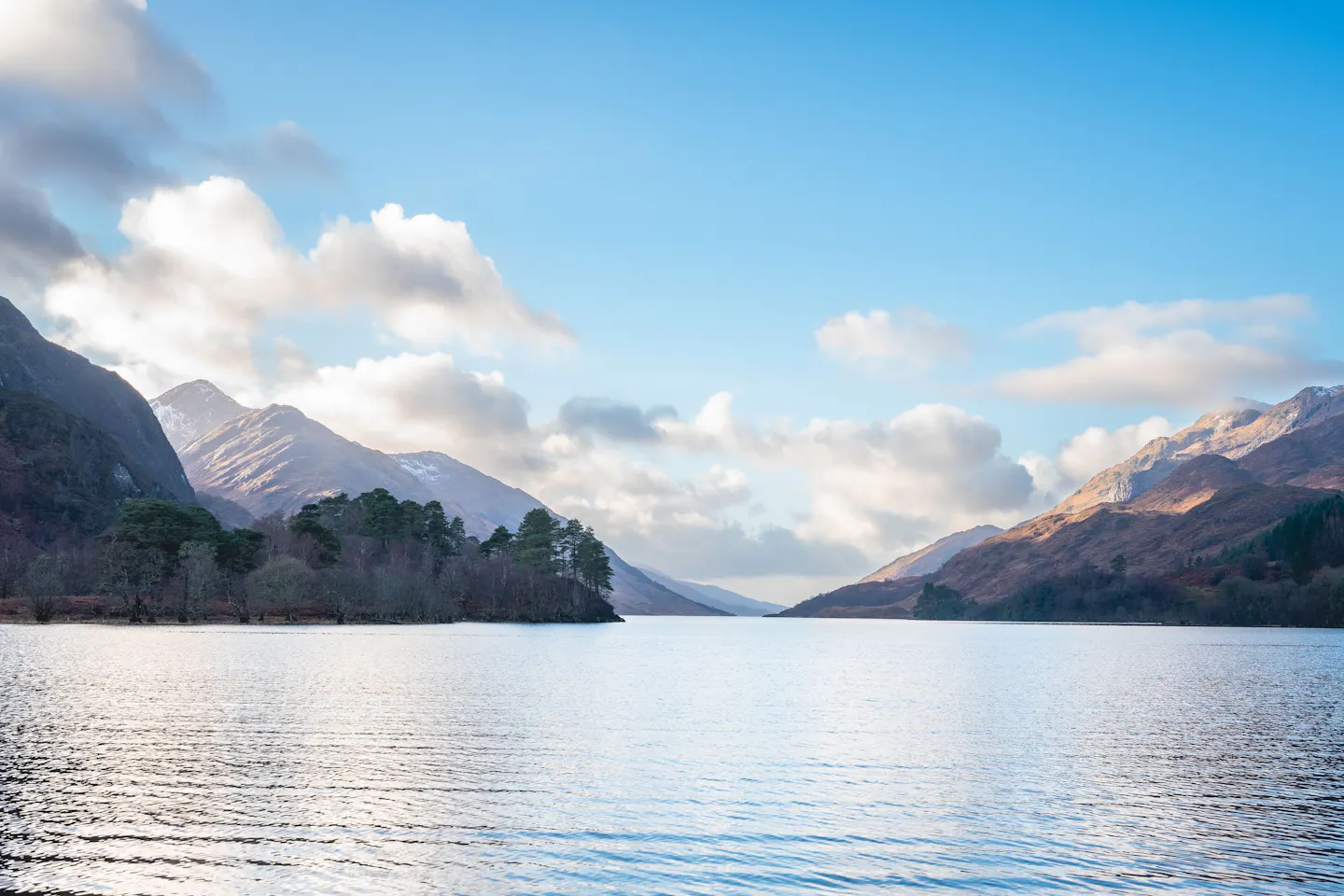
Seven days is enough for a strong first trip if you are comfortable moving every one or two nights. You can see Edinburgh, part of the Highlands, the Isle of Skye and Inverness without turning every day into a race.
Eight to 10 days is better if you want a more relaxed trip. The extra time lets you stay two full nights in the same place, take a proper walk, have a long lunch, or change plans when the weather is not cooperating.
For a first visit, this is a useful rule:
- 3 to 4 days: Edinburgh plus one Highlands day trip or one overnight outside the city.
- 5 to 6 days: Edinburgh, Glencoe and either Skye or Inverness.
- 7 days: Edinburgh, Glencoe, Skye, Loch Ness and Inverness.
- 8 to 10 days: the same route at a slower pace, with Glasgow, Cairngorms, Stirling or extra island time.
- Two weeks: enough time to add places such as Mull, Islay, the North Coast, Aberdeenshire or the Outer Hebrides without constantly packing your suitcase.
The most common mistake is assuming Scotland looks small on the map, so everything must be close. Highland roads are often slower than expected, and the best days usually include stops that were not in the original plan.
What is the best time to visit Scotland?
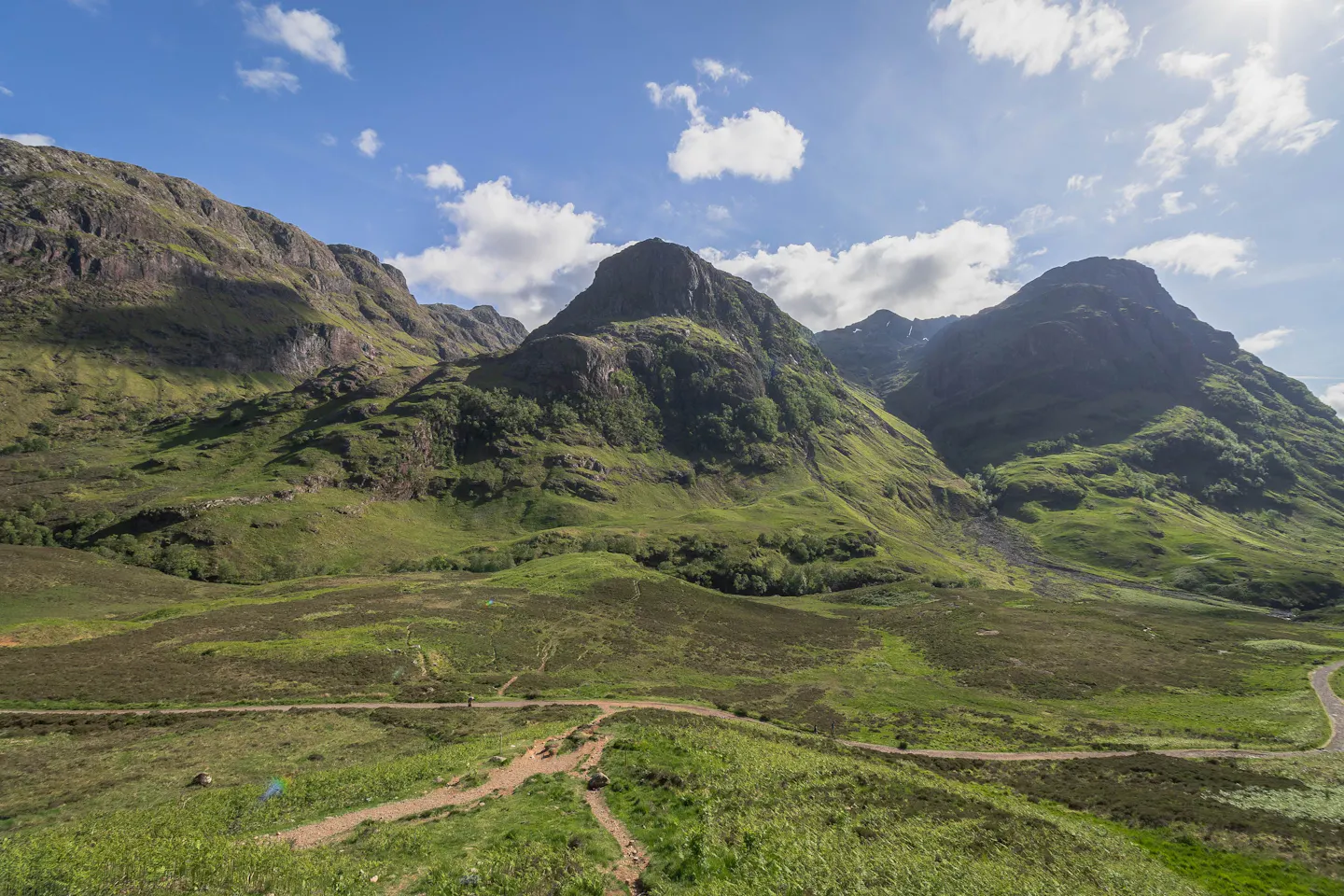
The best time for a first trip to Scotland is usually late spring or early autumn. May and June give you long days and good conditions for road trips and walking, while September can be excellent for cooler weather, autumn color and slightly less peak-summer pressure.
July and August are the busiest months in many popular places. They are still great months to visit, especially if you want festivals and long summer days, but accommodation on the Isle of Skye and in Edinburgh can book up early.
Autumn is a brilliant choice if you like moody landscapes, quieter roads and cozy pubs. Winter can be beautiful too, but daylight is shorter and some rural attractions, tours and seasonal businesses operate reduced hours.
One very Scottish rule: do not plan around a perfect weather forecast. Bring layers and a waterproof jacket and expect to adjust your day.
If you are traveling in the Highlands or islands between roughly May and October, pack midge repellent. VisitScotland says midge season typically runs from May to October, with peak activity in the middle of summer, especially in the west Highlands, islands and damp rural areas.
Do you need a visa or ETA for Scotland?

Scotland is part of the United Kingdom, so UK entry rules apply.
Many travelers who can visit the UK without a visa now need an Electronic Travel Authorisation, or ETA, before traveling. Whether you need an ETA or a visa depends on your nationality and circumstances, so check the official UK government guidance before booking.
The important point is not to assume that visa-free travel means you can simply arrive without any pre-travel permission. Entry rules have changed in recent years, and they can change again.
If you already hold a UK visa or another qualifying permission to live, work or study in the UK, the ETA rules may not apply to you. Always use the official government checker rather than a third-party website.
Should you rent a car in Scotland?

For a first trip that includes the Highlands and the Isle of Skye, a rental car is the easiest option.
You do not need a car in Edinburgh. The center is walkable, public transport is good, and parking adds unnecessary stress. A smart plan is to spend your first two days in Edinburgh, collect the car when you leave the city, and return it when the road-trip part is finished.
Driving gives you much more freedom once you reach the Highlands. You can stop at viewpoints, small villages, beaches, castles and trailheads without building the day around bus timetables.
A few things first-time drivers should know:
- Drive on the left.
- Many rural roads are narrow and some are single-track with passing places.
- Driving times can be longer than the distance suggests.
- Do not use passing places as parking spots.
- Edinburgh, Glasgow, Aberdeen and Dundee have Low Emission Zones, so check whether your rental vehicle is compliant if you plan to drive into city centers.
- Scotland has no toll roads or toll bridges.
If you are nervous about left-side driving, choose an automatic car, avoid collecting it in the middle of a busy city if possible, and keep the first driving day simple.
Can you travel around Scotland without a car?

Yes. Scotland can absolutely work without a car, but your itinerary should be different.
Trains connect all eight Scottish cities and many towns, and routes between Edinburgh, Glasgow, Inverness, Aberdeen, Stirling, Perth and other destinations are straightforward. Scenic rail journeys can also be part of the trip rather than just transportation.
For a car-free first visit, a strong route is Edinburgh, Glasgow and Inverness by train, then one or two guided Highlands or Skye tours from those bases.
The Isle of Skye is possible without driving, but it takes more planning. Local buses do not always line up with the exact viewpoints and walks most first-time visitors want to see. If Skye is a priority and you do not want to rent a car, a small-group tour is usually the simpler option.
7-day Scotland itinerary for first-time visitors

This itinerary is designed for someone who wants the classic first Scotland experience: a historic city, dramatic Highlands, the Isle of Skye, lochs, castles and scenic drives.
It is active, but it is not built around checking off as many places as possible. The goal is to give each day one clear focus.
Day 1: Explore Edinburgh Old Town
Start in Edinburgh and keep the first day walkable.
Begin around the Royal Mile and work your way toward Edinburgh Castle. Give the castle enough time instead of treating it as a photo stop. Afterward, wander through closes and side streets, walk down Victoria Street, and explore Grassmarket.
If the weather is good, finish with a viewpoint. Calton Hill is the easiest option for a first evening and gives you a great sense of the city without requiring a serious hike.
For dinner, look for modern Scottish food, a cozy pub, or somewhere serving seasonal local ingredients. You do not need to make your first night a formal tasting-menu event. Edinburgh is better when you let yourself wander a little.
Stay: Old Town if you want to be close to the main sights, or New Town if you prefer elegant streets, restaurants and slightly more breathing room.
Day 2: See a different side of Edinburgh
Use your second day for the parts of Edinburgh that are easy to miss when you only follow the Royal Mile.
If you like walking, climb Arthur's Seat in the morning. If the weather is poor, switch to the National Museum of Scotland, the Scottish National Gallery, or another indoor stop.
Later, choose one neighborhood rather than trying to see everything. Stockbridge and Dean Village work well for a quieter walk. Leith is better if food and restaurants are a priority.
If you are visiting in August, remember that Edinburgh's festival season changes the city completely. Book accommodation and major plans early, then leave enough flexibility to enjoy whatever is happening around you.
Day 3: Drive from Edinburgh to Glencoe
Pick up your rental car in the morning and head west toward the Highlands.
This is the day when Scotland starts to feel very different. Do not rush straight to your hotel. Build the drive around a few scenic stops and let the landscape be the main attraction.
Glencoe is one of the best first Highland stops because the scenery is immediate and dramatic. Stop around the Three Sisters viewpoint, take a short walk if conditions are good, and give yourself time in the glen.
If you prefer a little more town infrastructure, you can stay in Fort William. If you want the mountain atmosphere, stay closer to Glencoe or Ballachulish.
Stay: Glencoe, Ballachulish or Fort William.
Day 4: Drive from Glencoe to the Isle of Skye
Leave early, but do not treat the drive as wasted time.
The route north and west is full of places worth stopping. Depending on your exact route and pace, you can pass mountain scenery, lochs and Eilean Donan Castle before crossing onto Skye.
Once you reach the island, keep the rest of the day easy. Check in, explore Portree, walk around the harbor and have dinner without trying to squeeze in three major sights before sunset.
This is where a lot of Scotland itineraries go wrong. Skye deserves more than a rushed afternoon.
Stay: Portree for the easiest first-time base and the biggest choice of restaurants, or Broadford if it works better for your route and accommodation.
Day 5: Spend a full day on the Isle of Skye
Give Skye one full day with no long transfer at either end.
A classic northern Skye day can include the Old Man of Storr, the Quiraing and the Trotternish Peninsula. You can also add Kilt Rock or smaller viewpoints depending on weather and energy.
Do not try to do every famous Skye stop in one loop. Choose one proper walk and a few scenic stops. The island is much more enjoyable when you are not constantly checking the clock.
If the weather turns, change the plan. Drive to a different part of the island, stop for lunch, visit a local producer, or wait for a clearer window. Skye is exactly the kind of place where a flexible itinerary beats a rigid checklist.
Stay: a second night on Skye.
Day 6: Drive from Skye to Inverness via Loch Ness
Leave Skye and head toward Inverness.
If you did not stop at Eilean Donan Castle on the way in, this is an easy place to add now. Continue toward the Great Glen and Loch Ness.
You do not need to spend the whole day chasing every Loch Ness attraction. Pick one main stop, such as a viewpoint, a short cruise, or Urquhart Castle, then continue to Inverness.
Spend the evening walking along the River Ness and around the center. Inverness is compact and works well as a calm final Highland night after several days on the road.
Stay: central Inverness so you can walk to dinner.
Day 7: Return to Edinburgh through the Cairngorms and Pitlochry
Drive south from Inverness and make the return journey part of the trip.
The Cairngorms give you a very different Highland landscape from Glencoe and Skye. If you have time and the weather is good, stop for a short walk or a scenic break around Aviemore.
Continue south toward Pitlochry, a good place for lunch, a coffee stop or a distillery visit if you want to include whisky in the trip.
From there, return to Edinburgh. If your flight leaves the next morning, sleep near the city or airport and keep the final evening easy.
If you have an extra day, this is where the itinerary gets better. Add another night in the Highlands, stop in Stirling, or spend a final night in Glasgow instead of rushing home.
Where should you stay on a first trip to Scotland?

You do not need to change hotels every night.
For this route, four bases are enough:
- Edinburgh: Old Town for sightseeing and atmosphere; New Town for restaurants, shopping and a calmer feel.
- Glencoe area: Glencoe or Ballachulish for scenery; Fort William for more services and accommodation choice.
- Isle of Skye: Portree is the easiest first-time base; Broadford can be more practical for some routes.
- Inverness: stay near the center or River Ness so you can park once and walk to dinner.
Book Skye accommodation first if you are traveling in peak season. It has limited capacity compared with a major city, and the best-located places can disappear long before your trip.
What should you eat and drink in Scotland?

Scottish food is much more interesting than the old jokes suggest, especially if you like seafood, rich comfort food, bakeries and whisky.
Try a few of these:
- Haggis, neeps and tatties for the classic first taste.
- Cullen skink, a creamy smoked haddock soup that is perfect on a cold day.
- Scottish salmon, mussels, scallops or langoustines, especially near the coast and islands.
- A full Scottish breakfast when you have a long day ahead.
- Steak pie, venison or other hearty pub dishes in the Highlands.
- Shortbread, tablet and local bakery stops for something sweet.
- Whisky, but choose one distillery or a good whisky bar instead of forcing a distillery visit into every day.
If you do not eat meat, you will still find plenty of modern Scottish restaurants and cafes with vegetarian options. The easiest rule is to look for places cooking with local ingredients rather than searching only for the most famous traditional dish.
What should you pack for Scotland?

Pack for changing conditions, not for one season.
For most first-time trips, bring:
- A waterproof outer layer with a hood.
- Light layers you can add or remove.
- Comfortable walking shoes with decent grip.
- A small day bag.
- Midge repellent if you are visiting the Highlands or islands during midge season.
- A reusable water bottle.
- A UK Type G power adapter if your devices use a different plug.
- Sunglasses and sunscreen, even if the forecast looks very Scottish.
If you are doing serious mountain hikes, your packing list needs to be more technical. Do not treat a Munro or exposed Highland trail like a casual city walk just because the starting point is close to the road.
What should you book in advance?

Scotland rewards flexibility, but a few things are worth locking in early.
Book these first:
- Your first and last nights if they are in Edinburgh during a busy period.
- Accommodation on the Isle of Skye.
- A rental car if you need an automatic transmission or a specific vehicle size.
- Major attractions with timed entry if they are important to you.
- Ferries if your route includes an island that requires one.
- Special restaurants, whisky tastings or tours you would be genuinely disappointed to miss.
Leave the smaller stops flexible. You do not need reservations for every lunch, viewpoint and short walk.
Common first-time Scotland mistakes to avoid

- Trying to see Edinburgh, Glasgow, Skye, the North Coast 500 and three islands in one week.
- Spending only one rushed night on Skye after a long drive.
- Assuming a two-hour map estimate means the drive will actually take two hours once you add narrow roads, photo stops and lunch.
- Keeping a rental car in central Edinburgh when you do not need it.
- Building an outdoor itinerary with no bad-weather alternatives.
- Booking every hour and leaving no room for spontaneous stops.
- Underestimating how early popular accommodation can sell out in summer.
- Ignoring midges because they sound too small to matter.
Treat Scotland as a road trip with a few anchors, not as a checklist of famous locations. The spaces between the big sights are often what make the trip memorable.
Is Edinburgh or Glasgow better for a first trip?
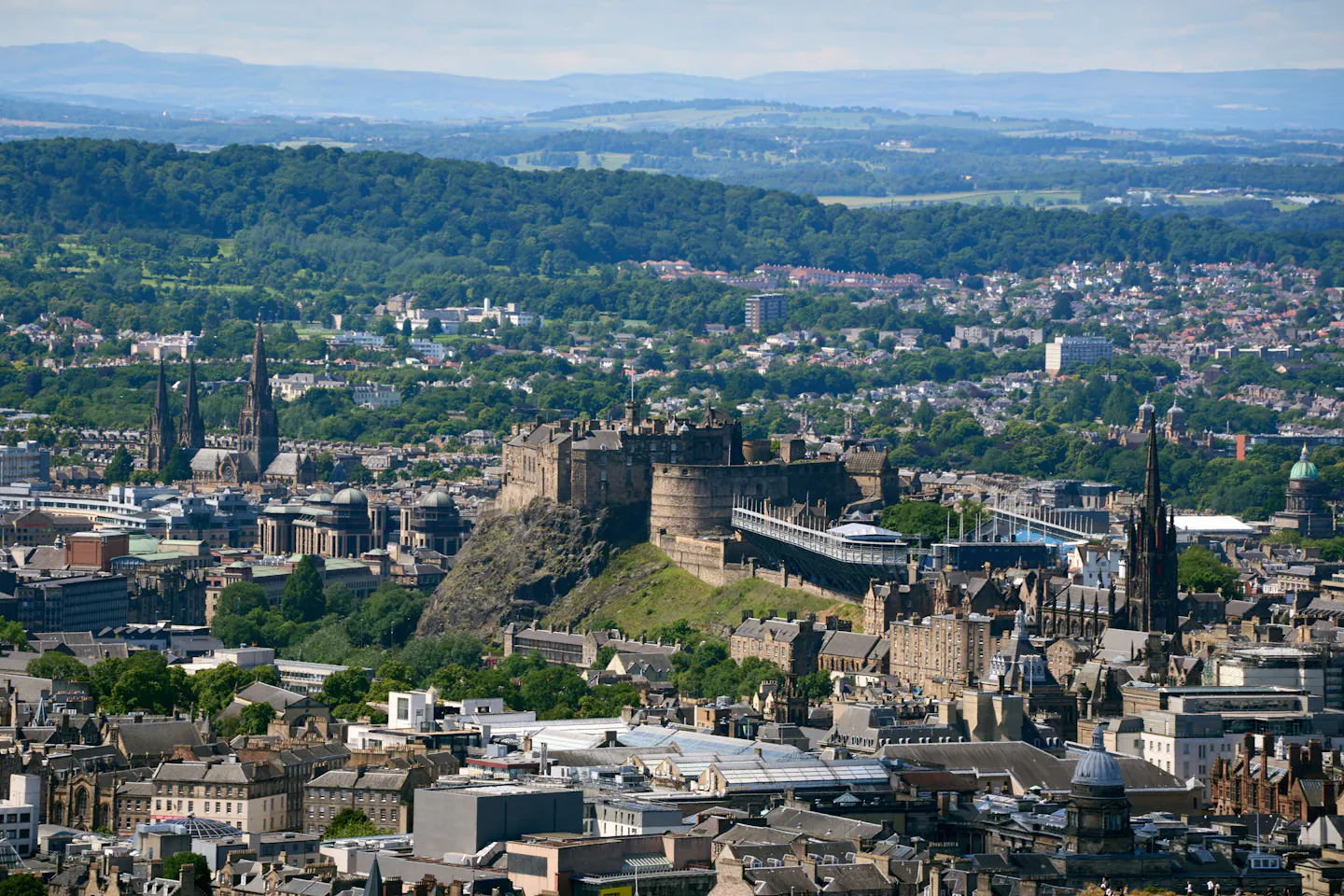
If you can choose only one, Edinburgh is the easier first-time pick. It has the castle, the Old Town, dramatic viewpoints and many of the images people already associate with Scotland.
Glasgow is a great addition when you have more time and care about music, nightlife, architecture, museums and a more lived-in city feel.
For a 7-day first trip focused on Highlands scenery, prioritize Edinburgh. For a 10-day trip, adding one or two nights in Glasgow makes sense.
Is the Isle of Skye worth it on a first trip?

Yes, if you have at least seven days in Scotland and can give Skye two nights.
Skye is one of the country's most dramatic destinations, but it adds driving time. If your trip is only four or five days, forcing Skye into the route usually means spending too much time in the car.
For a shorter trip, stay around Edinburgh, Loch Lomond, Glencoe or another closer Highlands base. Save Skye for a trip where you can enjoy it properly.
How far in advance should you plan a Scotland trip?

For summer travel, start with accommodation and your car several months ahead if you can, especially for Skye and Edinburgh in August.
For spring and autumn, you can often be more flexible, but popular small hotels and guesthouses still fill quickly.
The route itself does not need to be finalized months in advance. Book the things with limited capacity, then keep your daily plan flexible enough to react to weather.
FAQ: Planning a first trip to Scotland
What is the best Scotland itinerary for first-time visitors?
A strong first-time route is Edinburgh, Glencoe, the Isle of Skye, Loch Ness and Inverness, then back south through the Cairngorms or Pitlochry. It gives you a mix of city, Highlands, island scenery, castles and road-trip landscapes without trying to cover the entire country.
Is seven days enough for Scotland?
Yes. Seven days is enough for Edinburgh plus a focused Highlands and Skye loop. If you want Glasgow, multiple islands or the North Coast 500 as well, plan more time.
Can you visit Scotland without renting a car?
Yes. Edinburgh, Glasgow and Inverness are easy to connect by train, and you can use guided day tours for the Highlands or Skye. A car gives you more freedom in rural areas, but it is not required for a good trip.
When is the best month to visit Scotland?
May, June and September are excellent choices for many first-time travelers because they balance daylight, outdoor conditions and crowd levels. July and August are lively and popular but busier, while autumn and winter are better for a quieter, moodier trip.
When is midge season in Scotland?
VisitScotland says midge season typically runs from May to October, with peak activity in the middle of summer. They are most common in the west Highlands, islands and damp rural areas, especially in calm conditions.
Do I need an ETA to visit Scotland?
Many travelers who do not need a UK visa now need an ETA before traveling. The rule depends on nationality and immigration status, so check the official UK government ETA guidance before your trip.
Is Scotland good for a first road trip?
Yes. Scotland is one of Europe's best road-trip destinations because the drives themselves are part of the experience. Just remember that rural roads can be narrow and slow, so plan fewer miles than you might in another country.
Plan your Scotland trip with EasyMiles
The hardest part of a Scotland trip is not finding beautiful places. It is deciding which ones actually fit together without spending half your holiday driving back and forth.
EasyMiles can build the whole trip around your dates, travel pace and interests. Tell it where you are going, how many days you have, what kind of food you like and whether you care more about castles, hikes, whisky, hidden viewpoints, cozy villages or city time.
Instead of giving you a generic list of Scotland's most famous places, EasyMiles turns those preferences into realistic days. It can help you decide what to see, where to eat, what to order and which stops make sense together geographically.
That matters even more in Scotland, where weather can change your plans and a place that looked close on the map can take longer to reach than expected. A flexible itinerary makes it much easier to slow down, swap an outdoor stop for something indoors, or rework a day when a restaurant is closed or you simply want an easier afternoon.
Plan less, see Scotland at a better pace, and keep enough room for the moments you did not know you needed to schedule.