
The easiest way to plan a multi-stop trip is to build the route first and the daily itinerary second. Pick the places you genuinely want to visit, put them in a logical geographic order, decide how many nights each stop deserves, and count travel days as real travel days. Only then should you book transport, hotels, and activities.
A good multi-stop itinerary usually follows one simple rule: spend more time enjoying places than moving between them. If your route zigzags across a map or you change hotels every night, the trip will feel harder than it needs to.
The simple version is:
- Choose your must-visit stops.
- Put them in a logical route with as little backtracking as possible.
- Give each destination enough nights to be worth the move.
- Compare trains, buses, ferries, cars, and flights using door-to-door travel time.
- Look for open-jaw or multi-city flights when your route starts and ends in different places.
- Book the main transport first, then accommodation, then must-do activities.
- Build each day around nearby places instead of jumping across the city.
- Keep the whole trip in one itinerary so every booking and transfer makes sense together.
This approach works whether you are planning three European cities by train, a road trip with several overnight stops, a multi-country holiday, or a longer route through Asia or the United States.
Start with your non-negotiable stops

Before opening flight tabs or booking hotels, write down the places that are the real reason for the trip. These are your anchor stops.
Maybe you are going to Japan mainly for Tokyo and Kyoto, but Osaka would be nice if there is time. Maybe your Europe trip has to include Paris and Amsterdam, while Bruges is optional. Treating every idea as equally important is how a seven-day trip suddenly becomes six cities.
Separate must-do stops from nice-to-have stops
Make two groups: places you would genuinely be disappointed to miss, and places that would be fun only if they fit naturally. Build the route around the first group. Add the second group only when it does not create a rushed detour.
This makes cutting stops much easier. A shorter route with better pacing almost always feels like a bigger trip than a long checklist of places you barely experience.
Match the number of stops to the length of the trip
There is no perfect number, but the shorter the trip, the more selective you need to be. On a one-week holiday, two main bases can be plenty. With around ten days, two or three main stops usually feel comfortable. With two weeks, three or four stops can work well if the transport between them is simple.
Small towns can need less time, while major cities, islands, national parks, or places with day trips often deserve more. The point is not to follow a fixed formula. It is to avoid spending half the holiday checking out, moving luggage, and checking in again.
Put the stops in the right order before booking anything

Once you know where you want to go, open a map and look at the route as a whole. The best order is usually the one that keeps you moving in one general direction.
For example, Rome → Florence → Venice makes more sense than Rome → Venice → Florence if you are arriving from the south and flying home from Venice. The destinations are the same, but the first route is cleaner and avoids unnecessary backtracking.
Choose a route shape that fits the trip
Most multi-stop itineraries fall into one of three shapes:
- Linear route: start in one place and finish somewhere else. This is often the most efficient option for city-hopping trips.
- Loop route: start and finish in the same place while traveling in a circle. This can work well for road trips or when round-trip flights are much better value.
- Hub-and-spoke route: stay in one or two bases and take day trips. This is useful when several places are close together and you want fewer hotel changes.
Do not assume that more overnight stops automatically mean you see more. Sometimes staying in Florence and taking a day trip to Siena is easier than moving hotels for one night.
Consider an open-jaw or multi-city flight
If your route is linear, check whether you can fly into the first destination and home from the last one. Airlines and flight search sites usually call this a multi-city itinerary or open-jaw trip.
This can remove the final backtracking leg. Even when the ticket costs a little more than a basic round trip, it may save a train, hotel night, airport transfer, or several hours of travel. Compare the total trip cost and total time, not just the airfare shown first.
Decide how many nights to spend at each stop

A common planning mistake is dividing the trip evenly. Ten days and three cities does not automatically mean three days in each place. Different stops need different amounts of time, and transfer days reduce the hours you actually have.
Instead, start with your priorities. Give the most important or most demanding destination the most time. Then look at what you want to do in each place and how long it takes to get there.
Count usable days, not just calendar days
A two-hour train ride is rarely only two hours of your day. You still need to check out, get to the station, wait, travel, reach the new hotel, leave your luggage, and orient yourself.
Flights can take even more time once airport transfers, security, boarding, and baggage are included. Treat transfer days as lighter itinerary days. If you arrive early, you can add a neighborhood walk, a relaxed meal, or one easy attraction. Do not build a full sightseeing schedule around a tight connection.
A simple pacing rule
For many trips, two nights is a quick taste, three nights gives you two useful mornings and evenings plus one full day, and four or more nights lets you slow down or add day trips. That does not mean every place needs three nights. A small town might be perfect for one night, while London, Tokyo, Paris, or New York can easily use much more.
Ask one question for every stop: is this place worth packing, moving, and checking in again? If the answer is not clearly yes, make it a day trip or remove it.
Choose transport based on door-to-door time

The fastest-looking option is not always the fastest trip. A one-hour flight can be slower than a three-hour train once you include airport travel and waiting time.
Compare each transport leg from the door of one hotel to the door of the next. This gives you a much more realistic picture of the day.
When trains make sense
Trains are often excellent for nearby cities because stations are usually central and you can arrive closer to departure time than at an airport. They work especially well in parts of Europe and Japan where major cities are connected by frequent rail services.
When buses or ferries make sense
Buses can be useful when rail links are limited or when you are connecting smaller towns. Ferries are often part of the trip itself when traveling between islands or coastal destinations. Check seasonal schedules and how far the port or bus station is from where you are staying.
When driving makes sense
A car is best when the route includes rural areas, scenic stops, national parks, beaches, wineries, or villages that are difficult to reach by public transport. It is usually less attractive when the trip is mostly large cities with expensive parking and good rail connections.
If you rent a car across borders, confirm the rental company's cross-border rules, insurance, toll requirements, and one-way drop fees before booking.
When flying makes sense
Flights are useful for long distances where ground transport would consume most of a day. But compare airport locations carefully. A cheap flight from a distant secondary airport can create more time and cost than expected, especially after adding baggage and transfers.
Book the trip in the right order
Once the route and pacing make sense, start booking. The order matters because every later booking depends on the earlier ones.
- Book or lock in your main international or long-distance arrival and departure first.
- Confirm the key transport between stops, especially routes with limited departures or reserved seats.
- Book accommodation around your actual arrival and departure times.
- Reserve the attractions, tours, or restaurants you would be genuinely upset to miss.
- Leave flexible meals, walks, neighborhoods, viewpoints, and backup activities for later.
This keeps you from booking a hotel before realizing the only convenient train leaves at a terrible time, or reserving an attraction on the afternoon you actually need to cross the country.
Build each stop as a realistic day-by-day itinerary
Once the route is fixed, plan what you will actually do in each destination. This is where many people either under-plan completely or over-plan every hour. The best itinerary sits in the middle.
Start with one or two anchor activities each day, then add nearby places around them. If you have a museum booking at 11:00, look for breakfast, lunch, neighborhoods, parks, shops, or viewpoints in the same part of the city.
Group places by area
Do not build a day from a list of your favorite attractions without checking where they are. Three individually great places can create a bad day if they are on opposite sides of the city.
Grouping by neighborhood or route reduces transport time and makes the day feel more natural. It also leaves room for spontaneous stops, which is often where the best travel moments happen.
Plan around opening hours and fixed reservations
Put anything with a fixed time into the itinerary first: train departures, museum tickets, tours, restaurant reservations, performances, or check-in windows. Then fit flexible activities around those anchors.
Also check weekly closing days. A beautiful itinerary is useless if the museum is closed on Monday or the restaurant you planned for lunch only opens for dinner.
Leave space for weather, delays, and energy
Multi-stop travel is tiring. You may have an early train, bad weather, jet lag, a delayed flight, or simply decide that a long lunch is more appealing than another museum.
Leave some breathing room, especially after transfer days. A flexible itinerary is not an unplanned itinerary. It is a plan that can survive real life.
Keep the whole trip in one place

The more stops you add, the more important it becomes to keep one master itinerary. Flights in email, hotels in a booking app, train tickets in screenshots, restaurant saves on Instagram, and attractions in a notes file are easy to manage separately until something changes.
Your main trip plan should show the route, dates, accommodation, transport between stops, fixed bookings, and daily plan in one sequence. That way you can immediately see whether a change in one city affects the next train, hotel, or reservation.
You do not need a minute-by-minute spreadsheet. You need one version of the trip that tells you where you are sleeping, how you are getting there, and what matters most each day.
Example: a simple 10-day multi-stop Europe itinerary
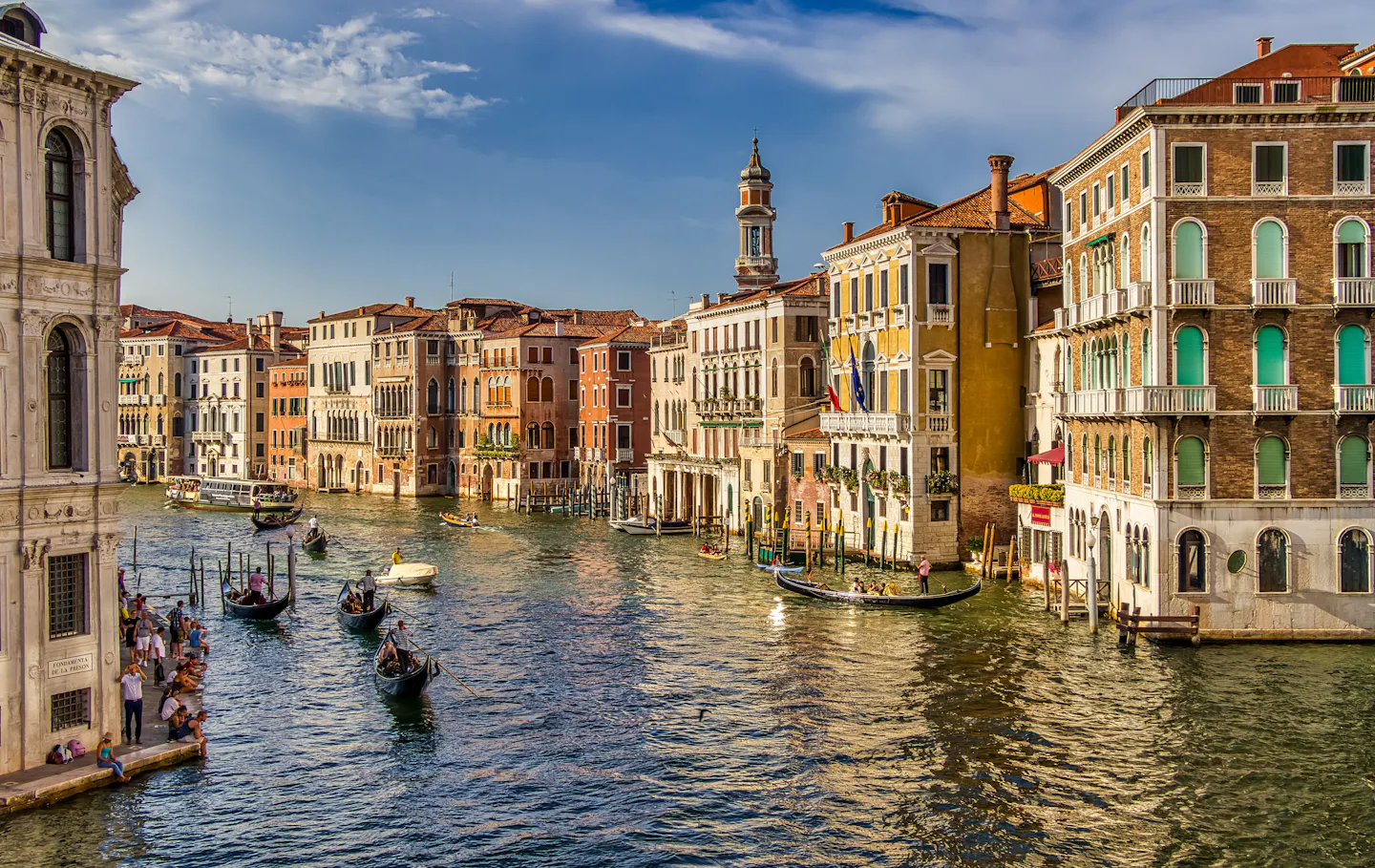
Imagine a first trip to Italy with Rome, Florence, and Venice. A clean route could look like this:
- Days 1–3: Rome. Arrive on day one, then use two full days for the historic center, Colosseum area, Vatican, neighborhoods, and food.
- Day 4: Train to Florence. Keep the afternoon light with a walk, viewpoint, or dinner near the center.
- Days 5–6: Florence. Use one day for the main museums and historic center, and one for a slower day or a nearby excursion.
- Day 7: Train to Venice. Arrive, check in, and explore without trying to complete a full sightseeing list.
- Days 8–9: Venice. Use the time for the main sights, quieter neighborhoods, islands, food, and evening walks.
- Day 10: Fly home from Venice instead of returning to Rome.
The important part is not that this exact split is perfect for everyone. It is that the route moves in one direction, each transfer has space around it, and the final flight does not force you to backtrack.
What changes when your trip crosses several countries?

A multi-country itinerary needs the same route logic, plus a few extra checks. Before you book, confirm passport validity requirements, visa or entry rules for every country on the route, travel insurance coverage, mobile data options, currencies, and any driving requirements if you are renting a car.
Use official government or border-control sources for entry rules because requirements can change. Also check whether moving between countries changes your train booking process, rental car agreement, or airport timing.
If the trip crosses time zones, remember that arrival times are shown in local time. This matters when you are connecting to a train, ferry, tour, or same-day flight.
Common multi-stop trip planning mistakes

The most common mistakes are simple, but they can make the whole trip feel rushed.
- Adding a stop because it looks close on a map without checking the real transfer time.
- Backtracking to the original arrival city just to catch the flight home.
- Treating every transfer day as a full sightseeing day.
- Choosing a very cheap flight without counting baggage, airport transfers, and waiting time.
- Changing hotels too often when a day trip would be easier.
- Booking attractions before the route and transport are confirmed.
- Saving every confirmation in a different app or email thread.
- Planning every hour with no room for weather, delays, or a change of mood.
If your itinerary feels complicated before you leave, that is useful information. Simplify the route while everything is still easy to change.
FAQ: planning a multi-stop trip
How many stops should I plan for a 10-day trip?
For most travelers, two or three main stops is a comfortable starting point for ten days. Three stops work especially well when the transport links are simple and each move takes only part of a day. If the destinations are far apart, two stops can feel much better.
Is it better to book round-trip or multi-city flights?
If your itinerary starts and ends in different cities, compare a multi-city or open-jaw ticket with a normal round trip. The cheapest airfare is not always the cheapest trip. A slightly more expensive open-jaw ticket can be better value if it removes a long return journey, extra hotel night, or airport transfer.
Should I book all transport before hotels?
Confirm the main route first. For high-demand or limited transport legs, it can make sense to secure those before finalizing every hotel. In practice, flights, trains, and accommodation often need to be checked together because prices and availability affect each other. Avoid non-refundable bookings until you know the complete route works.
How do I plan a multi-stop road trip?
Use the same process, but calculate realistic driving hours, fuel or charging stops, parking, tolls, and one-way rental fees. Avoid changing hotels every night unless the drive itself is the main point of the trip. Two- or three-night bases can make a road trip much more relaxing.
How do I keep a multi-city itinerary from feeling rushed?
Cut one stop. That is often the most effective fix. Then reduce backtracking, keep transfer days light, group nearby activities together, and leave at least some unplanned time in every destination.
Plan the whole trip with EasyMiles
A multi-stop trip becomes much easier when the route, daily plans, restaurants, bookings, and practical details are not scattered across ten different tabs.
EasyMiles is built to turn a destination and your dates into a complete day-by-day itinerary around the way you actually travel. You can plan around your interests, preferred pace, food preferences, and travel style, while the itinerary takes practical details such as opening hours, weather, and travel time between places into account.
For a multi-stop journey, use EasyMiles to build the detailed plan for each destination once your route and travel dates are fixed. It can help you decide what to see, where to eat, what to order, which places fit naturally together, and how to adjust the day when plans change.
That means less time moving between map pins and booking tabs, and more time actually enjoying each stop.
Start with the route. Keep the number of stops realistic. Then let EasyMiles turn each part of the journey into a trip you can actually follow.