
The best Harry Potter-inspired trip around Europe starts in London, continues through Oxford and some of England's most famous Hogwarts filming locations, then heads north to Edinburgh and the Scottish Highlands. If you have extra time, add Porto as a final literary-themed stop.
For the strongest first trip, plan around 10 to 14 days and focus on these places:
- London for King's Cross, famous city filming spots, and the Warner Bros. Studio Tour London.
- Oxford for real university interiors used as the Hogwarts library, infirmary, staircases, and corridors.
- Lacock and Gloucester for medieval cloisters and village streets that appeared in the films.
- Durham and Alnwick for more Hogwarts locations, including the place where Harry had his first flying lesson.
- Edinburgh for the city's connection to J.K. Rowling's writing years and its naturally magical atmosphere.
- The Scottish Highlands for Glenfinnan Viaduct, Loch Shiel, Glencoe, and the landscapes around the Hogwarts Express.
- Porto as an optional extension for bookshop culture and a city closely associated with Rowling's years in Portugal.
The important thing is to know what you are actually visiting. Some places are genuine Harry Potter filming locations. Others are connected to the books, the author, or fan culture rather than the films. This guide separates them clearly so you can build a trip that feels magical without turning internet myths into facts.
What is the best Harry Potter route around Europe?

If this is your first Harry Potter trip, the easiest route is:
London -> Oxford -> Lacock or Gloucester -> Durham or Alnwick -> Edinburgh -> Fort William and Glenfinnan -> optional Porto.
You do not need to visit every location. A 7-day trip can work with London, Oxford, Edinburgh, and Glenfinnan. With 10 to 12 days, you can add Lacock, Durham, or Alnwick. With two weeks, you can slow the trip down and add Porto at the end.
Most authentic Harry Potter filming locations are in the United Kingdom, so do not force the trip across five countries just to make it feel more "European." England and Scotland are where you will find the strongest combination of real sets, castles, cloisters, railways, and landscapes seen on screen.
Which Harry Potter places are real filming locations?
Before planning the route, it helps to separate four types of stops.
- Actual Harry Potter filming locations include King's Cross in London, Oxford's Bodleian Libraries and Christ Church, Lacock Abbey, Gloucester Cathedral, Durham Cathedral, Alnwick Castle, Glenfinnan Viaduct, Loch Shiel, and several Highland landscapes.
- The Warner Bros. Studio Tour London is not simply a themed attraction. It contains authentic sets, props, costumes, and production material from the films, including the Great Hall, Diagon Alley, the Forbidden Forest, Platform 9¾, and the Hogwarts Express.
- Edinburgh is mainly a literary and writing-history stop. The films were not shot around the Old Town in the same way they were at Oxford or Alnwick.
- Porto is best treated as an optional fan and literary stop. J.K. Rowling lived in Porto in the early 1990s, and Livraria Lello is frequently associated with Harry Potter tourism, but it is not a Harry Potter filming location and claims about direct visual inspiration should be treated carefully.
London: start with the wizarding world in the real city

London is the easiest place to begin because it combines recognisable film locations with the biggest behind-the-scenes Harry Potter experience in Europe.
Give London at least two full days. Three is better if you want the Studio Tour without rushing the rest of the city.
King's Cross Station and Platform 9¾
King's Cross is one of the most obvious Harry Potter stops in London. In the story, students pass through the barrier between platforms 9 and 10 to board the Hogwarts Express.
The real station has a Platform 9¾ photo point with a luggage trolley disappearing into the wall. It is popular, so arriving early in the day can make the experience easier.
Do not build your entire visit around finding the exact movie angle. The station was adapted for filming, and nearby St Pancras International was also used for exterior shots. The fun is in seeing a very ordinary London transport hub turn into one of the most famous travel moments in the series.
Leadenhall Market
Leadenhall Market is worth adding because parts of the covered Victorian market were used for scenes around the entrance to the Leaky Cauldron in Harry Potter and the Philosopher's Stone.
It is an easy stop to combine with the City of London. You can walk through the market, then continue toward the Thames, St Paul's Cathedral, and the Millennium Bridge.
Millennium Bridge and the City of London
The Millennium Bridge is strongly associated with the opening destruction sequence in Harry Potter and the Half-Blood Prince. Even if you remember the bridge collapsing under Death Eater attacks, the real version is far more peaceful.
Walk across it between St Paul's and Tate Modern. This part of London works well as a half-day route because several film-connected locations sit close to major sights you would probably want to visit anyway.
Warner Bros. Studio Tour London: The Making of Harry Potter
If you only pay for one major Harry Potter experience on the trip, make it the Warner Bros. Studio Tour London.
This is where the trip moves from "I recognise that street" to seeing the actual filmmaking world. The tour includes authentic sets, props, costumes, creature effects, production design, and the model of Hogwarts used during filming.
You can walk through the Great Hall, Diagon Alley, the Forbidden Forest, Gringotts Wizarding Bank, Platform 9¾, and other major sets. The experience changes slightly through seasonal features, so check the official schedule before your trip.
Tickets must be booked in advance. Do not arrive expecting to buy a ticket at the door. Popular dates can sell out, especially during school holidays, autumn events, and the Christmas season.
Give the visit most of a day once you include transport from central London.
Oxford: the closest thing to walking through Hogwarts

Oxford is one of the best day trips from London for Harry Potter fans because several real university spaces were used in the films.
You can visit Oxford independently by train, but a guided walking tour can be useful if you want to connect individual buildings to exact scenes.
Christ Church
Christ Church is one of Oxford's most popular Harry Potter stops.
The Hall Staircase appeared in the films and is immediately recognisable to many fans. The Great Hall itself was not used as the Hogwarts Great Hall set, but its historic college-hall design is often discussed in connection with the visual atmosphere people associate with Hogwarts.
That distinction matters. Come for the architecture and the real filming connections, not because every room is an exact movie set.
Bodleian Libraries
The Bodleian gives you two of Oxford's strongest filming locations.
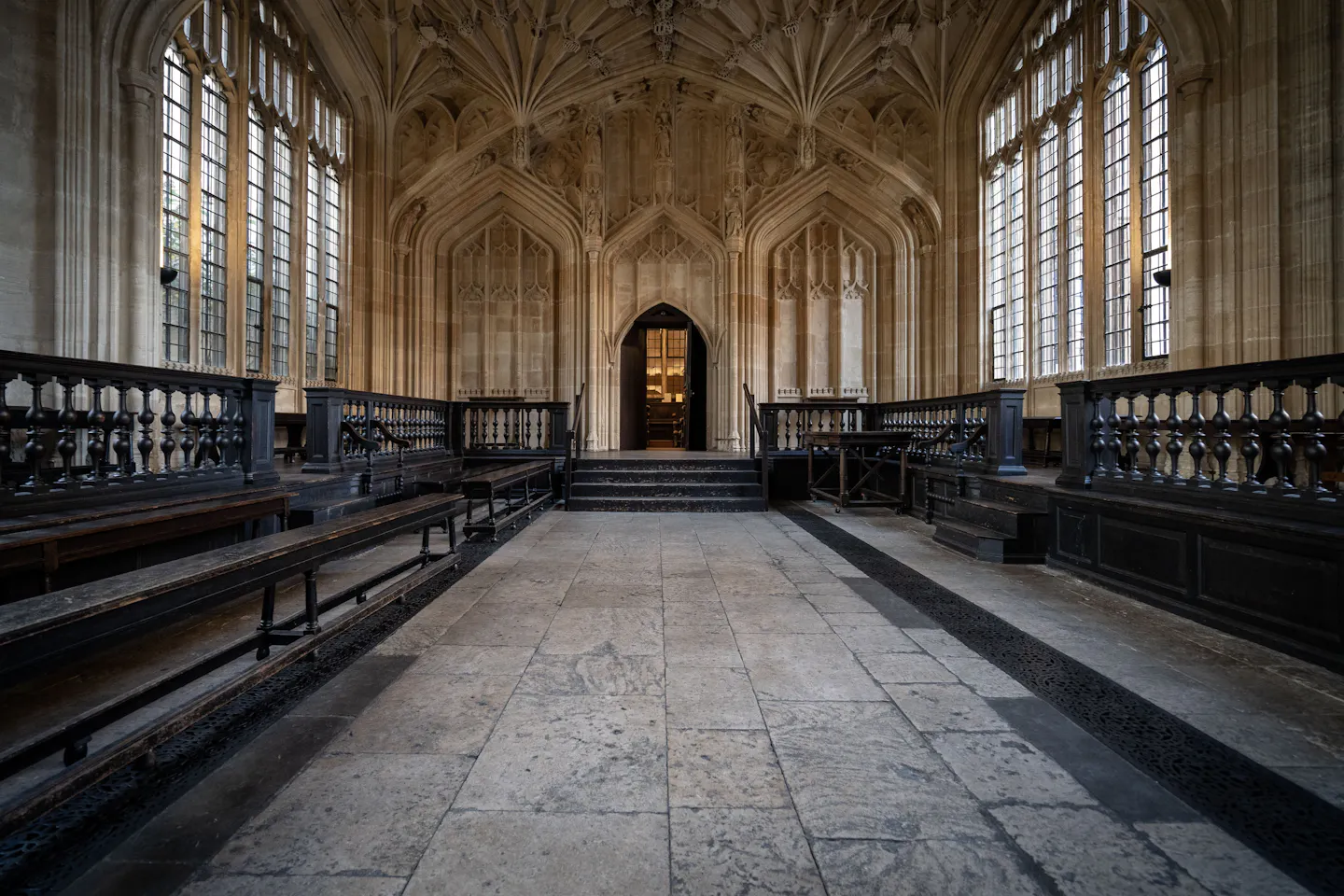
Duke Humfrey's Library was used as the Hogwarts library. The Divinity School, with its elaborate vaulted ceiling, appeared as the Hogwarts infirmary.
These rooms still function as part of a historic university and library system, so access depends on the tour or ticket you book. Check what is included before your visit rather than assuming every room is open for casual entry.
New College
New College is another atmospheric stop if you want more Hogwarts-style cloisters and courtyards.
Its cloisters and courtyard appeared in Harry Potter and the Goblet of Fire, including scenes around the moment when students turn against Harry after his name comes out of the Goblet of Fire.
Oxford is compact enough that you can combine several locations in one day and still leave time to walk along the old college streets.
Lacock and Gloucester: medieval Hogwarts without the studio sets
If Oxford feels academic, Lacock and Gloucester feel medieval.
These locations are especially good for travelers who want quiet stone corridors, old villages, and the feeling that Hogwarts might exist just around the next corner.
Lacock Abbey
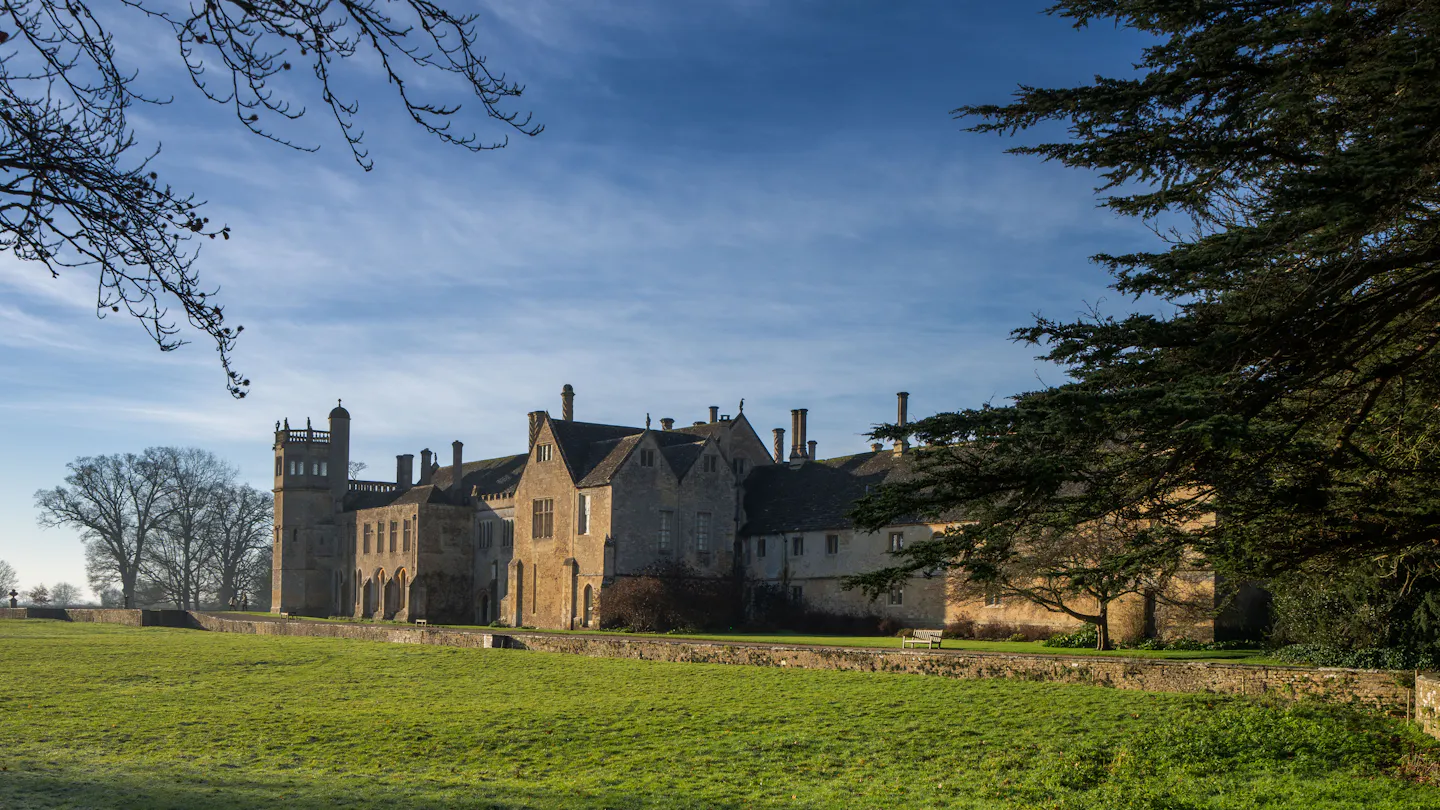
Lacock Abbey in Wiltshire was used for Hogwarts interiors in the first two Harry Potter films.
Its medieval cloisters appear as Hogwarts corridors, and several rooms became classrooms and other school interiors. The National Trust still actively highlights the site's Harry Potter filming history.
The abbey is also worth visiting even if you are not trying to recreate scenes. It is a real historic place with centuries of architecture, which is part of why it worked so well on screen.
Lacock village
The village beside the abbey is another useful stop.
Its preserved streets appeared in the films, including scenes connected with Godric's Hollow and the village of Budleigh Babberton. The lack of modern visual clutter gives Lacock a naturally cinematic feel.
This is one of those places where it is better to walk slowly than to rush from one "photo spot" to another.
Gloucester Cathedral
Gloucester Cathedral is one of the most impressive Hogwarts corridor locations you can visit.
Its cloisters were transformed into Hogwarts for the films, and the cathedral now offers tours that explain both the architecture and its screen history.
If your route goes from London or Bath toward Wales or the Midlands, Gloucester can be easier to include than some of the more remote northern locations.
Northern England: Durham and Alnwick

You can skip northern England if time is tight, but serious film-location fans should consider at least one stop here.
Durham Cathedral
Durham Cathedral appeared in Harry Potter and the Philosopher's Stone and Harry Potter and the Chamber of Secrets.
The cloisters were used for Hogwarts corridor scenes, while the Chapter House became Professor McGonagall's classroom. One of the most memorable outdoor cloister scenes is connected with Ron's spell going very wrong.
Durham is especially convenient if you are traveling north by train toward Edinburgh. Instead of treating it as a separate expedition, you can make it part of the journey.
Alnwick Castle
Alnwick Castle is one of the most fun filming locations because you can stand where Harry's first broomstick lesson was filmed.
The Outer Bailey was used for the flying lesson in Harry Potter and the Philosopher's Stone, while other castle areas appeared in the first two films.
The castle also runs broomstick training sessions on many visitor days, weather permitting. If that experience matters to you, check the day's schedule and ticket rules before arriving.
Alnwick is more awkward to reach than Durham without a car, but it is worth the detour if you want one of the most recognisable outdoor Hogwarts locations.
Edinburgh: follow the writing history, not filming myths

Edinburgh belongs on a Harry Potter-inspired trip, but for a different reason.
The city is closely connected with J.K. Rowling's writing life, and its Old Town naturally has the kind of steep lanes, towers, graveyards, bookshops, and dark stone architecture that fans love. However, many claims about a specific street, grave, or building being the confirmed inspiration for a character or place are repeated more confidently online than the evidence supports.
Enjoy Edinburgh for its real literary connection and atmosphere without needing every corner to have a direct one-to-one Harry Potter origin story.
The Elephant House
The Elephant House became famous because Rowling wrote there during her Edinburgh years.
It is one of the city's most recognisable Harry Potter-related stops. Even if you only see it from outside, it helps connect the fictional world to the very ordinary reality of a writer working in Edinburgh cafes.
Victoria Street
Victoria Street is often described as "the real Diagon Alley" because of its curve, colourful shopfronts, and stacked Old Town architecture.
It is a great place to visit, but treat the Diagon Alley connection as fan culture rather than a confirmed filming fact. The street was not used as Diagon Alley in the films.
Greyfriars Kirkyard
Greyfriars Kirkyard is another stop commonly included on Harry Potter walking tours.
Fans sometimes connect names on old gravestones with names from the books. It can be a fun detail to notice, but it is better to visit the kirkyard as a historic Edinburgh site rather than presenting every similarity as proven inspiration.
Edinburgh Old Town after dark
One of the best Harry Potter experiences in Edinburgh does not require a ticket.
Walk through the Old Town in the evening when the closes, stone buildings, staircases, and church towers become more atmospheric. Add a bookshop, a pub, or a cosy cafe and the city starts to feel more "wizarding world" than many purpose-built themed attractions.
The Scottish Highlands: the most cinematic part of the trip
If London gives you sets and Oxford gives you Hogwarts interiors, the Scottish Highlands give you scale.
This is where the journey starts to feel like the train ride to Hogwarts.
Glenfinnan Viaduct
Glenfinnan Viaduct is the essential Highlands stop.
The curved railway viaduct appears in several Harry Potter films as part of the Hogwarts Express journey. You can see it from nearby viewpoints even if you do not ride a train.
Time your visit carefully if you want to photograph a train crossing the viaduct. Train schedules can change, and the famous steam service is seasonal.
The Jacobite steam train
The Jacobite operates between Fort William and Mallaig and is commonly nicknamed the "real Hogwarts Express" by fans because it crosses Glenfinnan Viaduct.
It is not the Hogwarts Express train from the story, but the journey uses the same dramatic railway landscape seen in the films.
The service is seasonal and can be affected by operational changes, so check the current timetable directly before building your entire Highlands itinerary around it. If tickets are unavailable, regular rail services still travel along the West Highland Line and the viaduct can also be visited from the ground.
Loch Shiel
Loch Shiel sits beside Glenfinnan and appears in the broader visual world used for Hogwarts' lake.
Even travelers who are not deeply interested in exact scene matching usually remember this part of the trip because the landscape is so dramatic.
Glencoe and Glen Nevis
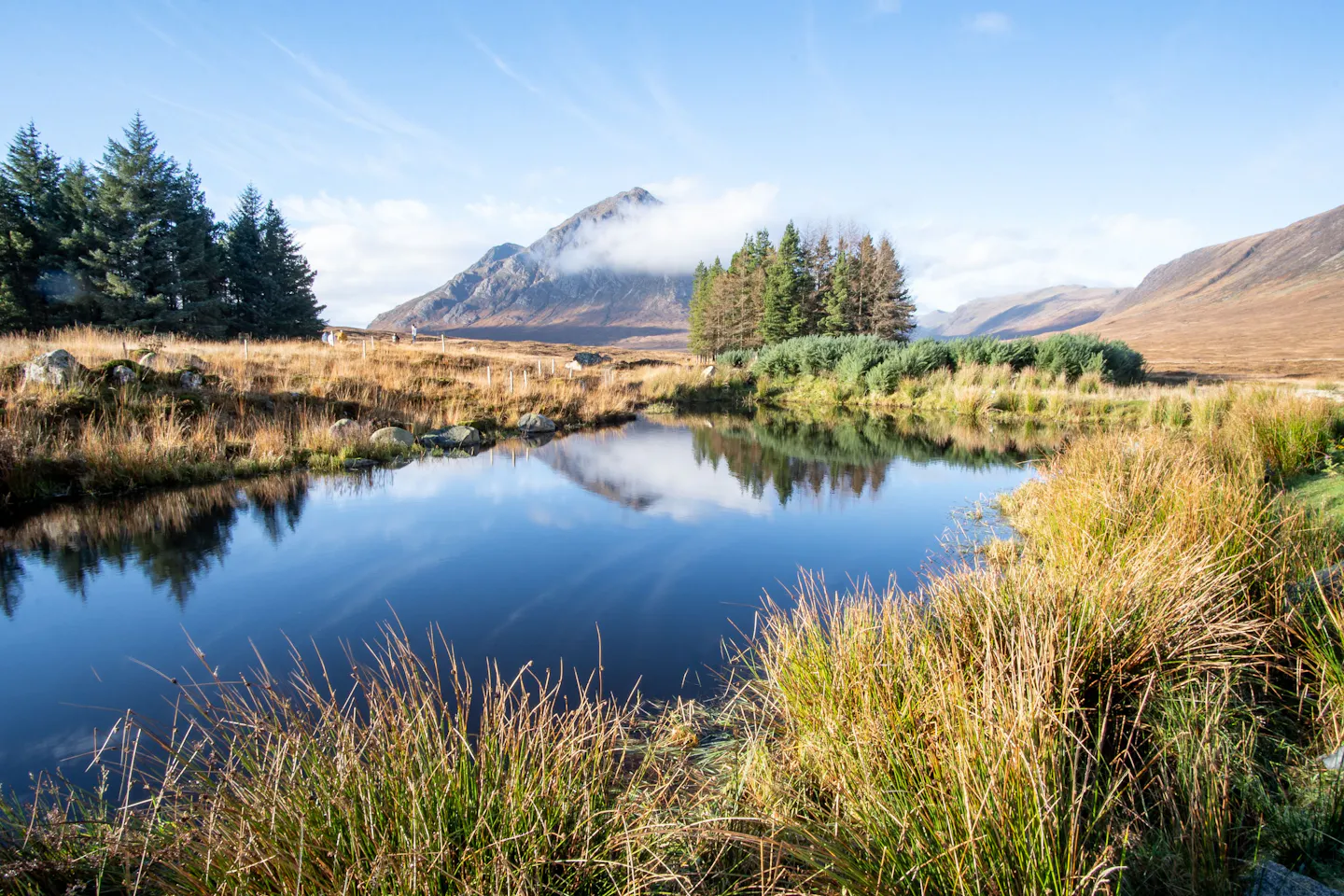
Glencoe and the Fort William area were used as backdrops for several Harry Potter scenes and are worth including for the scenery alone.
This is also where a car becomes useful. Trains connect the major towns, but a road trip gives you more flexibility to stop at viewpoints and explore glens without rushing.
Should you add Porto to a Harry Potter trip?

Porto is a fun optional extension, especially if you want the trip to continue beyond the UK.
J.K. Rowling lived in Porto before the Harry Potter books became a global phenomenon, which is why the city has become part of Harry Potter travel culture.
Livraria Lello
Livraria Lello is the main fan stop.
The bookshop is famous for its neo-Gothic interior, carved wood, stained glass, and dramatic central staircase. It is one of Porto's most visited attractions and often appears in Harry Potter travel guides.
Still, this is not a filming location. It is also safer to describe the Harry Potter connection as part of fan culture and Rowling's time in Portugal rather than as a proven blueprint for Hogwarts.
Visit because it is a beautiful historic bookshop and because Porto adds a lovely literary ending to the trip.
What else to do in Porto
Do not spend two days chasing weak Harry Potter theories.
Walk through the historic centre, visit the Clerigos area, cross the Dom Luis I Bridge, eat well, and enjoy Porto as a destination in its own right. A themed trip is much better when the cities are still interesting after the fandom connection ends.
A 12-day Harry Potter-inspired Europe itinerary

This route gives you a strong mix of real filming locations, studio sets, literary history, and scenic travel without making every day a transfer day.
Day 1: Arrive in London
Settle in, walk around central London, and visit King's Cross if your arrival time allows.
Day 2: Harry Potter London
See King's Cross and Platform 9¾, Leadenhall Market, the City of London, Millennium Bridge, and a few central filming locations. Keep the day mostly walkable.
Day 3: Warner Bros. Studio Tour London
Give the Studio Tour most of the day. Book the ticket before flights and hotels if this experience is non-negotiable for you.
Day 4: Oxford
Take a day trip from London. Prioritise Christ Church, the Bodleian Libraries, and New College. Return to London or stay overnight in Oxford.
Day 5: Lacock and Gloucester
Renting a car makes this day much easier. Visit Lacock Abbey and village, then continue toward Gloucester if timing works. If you dislike rushed days, choose one and spend more time there.
Day 6: Travel north
Take the train toward Durham or Newcastle. Visit Durham Cathedral if you choose the train-friendly route.
Day 7: Alnwick and Edinburgh
Visit Alnwick Castle if it is a priority, then continue to Edinburgh. If you prefer an easier journey, skip Alnwick and spend more time in Durham before continuing north.
Day 8: Edinburgh
Explore the Old Town, Victoria Street, Greyfriars Kirkyard, the Elephant House area, and independent bookshops. Think of this as a literary-atmosphere day rather than a filming-location checklist.
Day 9: Edinburgh to Fort William
Travel into the Highlands. If you have a car, stop in Glencoe on the way and take your time with the scenery.
Day 10: Glenfinnan and the West Highland Line
Visit Glenfinnan Viaduct and Loch Shiel. Ride the Jacobite if it is operating and you have tickets, or use regular transport and visit the viewpoints instead.
Day 11: Highlands or return to Edinburgh
Keep one flexible day for weather, a longer road trip, Glen Nevis, or a slower return to Edinburgh or Glasgow.
Day 12: Optional Porto extension
Fly to Porto if you want a final European city break. Visit Livraria Lello and enjoy the city without forcing a Harry Potter connection onto every stop.
If you have 14 days, add one extra London day and one extra Highlands or Porto day.
How to plan the transport

This trip is easiest when you mix trains with a short car rental.
Use trains for London to Oxford, London to Durham or Newcastle, and northern England to Edinburgh. Britain's rail network makes these city-to-city sections relatively straightforward.
Use a car for Lacock and rural Wiltshire if you want maximum flexibility. A car is also useful in the Scottish Highlands, especially for Glencoe, Glen Nevis, and viewpoints away from railway stations.
For Glenfinnan, decide early whether your priority is riding the Jacobite or seeing the viaduct from a viewpoint. They are different experiences, and trying to do both on a tight schedule can make the day unnecessarily stressful.
For Porto, flying from Edinburgh or another major UK airport is usually the simplest option. Treat it as an extension rather than part of the overland route.
When is the best time for a Harry Potter trip around Europe?
Late spring and early autumn are usually the easiest seasons for this route.
May and June give you long daylight hours, green landscapes, and a better chance of fitting outdoor locations into the day. September can be excellent because the summer crowds begin to ease while many attractions are still operating normally.
October is atmospheric, especially in Edinburgh and at the Studio Tour, but daylight gets shorter in Scotland and Highland weather can be unpredictable.
Late November and December are ideal if your priority is Christmas atmosphere and the Studio Tour's seasonal Hogwarts experience. The trade-off is short days, cold weather, and less flexibility for rural filming locations.
Summer works well for families because attractions and seasonal experiences are in full swing, but it is also the period when popular tickets, trains, accommodation, and the Jacobite can be hardest to secure.
How far in advance should you book?

Book the Warner Bros. Studio Tour first.
It is the one experience on this route that can shape your entire itinerary because tickets must be purchased in advance and popular dates sell out.
Next, book any limited-access Oxford tours, your preferred Highland steam-train date, and accommodation in Fort William during busy months.
City hotels and standard trains can usually be planned around those fixed experiences.
How many days do you need?
Seven days is the minimum for a satisfying trip. Keep it simple: London, the Studio Tour, Oxford, Edinburgh, and Glenfinnan.
Ten days is better if you want one or two extra filming locations such as Lacock, Durham, or Alnwick.
Twelve to fourteen days is the sweet spot for a complete route because you can slow down, spend proper time in the Highlands, and add Porto without turning the trip into a race.
Where should you stay?
In London, stay somewhere with easy Tube or rail access rather than choosing a hotel only because it has a vaguely magical interior.
In Oxford, an overnight stay is optional. Most travelers can visit as a day trip from London.
For Lacock and Gloucester, Bath, Bristol, or a countryside stay can work depending on the rest of your route.
For Durham and Alnwick, choose Durham, Newcastle, or Alnwick itself depending on whether you are traveling by train or car.
In Edinburgh, stay in or near the Old Town if atmosphere matters most, or close to Waverley Station if you want an easy onward journey.
For the Highlands, Fort William is the practical base for Glenfinnan and the West Highland Line.
In Porto, stay in the historic centre if you want to walk to Livraria Lello, Clerigos, the riverfront, and central restaurants.
What should you skip?
Skip places that are only "Harry Potter-inspired" because a tour company says so, unless you genuinely like the place anyway.
Skip long detours for a single photograph when the location has no real filming or literary connection.
Skip trying to visit every Hogwarts filming location in Britain. Many scenes were created by combining multiple buildings, studio sets, visual effects, and Scottish landscapes. There is no single real-life Hogwarts castle.
And skip treating Edinburgh or Porto as if every old street was secretly the blueprint for the books. The trip becomes more interesting when you distinguish real production history from fan mythology.
FAQ: Harry Potter travel in Europe
Where are the best Harry Potter locations in Europe?
The strongest Harry Potter locations are in England and Scotland. London, Oxford, Lacock, Gloucester, Durham, Alnwick, Edinburgh, Glenfinnan, and the Scottish Highlands give you the best mix of filming locations, studio sets, writing history, and landscapes. Porto is a good optional literary-themed extension.
Where was Hogwarts filmed?
Hogwarts was created from many different places rather than one castle. Filming locations include Oxford university buildings, Lacock Abbey, Gloucester Cathedral, Durham Cathedral, Alnwick Castle, and Scottish landscapes. Interior sets were also built at Warner Bros. studios.
Can you visit the real Hogwarts?
There is no single real Hogwarts. The closest experience is combining the Warner Bros. Studio Tour London with places such as Oxford, Lacock, Durham, Alnwick, and the Scottish Highlands.
Can you ride the Hogwarts Express in Scotland?
You can ride the Jacobite steam train between Fort William and Mallaig when the seasonal service is operating. It crosses Glenfinnan Viaduct, which appears in the Harry Potter films. The service is often described by fans as the real-life Hogwarts Express, but it is a separate tourist rail journey.
Is Edinburgh a Harry Potter filming location?
Edinburgh is mainly connected with J.K. Rowling's writing years and Harry Potter fan culture. It is not one of the main filming hubs for the original film series. Visit it for literary history, atmosphere, and the wider Scottish connection.
Is Livraria Lello in Porto a Harry Potter filming location?
No. Livraria Lello was not used as a Harry Potter filming location. It is popular with fans because of its dramatic interior, bookish atmosphere, and Rowling's period living in Porto.
What is the best Harry Potter trip for first-time visitors?
A first-time route should include London, the Warner Bros. Studio Tour, Oxford, Edinburgh, and Glenfinnan. Add Lacock, Durham, or Alnwick if you have more than a week.
Can you do this trip without a car?
Mostly, yes. London, Oxford, Durham, Edinburgh, and Fort William are accessible by public transport. A car makes Lacock, Alnwick, Glencoe, and more remote Highland stops easier.
Plan your whole Harry Potter-inspired trip with EasyMiles
A Harry Potter trip sounds simple until you start trying to connect a London studio ticket, an Oxford day trip, a castle in Northumberland, Edinburgh, a seasonal steam train, Highland weather, and maybe a flight to Porto.
That is exactly the kind of multi-stop trip where planning can become more work than the holiday itself.
EasyMiles can help you turn all of those ideas into one realistic itinerary. Add your cities, dates, interests, and travel style, and EasyMiles can organise the route around opening hours, travel time, weather, restaurants, and the places you actually want to see.
Instead of keeping twenty browser tabs open, you can build the trip around what matters most: the Studio Tour, the Hogwarts filming locations you care about, enough time in Edinburgh, the right day for Glenfinnan, and good places to eat between everything else.
And if plans change while you are traveling, EasyMiles can help adjust the itinerary instead of making you rebuild the whole trip from scratch.
That leaves you with the fun part: deciding whether your trip begins at Platform 9¾ or with a Butterbeer.