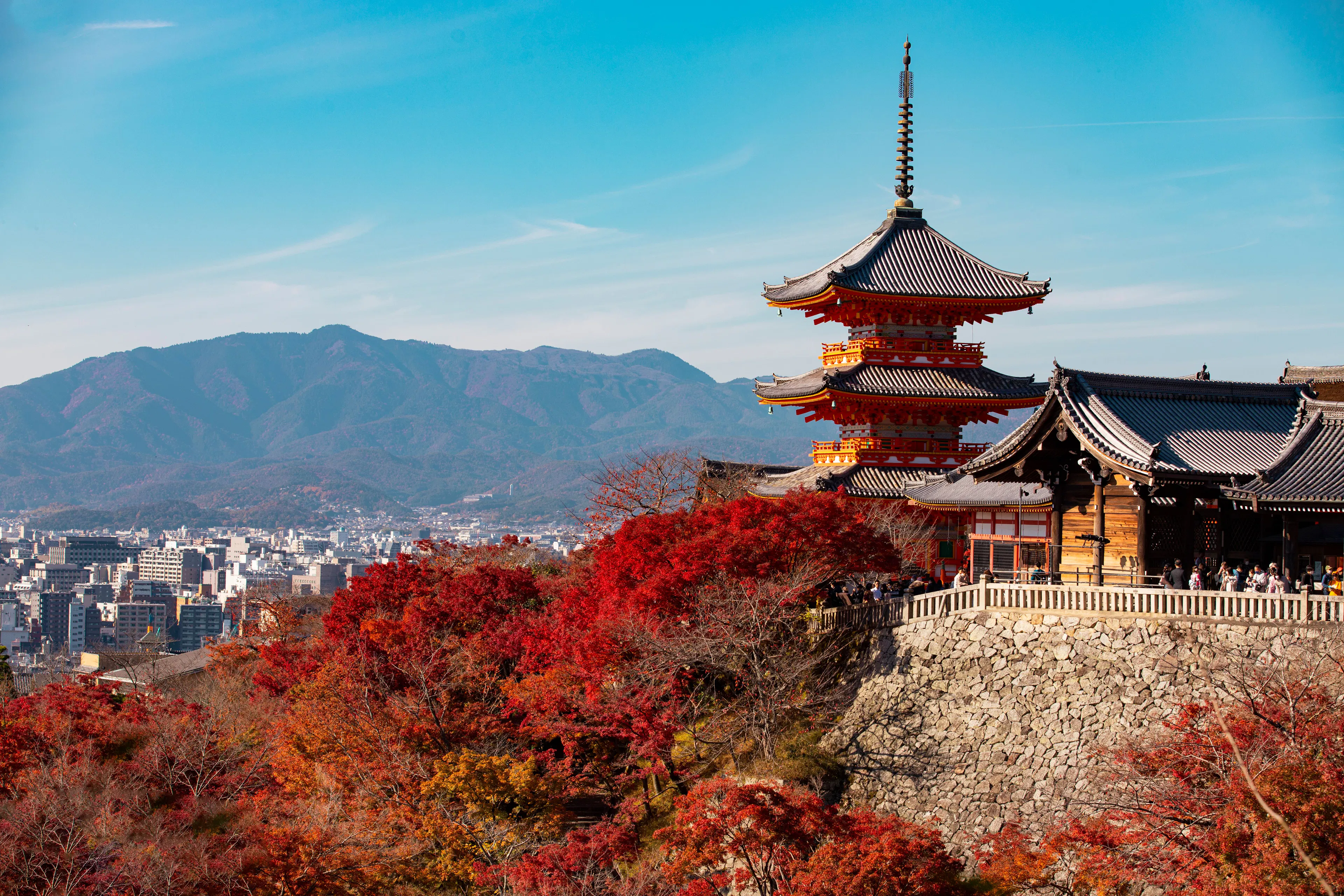
Planning your first trip to Japan is easiest when you keep the route simple. For most first-time visitors, 10 to 14 days is ideal: spend a few days in Tokyo, continue to Kyoto, finish in Osaka, and add one or two day trips if you have time. Book flights and hotels first, check your entry requirements, use an IC card for local transport, buy Shinkansen tickets for longer journeys, reserve only the attractions and restaurants that truly sell out, and leave some space to wander.
A good first Japan trip looks something like this:
- Tokyo: 4 to 5 days for neighborhoods, food, shopping, museums, nightlife, and a possible day trip.
- Kyoto: 3 to 4 days for temples, shrines, traditional streets, gardens, and slower mornings.
- Osaka: 2 to 3 days for food, nightlife, markets, and easy access to Nara.
- Extra time: add Hakone or the Fuji Five Lakes, Hiroshima and Miyajima, or another night in Tokyo or Kyoto.
The biggest mistake is trying to see too much. Japan looks compact on a map, but every city can fill several days. A slower route usually gives you a much better first trip than changing hotels every night.
How many days do you need for your first trip to Japan?

If this is your first time in Japan, aim for at least 10 days if you can. Two weeks is even better. You can absolutely visit in one week, but you will need to make stronger choices.
If you have 7 days
Choose two main bases instead of trying to cross the whole country. Tokyo and Kyoto work well if this is your once-in-a-lifetime first visit. Another option is Tokyo only, with day trips to places such as Kamakura, Nikko, Hakone, or the Fuji area.
If you have 10 days
This is enough for the classic Tokyo–Kyoto–Osaka route without making every day feel like a transfer day. A simple split is four nights in Tokyo, three nights in Kyoto, and two nights in Osaka, with one day used for a day trip or flexible travel.
If you have 14 days
Two weeks gives you room to breathe. You can add Hakone or the Fuji Five Lakes, spend an extra day in Kyoto, visit Nara, or continue to Hiroshima and Miyajima. You can also keep the route exactly the same and simply slow it down, which is often the better choice.
What is the best time to visit Japan for the first time?
Spring and autumn are the easiest seasons for a first Japan trip because the weather is generally comfortable for long sightseeing days. They are also two of the most popular times to visit, so hotels and famous attractions can be busy.
Spring: cherry blossoms and mild weather
Spring is the season most people picture when they imagine Japan. Cherry blossoms move through the country from warmer southern areas toward the north, so the exact bloom period changes by city and by year. Tokyo and Kyoto are usually busiest around the main blossom period.
Spring is beautiful, but it is not automatically the best choice if you hate crowds or expensive hotels. If you want a calmer trip, consider visiting after the main cherry blossom rush or later in May, while avoiding Japan’s Golden Week holiday period.
Autumn: comfortable weather and fall colors
Autumn is one of the best all-round choices for first-time visitors. The worst summer heat has passed, walking is more comfortable, and the fall colors gradually move from northern Japan toward the south. In much of central Japan, the strongest autumn colors usually arrive later than many first-time visitors expect.
October and November are especially good for city trips, food, temples, gardens, and long walking days.
Winter: fewer crowds, clear air, and onsen season
Winter is a great option if you care less about blossoms and more about lower crowds, seasonal food, hot springs, and crisp weather. Tokyo, Kyoto, and Osaka can be cold, but they are very manageable with the right clothes. If you want snow, add Hokkaido, Nagano, Tohoku, or another mountain destination.
Summer: festivals, fireworks, and serious heat
Summer has a lot going for it: festivals, fireworks, longer days, and mountain hiking. But Tokyo, Kyoto, and Osaka can be very hot and humid. If this is your first trip and you struggle in heat, spring, autumn, or winter will probably feel easier.
Also keep Japan’s busiest domestic travel periods in mind. Golden Week, the Obon holiday period, and New Year can mean fuller trains, higher hotel prices, and more competition for reservations.
Where should you go on your first trip to Japan?
For most travelers, the easiest first route is Tokyo, Kyoto, and Osaka. It gives you three very different sides of Japan without forcing you into complicated transport.
Tokyo: give it more time than you think
Tokyo is not one city experience. Shibuya feels completely different from Asakusa. Shinjuku at night is different from quiet morning streets around Meiji Shrine. Ginza, Ueno, Harajuku, Daikanyama, Kichijoji, and Shimokitazawa can all feel like separate trips.
For a first visit, mix famous places with neighborhood time. See Shibuya Crossing, visit Senso-ji in Asakusa, walk around Meiji Shrine and Harajuku, explore Shinjuku after dark, and leave at least one half-day with no major booking.
Tokyo is also a good base for day trips. Kamakura works well for temples and the coast, Nikko for shrines and nature, and Hakone or the Fuji Five Lakes for mountain views and a slower overnight break.
Kyoto: plan by area, not by attraction
Kyoto is where first-time itineraries often become exhausting. The famous sights are spread across different parts of the city, and moving back and forth wastes time.
Plan Kyoto by area instead. Spend one morning around Fushimi Inari, another in eastern Kyoto around Kiyomizu-dera and Gion, and another around Arashiyama or the northwest temples. Start early for the most famous places, then use afternoons for quieter streets, gardens, cafes, or smaller temples.
Kyoto rewards slower travel. Do not treat it like a checklist of thirty temples.
Osaka: use it for food, energy, and easy day trips
Osaka feels more casual and lively than Kyoto. It is a great place to finish a first trip because the city is easy to enjoy without a strict sightseeing plan.
Spend time around Namba and Dotonbori, explore Kuromon Market, try okonomiyaki and takoyaki, and go out in the evening. Osaka is also a very convenient base for Nara, Kobe, Himeji, or Universal Studios Japan.
Should you add Mount Fuji, Nara, or Hiroshima?
Yes, but only if you have enough time.
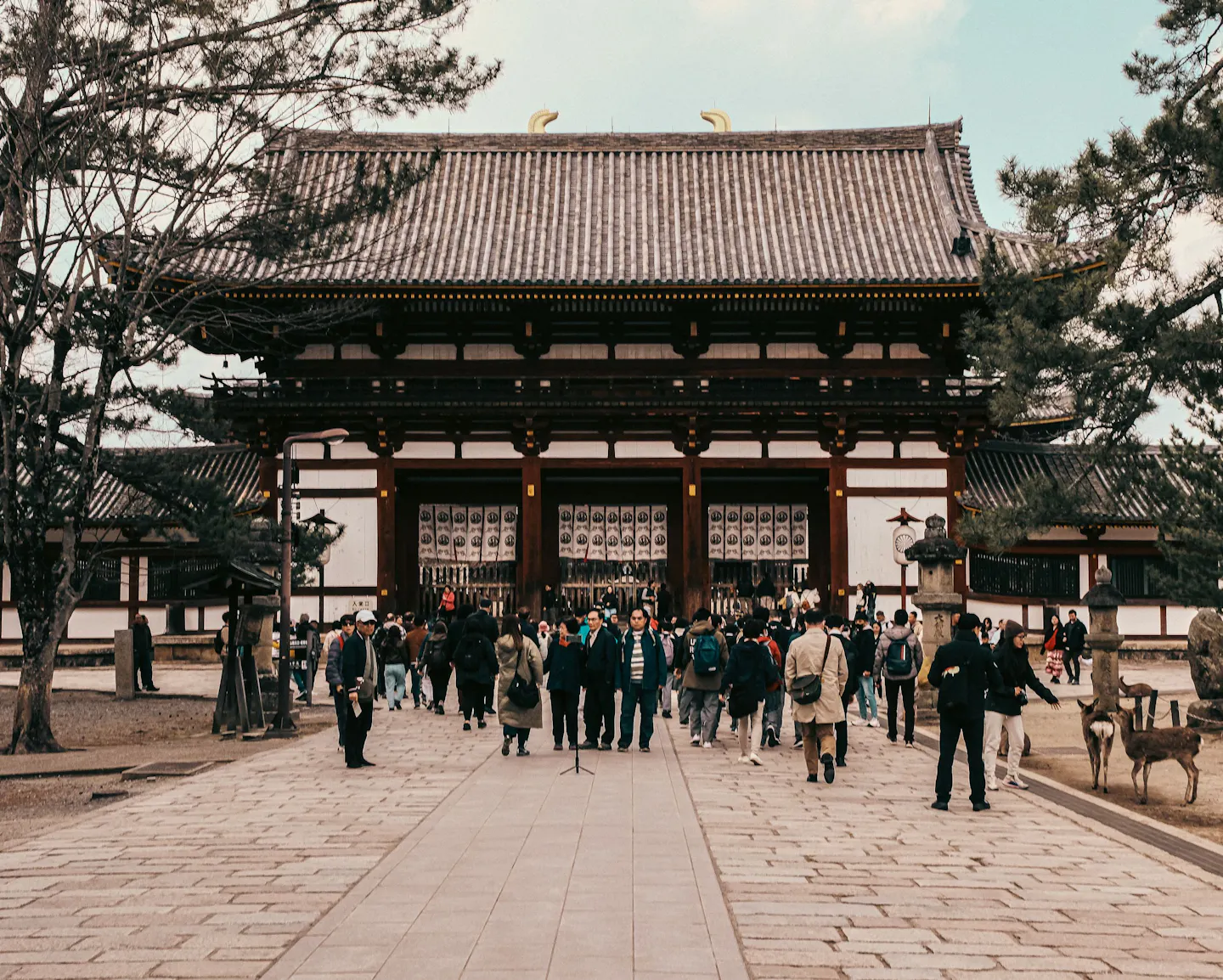
Nara is the easiest addition. You can visit from Kyoto or Osaka and return the same day. It is ideal if you want temples, historic streets, and Nara Park without another hotel change.
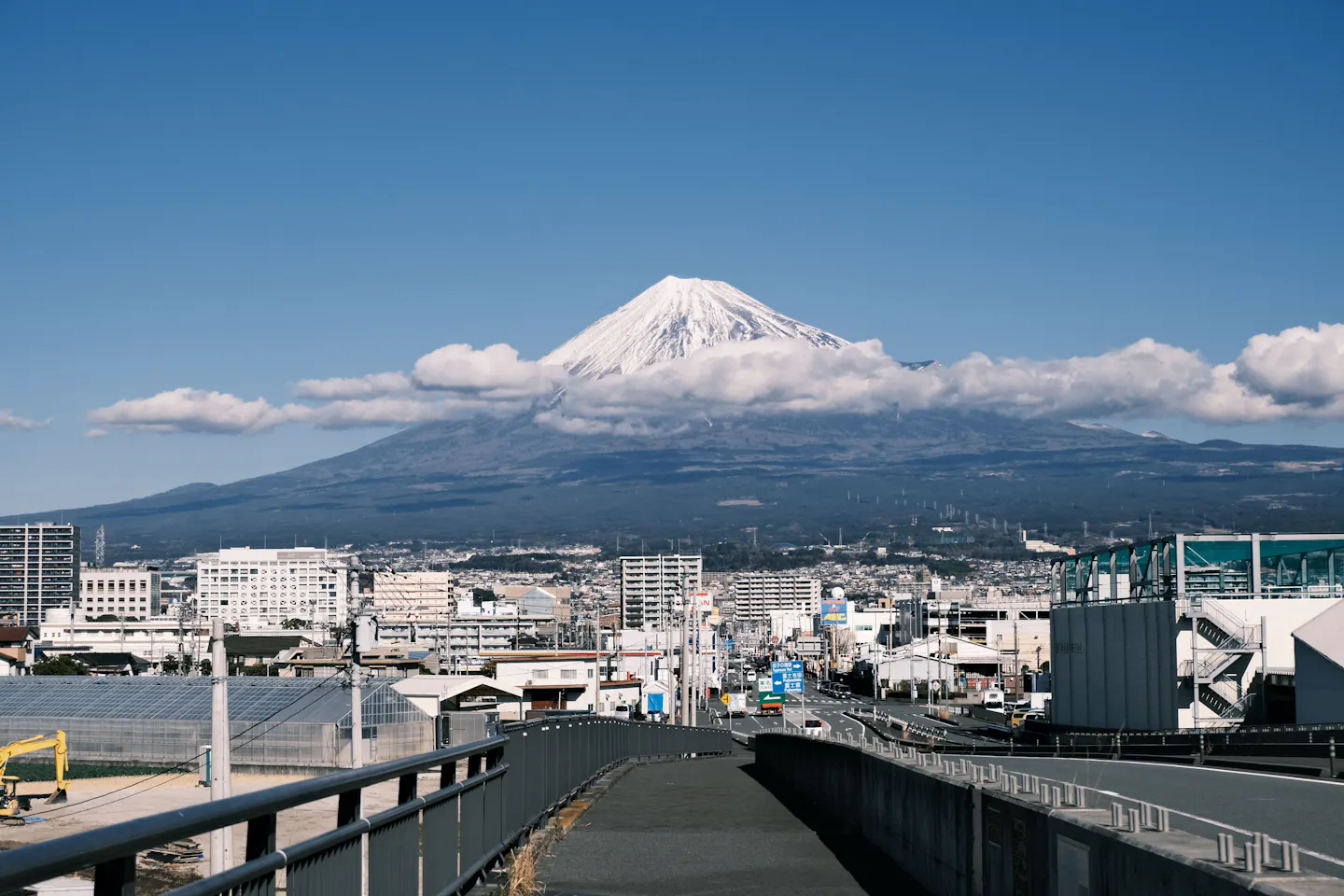
For Mount Fuji, choose between a day trip and an overnight stay. Hakone is good for onsen, views, and a classic ryokan experience. The Fuji Five Lakes area is better if the mountain itself is the main reason you are going. Remember that clear Fuji views are never guaranteed.
Hiroshima and Miyajima are worth adding if you have around two weeks. Give the area at least one overnight if possible instead of squeezing it into a rushed day trip from Kansai.
How should you book flights to Japan?
If your route starts in Tokyo and ends in Osaka, check open-jaw flights: fly into Tokyo and home from Osaka, or the reverse. This can save you from paying for and spending time on a final train ride back across the country.
Tokyo has two major airports. Haneda is closer to central Tokyo, while Narita is farther out but has a large international network. Osaka’s main international gateway is Kansai International Airport.
Do not choose a flight based only on the cheapest headline fare. Check baggage, arrival time, airport transfer, and whether you will need an extra hotel night.
Where should you stay in Tokyo, Kyoto, and Osaka?

The best hotel is not always the one closest to the biggest tourist attraction. In Japan, being near a useful train or subway station often matters more.
Where to stay in Tokyo
Shinjuku is convenient for transport, nightlife, and first-time energy. Shibuya is great for shopping, restaurants, and late evenings. Ueno and Asakusa are often better if you want a calmer base with easy access to older Tokyo. Tokyo Station and Ginza are useful if you value central connections and easy Shinkansen access.
Try to stay within a short walk of a station. After a full sightseeing day, ten extra minutes with luggage feels much longer than it did on the booking map.
Where to stay in Kyoto
Kyoto Station is practical for first-timers, especially if you are using trains for day trips or arriving with luggage. Gion, Higashiyama, and Kawaramachi are more atmospheric and put you closer to evening walks, restaurants, and traditional streets.
If you want the easiest logistics, choose Kyoto Station. If you care more about atmosphere, stay closer to central or eastern Kyoto.
Where to stay in Osaka
Namba is the easiest choice if food, nightlife, and Dotonbori are priorities. Umeda is excellent for transport connections and works well if you plan day trips.
How do you get around Japan?

Japan’s transport system looks intimidating before you arrive and surprisingly logical once you start using it. The trick is to separate local transport from long-distance transport.
Use an IC card for everyday trains, subways, and buses
For city transport, an IC card is one of the easiest things you can set up. Cards such as Suica, PASMO, ICOCA, Welcome Suica, and TOURIST PASMO can be used on a large number of compatible trains and buses and at many convenience stores and vending machines.
You tap in and out instead of buying a separate ticket every time. For most first-time visitors, this removes a lot of small daily friction.
Use the Shinkansen for long-distance travel
The bullet train is usually the easiest way to move between Tokyo, Kyoto, and Osaka. You can buy individual tickets and reserve seats without buying a nationwide rail pass.
If you are traveling during a very busy holiday period, reserve long-distance trains earlier. Outside peak periods, the system is much more flexible than many first-time travelers expect.
Is the Japan Rail Pass worth it?
Do not buy the Japan Rail Pass automatically.
The pass used to be almost standard advice for first-time visitors, but the price is now high enough that many classic Tokyo–Kyoto–Osaka itineraries are cheaper with individual tickets. The seven-day Ordinary nationwide pass is currently ¥50,000 through the official online sales channel, so calculate your actual long-distance journeys before you buy.
A nationwide pass can still make sense for a rail-heavy route with several expensive long-distance trips. Regional passes can also offer better value if most of your travel is concentrated in one area.
What should you know about luggage on Japanese trains?
Pack lighter than you think you need. Japanese hotel rooms can be compact, train stations can be enormous, and dragging a large suitcase through rush-hour crowds is not fun.
On the Tokaido, Sanyo, and Kyushu Shinkansen, luggage with total dimensions from 160 cm to 250 cm requires a reservation for a seat with an oversized baggage area. Measure your suitcase before the trip if you are bringing a large case.
Luggage forwarding is also one of the most useful travel services in Japan. You can send suitcases between many hotels and travel with a small overnight bag. This is especially helpful if you are stopping in Hakone, visiting a smaller town, or taking a one-night detour between big cities.
Do you need a visa for Japan?
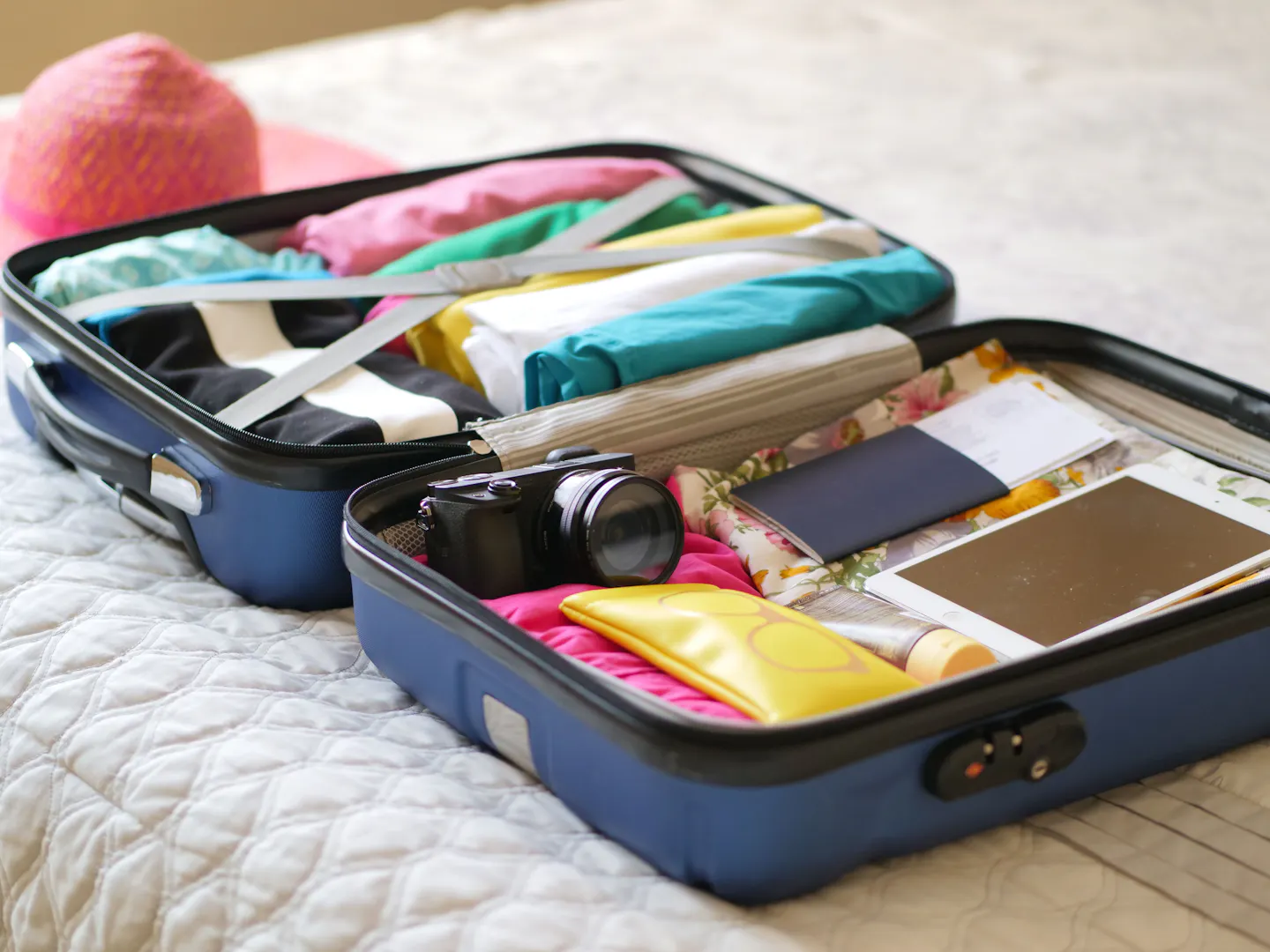
Visa rules depend on your passport, not simply where you live. Many nationalities can enter Japan visa-free for a short tourist stay, while others need a visa or may be eligible for Japan’s eVISA system.
Check Japan’s official visa information before you book non-refundable travel. Do not rely on a blog post or social media screenshot for entry rules because requirements can change.
Before flying, you can also use Visit Japan Web to complete arrival information for immigration and customs online. The official service is free, so avoid third-party sites that charge you just to create arrival QR codes.
How much money do you need for a first trip to Japan?

Japan can be expensive if you choose premium hotels, taxis, high-end restaurants, and a lot of paid attractions, but everyday travel does not have to be extreme.
Casual meals are often one of the nicest surprises. Ramen, curry, udon, soba, set meals, bakeries, food halls, and convenience stores make it easy to eat well without turning every meal into a major expense.
Instead of trying to guess one perfect daily budget, split your trip into these categories:
- Flights.
- Hotels.
- Long-distance trains or domestic flights.
- Local transport.
- Food and coffee.
- Ticketed attractions and experiences.
- Shopping.
- A buffer for last-minute plans.
Book hotels and long-distance transport first, then you will have a much clearer idea of how much you can comfortably spend each day.
Should you carry cash in Japan?
Yes, but you do not need to carry your entire trip budget in cash.
Credit and debit cards are widely accepted in cities, especially at hotels, department stores, larger restaurants, and major attractions. But smaller restaurants, rural businesses, temples, ticket machines, and older shops may still prefer or require cash.
Keep some yen with you and withdraw more when needed. Seven Bank and Japan Post Bank ATMs are commonly used by international visitors.
Do you need an eSIM, SIM card, or pocket Wi-Fi?

For most travelers with an unlocked phone, an eSIM is the simplest option. Install it before departure, activate it when you land, and keep your normal SIM available if you need to receive messages.
A physical SIM works just as well if your phone does not support eSIM. Pocket Wi-Fi can make sense for families or groups that want to connect several devices, but it is one more item to charge and return.
Reliable mobile data is worth having in Japan. You will use it constantly for maps, train routes, translations, restaurant searches, opening hours, and last-minute changes.
What should you book in advance in Japan?

You do not need to reserve every meal and every hour of your trip. In fact, overbooking can make Japan less enjoyable.
Book the things that are genuinely hard to replace:
- Hotels during cherry blossom season, autumn weekends, Golden Week, and other busy periods.
- High-demand attractions with timed entry.
- Popular theme parks and special exhibitions.
- A ryokan if there is one specific property you care about.
- Very popular restaurants or special-occasion meals.
- Long-distance trains during major holiday travel periods.
Leave ordinary sightseeing, neighborhood walks, casual meals, and most shopping flexible.
A useful rule is to give yourself one or two fixed reservations per day at most. Japan is full of places you will want to stop at simply because you walked past them.
What should you eat on your first trip to Japan?
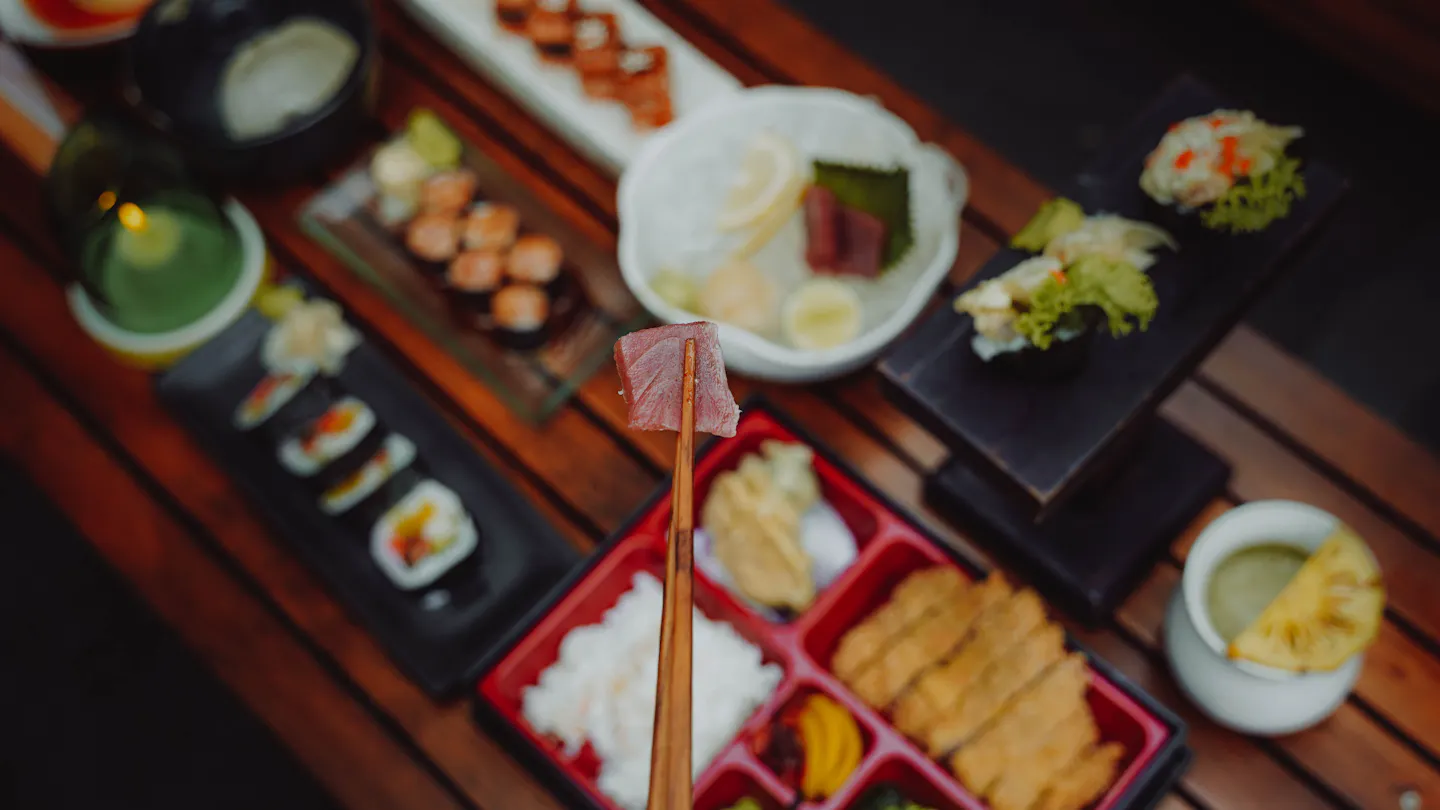
Do not turn your food plan into a list of only famous restaurants. Japan is one of the easiest countries to eat well without chasing viral reservations.
Try sushi, ramen, udon, soba, yakitori, tempura, tonkatsu, curry, okonomiyaki, takoyaki, yakiniku, and a proper Japanese breakfast. Visit a department-store food hall, buy something from a neighborhood bakery, and have at least one convenience-store snack run just because it is part of the experience.
In Tokyo, let neighborhoods guide your meals. In Kyoto, try a more traditional meal or tea experience. In Osaka, leave room for casual street food and late-night eating.
If you have allergies, dietary restrictions, or strong preferences, prepare a translated note on your phone before the trip. Vegetarian and vegan options are improving, but ingredients such as fish stock can appear in dishes that look meat-free.
What Japanese etiquette should first-time visitors know?

You do not need to memorize a hundred rules before you land. A few basics will carry you a long way.
- Queue where other people queue.
- Keep your voice low on public transport and avoid phone calls on trains.
- Follow signs about shoes in homes, ryokan, temples, and some restaurants.
- Do not tip in ordinary restaurants, taxis, or hotels.
- At temples and shrines, follow the posted instructions and treat the space as an active place of worship, not just a photo location.
- If you visit an onsen, wash before entering the bath and check the property’s tattoo policy in advance if it applies to you.
The most useful rule is simple: look at what people around you are doing. Japan is easy to navigate when you pay attention to local cues.
Do you need to speak Japanese?

No. You can travel through Tokyo, Kyoto, Osaka, and other major tourist areas without speaking Japanese.
Train stations usually have English signage, major transport announcements often include English, and translation apps solve many small problems. Learning a few phrases still makes the trip smoother and friendlier.
Start with hello, thank you, excuse me, please, and simple phrases for ordering or asking where something is. You do not need perfect pronunciation.
What should you pack for Japan?
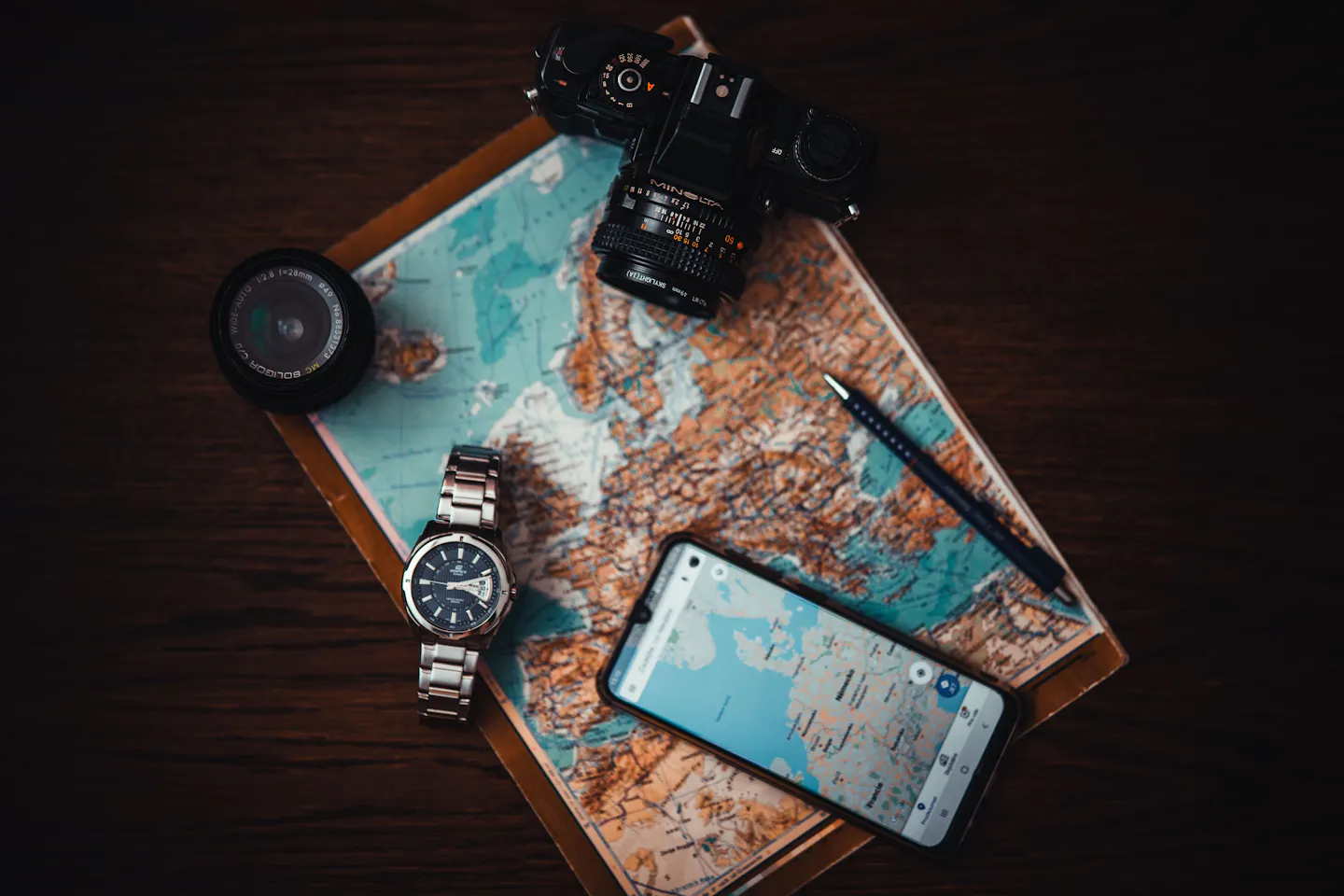
Pack for walking. You may easily do 15,000 to 25,000 steps on sightseeing days without realizing it.
Bring comfortable shoes you have already worn, layers that match the season, a small day bag, a portable charger, any medicine you rely on, and a plug adapter if your devices need one. Japan uses Type A plugs and 100V electricity.
Also leave room in your suitcase. Even travelers who do not plan to shop often change their mind after their first department store, stationery shop, pharmacy, or Don Quijote visit.
A simple 10-day Japan itinerary for first-time visitors

Day 1: Arrive in Tokyo
Keep the first day easy. Check in, walk around your neighborhood, eat something nearby, and go to bed before you turn arrival day into an endurance test.
Day 2: Shibuya, Harajuku, and Meiji Shrine
Start around Meiji Shrine, continue through Harajuku, and spend the afternoon and evening around Shibuya. This gives you green space, street style, shopping, cafes, and classic Tokyo energy in one connected area.
Day 3: Asakusa, Ueno, and Tokyo Skytree area
Visit Senso-ji early, walk through the older streets around Asakusa, then continue toward Ueno or the Skytree area depending on your interests.
Day 4: Choose your version of Tokyo
Make this a flexible day. You could do teamLab, Ginza, Tsukiji Outer Market, Daikanyama, Shimokitazawa, Akihabara, museums, or a day trip outside the city.
Day 5: Tokyo to Kyoto
Take the Shinkansen in the morning, check into your hotel, and keep the afternoon local. Walk through Gion, Yasaka Shrine, and the Higashiyama area instead of trying to complete a full sightseeing day after the transfer.
Day 6: Eastern Kyoto
Start early at Kiyomizu-dera, then walk through Sannenzaka and Ninenzaka, continue toward Gion, and add a quieter temple or garden later in the day.
Day 7: Fushimi Inari and another Kyoto area
Visit Fushimi Inari early, then choose one additional area rather than crossing the city repeatedly. You could add Uji, central Kyoto, Arashiyama, or a slower afternoon.
Day 8: Nara day trip
Go to Nara for Todai-ji, Nara Park, Kasuga Taisha, and the old streets around Naramachi. Return to Kyoto or continue to Osaka in the evening.
Day 9: Osaka
Explore Kuromon Market, Namba, Dotonbori, and nearby neighborhoods. Keep the evening free for food.
Day 10: Osaka and departure
Use your final hours for Umeda, Osaka Castle, shopping, or one last long lunch before heading to Kansai International Airport.
If your international flight leaves from Tokyo, consider moving the Osaka portion earlier or adding one final Tokyo night so you are not depending on a same-day cross-country transfer.
First-trip mistakes to avoid in Japan
Trying to visit too many cities
Tokyo, Kyoto, and Osaka already give you a full first trip. Add destinations only when they improve the route, not because you feel you should collect more names.
Changing hotels too often
Hotel changes cost more time than they appear to. Packing, checking out, storing luggage, traveling, finding the next hotel, and checking in can quietly consume half a day.
Buying every transport pass you see
Japan has many city passes, regional passes, and rail passes. A pass is only useful if it matches the trips you are actually taking. Sometimes a normal IC card and individual tickets are simpler and cheaper.
Building an itinerary around social media
Use social media for inspiration, not as your entire travel plan. If every stop on your list is a viral place, you may spend the trip standing in the same queues as everyone else.
Planning every minute
Some of the best parts of Japan are unplanned: a tiny restaurant, a stationery shop, a shrine you did not know existed, a beautiful side street, a coffee shop, or a department-store basement full of food.
Ignoring travel time inside cities
Tokyo and Kyoto both look easier on a map than they feel in real life. Group places by neighborhood and avoid bouncing across the city for one attraction at a time.
Frequently asked questions about planning a first trip to Japan
Is Japan easy for first-time international travelers?
Yes. Japan requires some planning, but public transport is excellent, major stations have English signage, cities are safe to explore with normal travel precautions, and there is a huge amount of tourist infrastructure.
Is 7 days enough for Japan?
Yes, but keep it simple. Choose Tokyo plus Kyoto, or stay in one main region and take day trips. Ten to fourteen days is better if you want Tokyo, Kyoto, and Osaka without rushing.
Should I fly into Tokyo or Osaka?
For the classic route, either works. The best option is often to fly into one and out of the other if flight prices make sense. That saves backtracking.
Do I need the JR Pass for Tokyo, Kyoto, and Osaka?
Usually, do the math first. The nationwide pass is no longer an automatic bargain for the classic route. Compare the pass price with individual Shinkansen tickets and any regional travel you plan.
Can I use one IC card across Japan?
Major IC cards are interoperable across many transport systems, so one card works for most normal city travel in the major regions. There are still exceptions, especially in smaller or rural areas, so keep some cash available.
Is Japan expensive?
It can be, but it does not have to be. Hotels during peak seasons and premium experiences can be expensive, while casual food, convenience stores, public transport, and many everyday experiences can be very reasonable.
How early should I book a Japan trip?
For ordinary travel periods, start with flights and hotels once your dates are firm. For cherry blossom season, Golden Week, popular autumn weekends, or a specific ryokan, book earlier. Attraction booking windows vary, so check each official site rather than assuming everything opens at the same time.
Plan your whole Japan trip with EasyMiles
Japan is one of those destinations where planning can quickly turn into thirty browser tabs: neighborhoods, trains, restaurant reservations, opening hours, day trips, weather, and the constant question of whether two places that look close on a map actually fit into the same afternoon.
EasyMiles is built to make that easier. Choose your destination, dates, pace, and interests, and EasyMiles can turn them into a connected day-by-day itinerary with activities, restaurants, local tips, and realistic travel time between stops. It can help you decide what makes sense together instead of giving you a random list of famous places.
It can also help with restaurant planning and bookings, and adjust the trip when real life changes the plan: bad weather, a closed place, a change of mood, or a day when you simply do not want to follow the original schedule.
For a first trip to Japan, that means less time comparing maps and spreadsheets and more time actually enjoying Tokyo, Kyoto, Osaka, and everything you discover between them.