
The best winter train journeys in Europe in 2027 are the Glacier Express and Bernina route in Switzerland, the Bergen Line, Flåm Railway and Rauma Line in Norway, Scotland’s West Highland Line, the GoldenPass Express and Jungfrau Railway in Switzerland, Austria’s Semmering Railway, and Germany’s Brocken Railway.
If you want the most dramatic snow-covered scenery, start with the Glacier Express or Bernina route. For fjords and wild mountain landscapes, Norway is hard to beat. The West Highland Line is the best choice for a moody Scottish winter, while the Brocken Railway is ideal if you want an old-fashioned steam-train experience.
Here are the 10 winter train journeys worth putting on your Europe itinerary for 2027:
1. Glacier Express, Switzerland — best overall winter rail journey
2. Bernina route, Switzerland to Italy — best for high Alpine scenery
3. Bergen Line, Norway — best for a full-day winter journey
4. Flåm Railway, Norway — best short scenic train ride
5. Rauma Line, Norway — best for dramatic valleys and mountains
6. West Highland Line, Scotland — best for wild, cinematic scenery
7. GoldenPass Express, Switzerland — best for lakes, villages and luxury
8. Jungfrau Railway, Switzerland — best high-altitude winter experience
9. Semmering Railway, Austria — best historic mountain railway
10. Brocken Railway, Germany — best winter steam-train journey
Winter rail travel in Europe can be especially rewarding because the journey becomes part of the trip. Snow makes mountain routes feel more dramatic, popular destinations are often quieter than in summer, and you can watch the landscape change without worrying about icy roads.
Below, we break down what makes each route special, how long it takes, and who it is best for.
Glacier Express, Switzerland: Best Overall Winter Train Journey

Route: Zermatt to St. Moritz
Journey time: around 8 hours
Best for: first-time scenic rail travelers, couples, photographers, luxury winter trips
If you want one train journey that looks exactly like the Europe-in-winter fantasy, make it the Glacier Express.
The train crosses the Swiss Alps between Zermatt and St. Moritz, passing snowy valleys, mountain villages, deep gorges, bridges and high Alpine landscapes. In winter, the whole route feels more dramatic. Roofs are covered in snow, the mountains look sharper, and the quieter season gives the journey a calmer atmosphere.
One of the route’s biggest advantages is that it connects two destinations that are worth visiting on their own. Zermatt gives you views of the Matterhorn and a car-free mountain village, while St. Moritz is one of Europe’s classic winter resorts.
The Glacier Express is not actually an express train in the usual sense. It is deliberately slow, which is the point. You are here to sit by the window, have lunch, and watch Switzerland pass by.
The Glacier Express operates in winter, with a seasonal break generally taking place in autumn before winter services restart. For the 2026/27 winter season, services run again from December, making January through early spring a strong period for this trip. Seat reservations are required, so this is one journey worth booking ahead.
Why take it in winter?
Snow makes the Rhine Gorge, Oberalp area and high mountain sections especially beautiful. January and February are good choices if your priority is a classic white Alpine landscape.
Bernina Route, Switzerland to Italy: Best for High Alpine Scenery
Route: St. Moritz or Pontresina to Tirano
Journey time: roughly 2.5 to 4 hours depending on the service
Best for: photographers, mountain lovers, day trips, travelers combining Switzerland and Italy
The Bernina route is one of the most visually impressive railway journeys in Europe, and winter makes it even better.
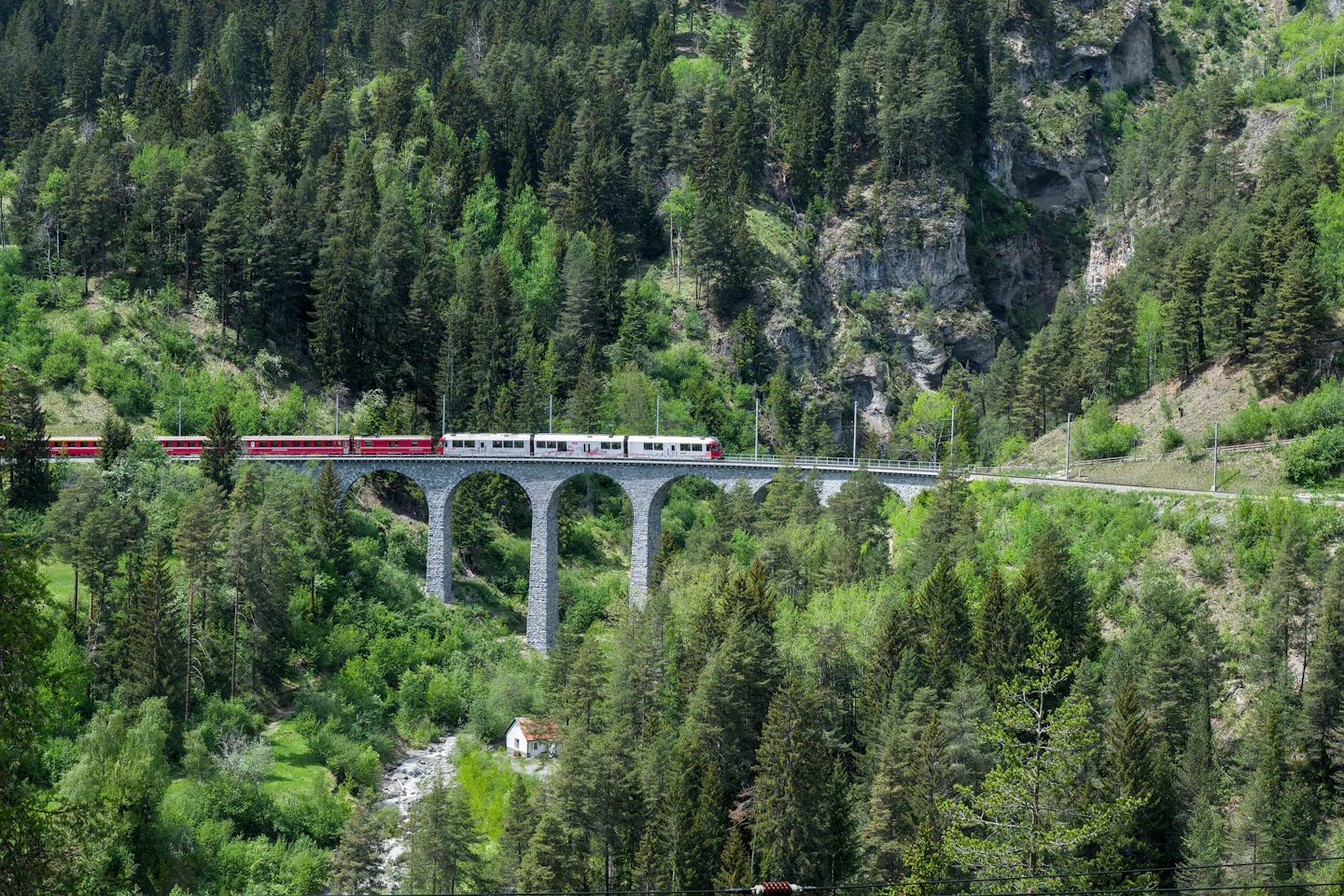
The train climbs through the Engadin and over the Bernina Pass before descending toward the Italian town of Tirano. Along the way, you can see frozen lakes, snow-covered peaks, glaciers and tiny Alpine stations. The change in landscape is one of the best parts: you start in a high Swiss winter world and gradually descend toward a milder Italian valley.
The Albula and Bernina railway lines are part of a UNESCO World Heritage site, and the engineering is almost as interesting as the scenery. The route includes dramatic curves, viaducts and steep sections that seem to have been designed specifically for window-seat photos.
The branded Bernina Express runs on a seasonal timetable, while regular regional trains also travel along the famous route. For a winter 2027 trip, check the Rhaetian Railway timetable for your exact date before deciding whether you want the panoramic train or regular services.
Why take it in winter?
The contrast is exceptional. Snow around the Bernina Pass can feel almost Arctic, but by the time you reach Tirano, the atmosphere is noticeably more Italian. It is also easy to combine with St. Moritz, Pontresina or a longer Swiss rail trip.
Bergen Line, Norway: Best Full-Day Winter Train Journey

Route: Oslo to Bergen
Journey time: about 6.5 to 7.5 hours
Best for: first trips to Norway, slow travel, snowy landscapes, city-to-city rail trips
The Bergen Line connects Norway’s two biggest cities and crosses one of the wildest landscapes you can reach by regular train in Europe.
The journey climbs from Oslo toward the mountains and crosses the Hardangervidda plateau before descending toward Bergen. In winter, large sections of the route can be surrounded by deep snow, especially around Finse and the high mountain plateau.
This is a very different experience from a dedicated panoramic train. You are simply taking a regular intercity service, which makes it easy to fit into a normal Norway itinerary. Spend a few days in Oslo, take the train west, and continue your trip in Bergen without needing an extra sightseeing day.
Try to travel during daylight if scenery is your priority. Winter days in Norway are short, especially in December and January, so departure time matters more than it does in summer.
Why take it in winter?
The Hardangervidda plateau looks incredible under snow, and the route feels far more remote than you would expect from a train connecting two major cities. It is one of the easiest ways to experience Norway’s winter interior without driving.
Flåm Railway, Norway: Best Short Scenic Winter Train Ride
Route: Myrdal to Flåm
Journey time: about 1 hour each way
Best for: fjord trips, short winter itineraries, families, travelers who want maximum scenery in minimum time
The Flåm Railway is short, steep and extremely scenic.
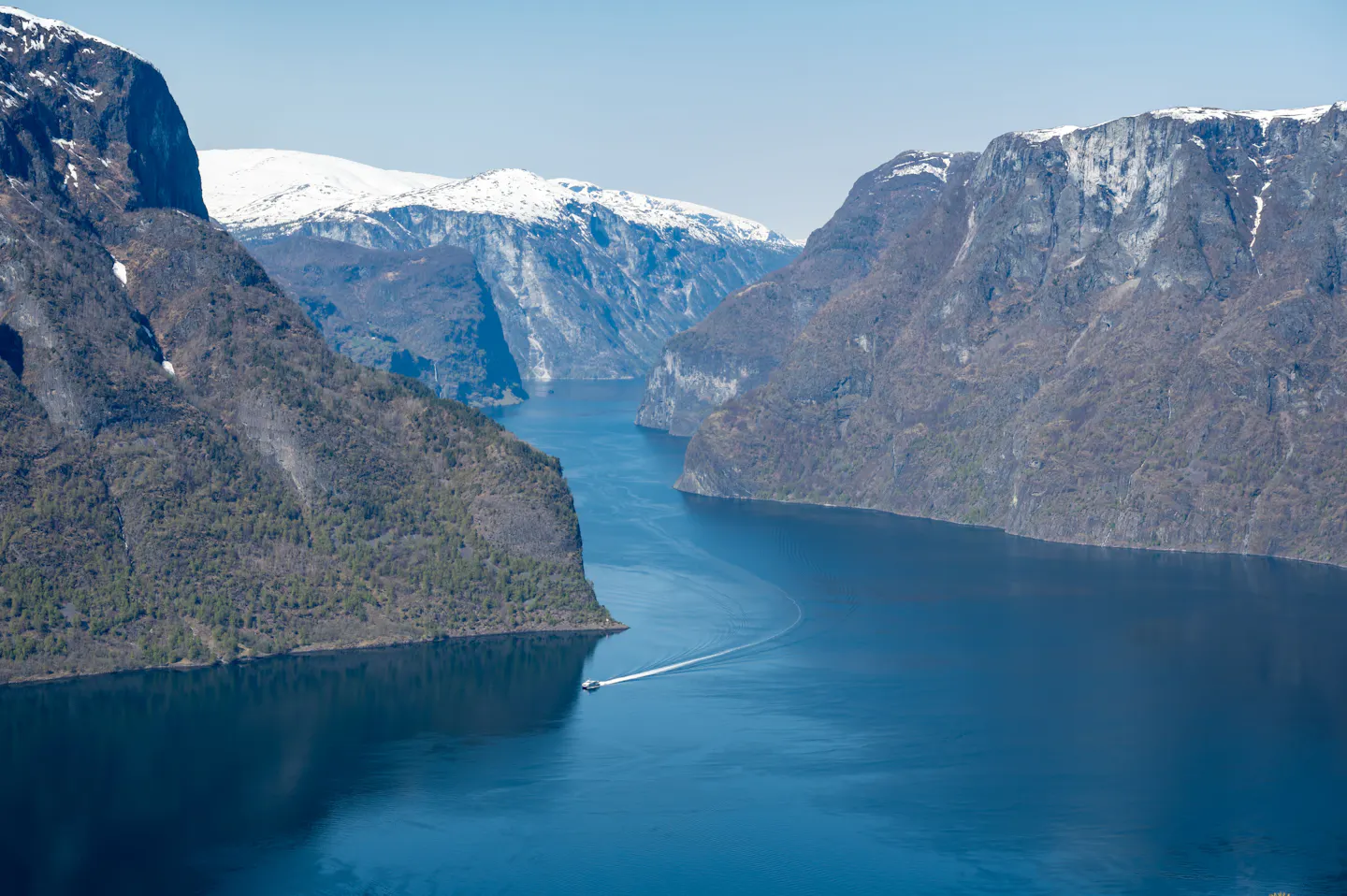
It runs between the mountain station of Myrdal and the village of Flåm, dropping through a narrow valley toward Aurlandsfjord. In winter, waterfalls, cliffs, snow-covered slopes and small farms create a completely different mood from the busy green landscape you see in summer.
The railway runs year-round. From November through March, the operator currently schedules fewer daily departures than in peak season, so winter travelers should plan connections carefully.
One of the easiest ways to include the Flåm Railway is to combine it with the Bergen Line. You can travel between Oslo and Bergen, change at Myrdal, and make Flåm part of a longer Norway route.
Why take it in winter?
Flåm is much quieter than in summer. The shorter daylight and reduced visitor numbers make the valley feel peaceful, and snowy mountains rising directly around the railway are the main event.
Rauma Line, Norway: Best for Dramatic Valleys and Mountains
Route: Dombås to Åndalsnes
Journey time: around 1 hour 30 minutes to 1 hour 40 minutes
Best for: mountain scenery, photographers, quieter Norway itineraries, combining rail and fjords
The Rauma Line is less famous internationally than the Bergen or Flåm routes, but it deserves a place on any list of Europe’s best winter train journeys.
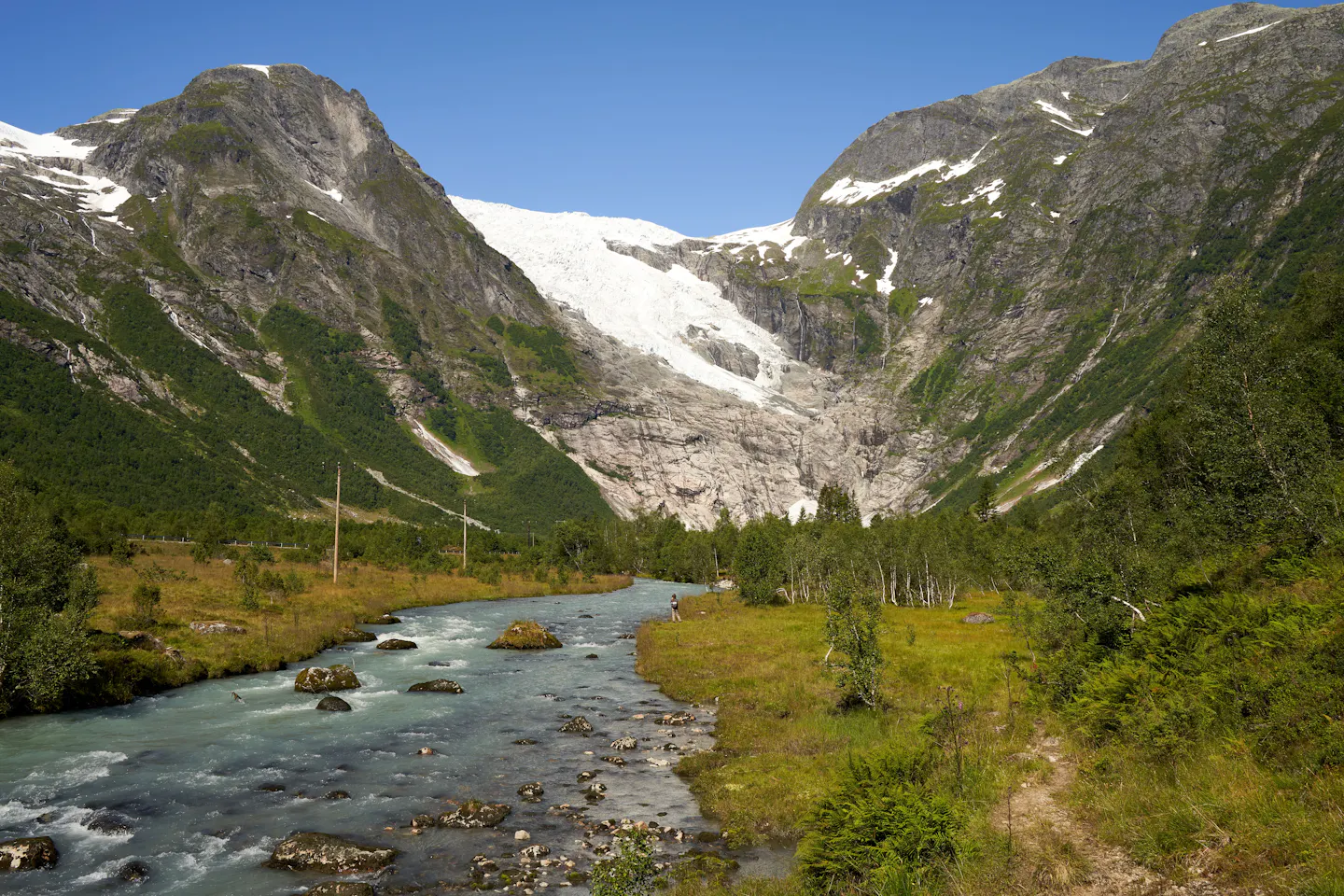
The railway runs from Dombås down through Romsdalen to Åndalsnes. Expect high mountains, frozen or snow-covered valleys, the Rauma River, the Kylling Bridge and views toward Trollveggen, one of Europe’s tallest vertical rock faces.
The journey is relatively short, which makes it easy to add to a longer Norway itinerary. You can connect to Dombås from Oslo or Trondheim and continue toward Åndalsnes, where the mountains seem to rise straight from the town.
Visit Norway notes that the line operates multiple departures a day and specifically highlights Bjorli as a winter ski stop along the route.
Why take it in winter?
This route feels wild. The valley can be covered in snow while dark cliffs tower above it, creating a dramatic winter landscape that feels very different from polished Swiss resort scenery.
West Highland Line, Scotland: Best for Wild, Cinematic Winter Scenery

Route: Glasgow to Fort William or Mallaig
Journey time: roughly 4 to 5.5 hours depending on your destination
Best for: Scotland trips, Harry Potter fans, moody landscapes, travelers who prefer rugged scenery to luxury trains
The West Highland Line is one of those journeys where bad weather can actually improve the atmosphere.
Starting in Glasgow, the route heads north through lochs, open moorland and the Scottish Highlands. The section toward Fort William and Mallaig is especially scenic, passing remote stations, mountain landscapes and the famous Glenfinnan area.
Winter here is not guaranteed to mean deep snow from start to finish. You may get snow, rain, low cloud, bright sun or all four in one day. That unpredictability is part of the appeal.
Unlike the Jacobite steam train, which is mainly a seasonal tourist service, regular ScotRail trains use the West Highland route and are the practical choice for a winter trip.
If you have time, continue all the way to Mallaig. The stretch beyond Fort William includes some of the most cinematic scenery on the route.
Why take it in winter?
The Highlands are quieter, darker and moodier in winter. If your idea of a scenic rail journey involves mist, mountains, lochs and a flask of coffee rather than polished panoramic windows, this is the route to choose.
GoldenPass Express, Switzerland: Best for Lakes, Villages and a More Luxurious Ride
Route: Montreux to Interlaken
Journey time: about 3 hours 15 minutes
Best for: couples, luxury trips, Swiss itineraries, travelers who want scenery without spending a full day on the train
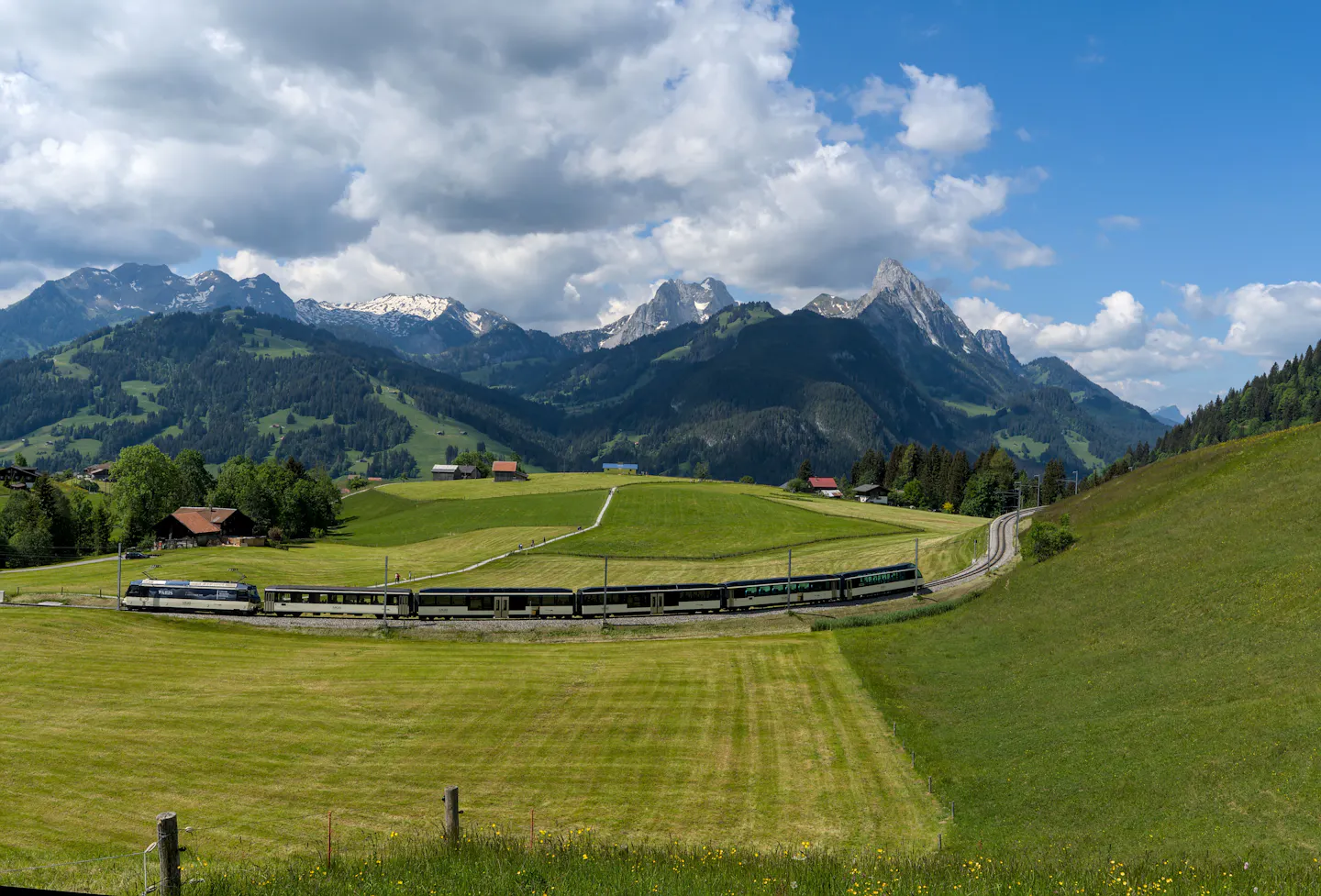
The GoldenPass Express links Montreux on Lake Geneva with Interlaken in the Bernese Oberland. It gives you a little bit of everything Switzerland does well: lakes, elegant towns, mountain villages, snowy peaks and comfortable panoramic trains.
The direct journey takes a little over three hours, making it easier to fit into a short itinerary than the Glacier Express.
In winter, the route becomes especially attractive around places such as Gstaad and the higher mountain sections, while the lower areas near Lake Geneva may be greener. That mix means the scenery changes constantly instead of staying snowy from beginning to end.
The train offers second class, first class and Prestige seating. Reservations are optional on many journeys but are strongly recommended, especially if you want a specific seat or are traveling during busy holiday periods.
Why take it in winter?
You can turn the railway into a multi-stop winter trip. Start in Montreux, spend time around Gstaad, then continue to Interlaken for access to Grindelwald, Wengen and the Jungfrau region.
Jungfrau Railway, Switzerland: Best High-Altitude Winter Experience
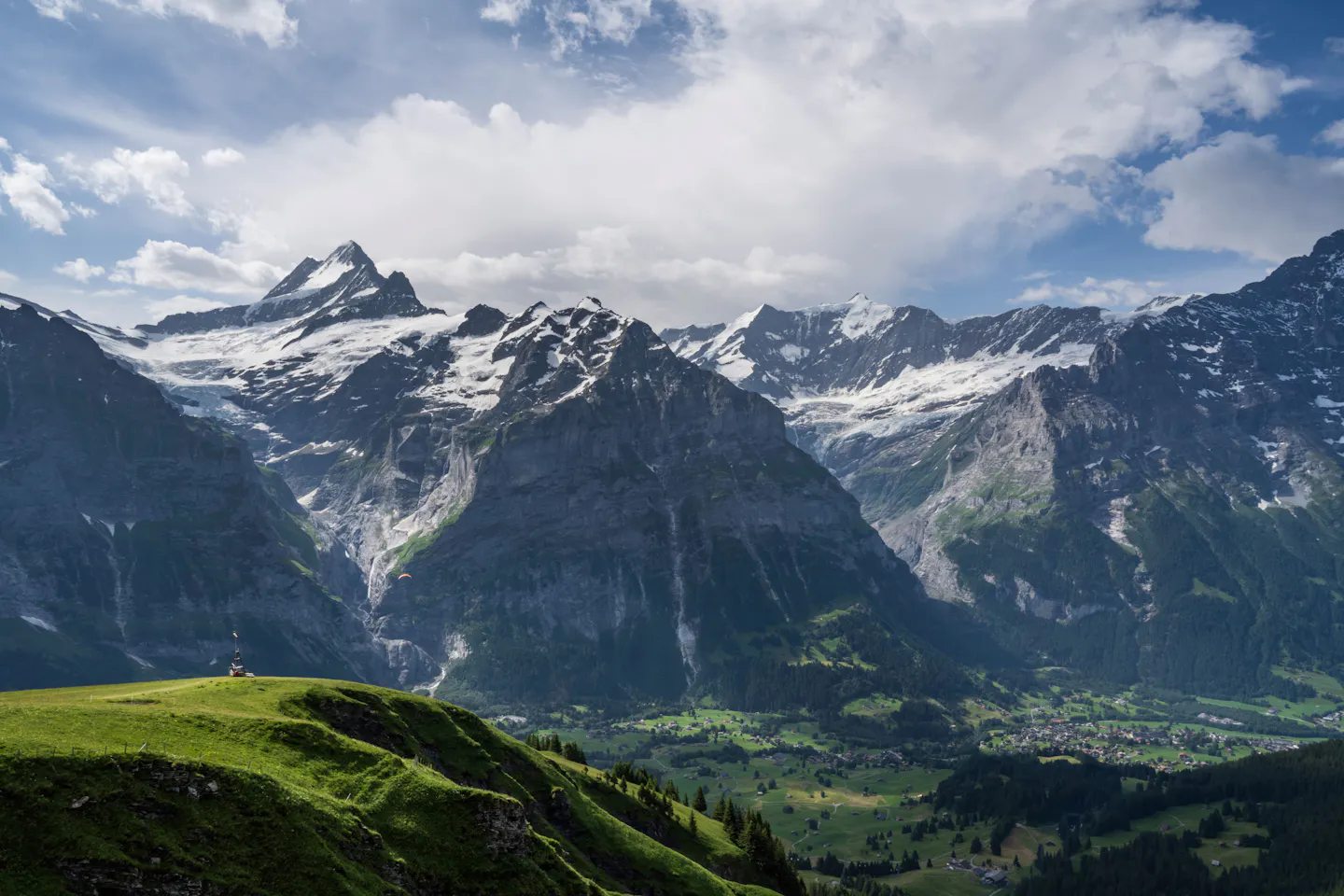
Route: Eigergletscher to Jungfraujoch, usually reached via Grindelwald or Lauterbrunnen/Wengen
Journey time: varies by starting point; allow several hours for the full excursion
Best for: snow lovers, first-time Alpine visitors, day trips, travelers who want a big mountain experience without skiing
The Jungfrau Railway is not a long cross-country journey. It is a mountain railway experience, and in winter it is one of the most memorable train rides you can take in Europe.
The railway climbs through the Eiger mountain to Jungfraujoch, home to Europe’s highest railway station at 3,454 meters. At the top, you get views across the high Alps and the Aletsch Glacier.
Winter is not an off-season here. The Jungfrau region is built around snow, skiing, winter hiking and mountain transport. For the 2026/27 season, Jungfrau Railways has already published winter products running through April 2027.
Weather matters. On a clear day, the views can be extraordinary. On a cloudy day, you may spend a lot of money to look at white fog. Check conditions before you go and keep your itinerary flexible if possible.
Why take it in winter?
You do not need to ski to get a serious high-Alpine winter experience. The journey itself, the snow-covered stations and the glacier scenery make it worthwhile.
Semmering Railway, Austria: Best Historic Mountain Railway
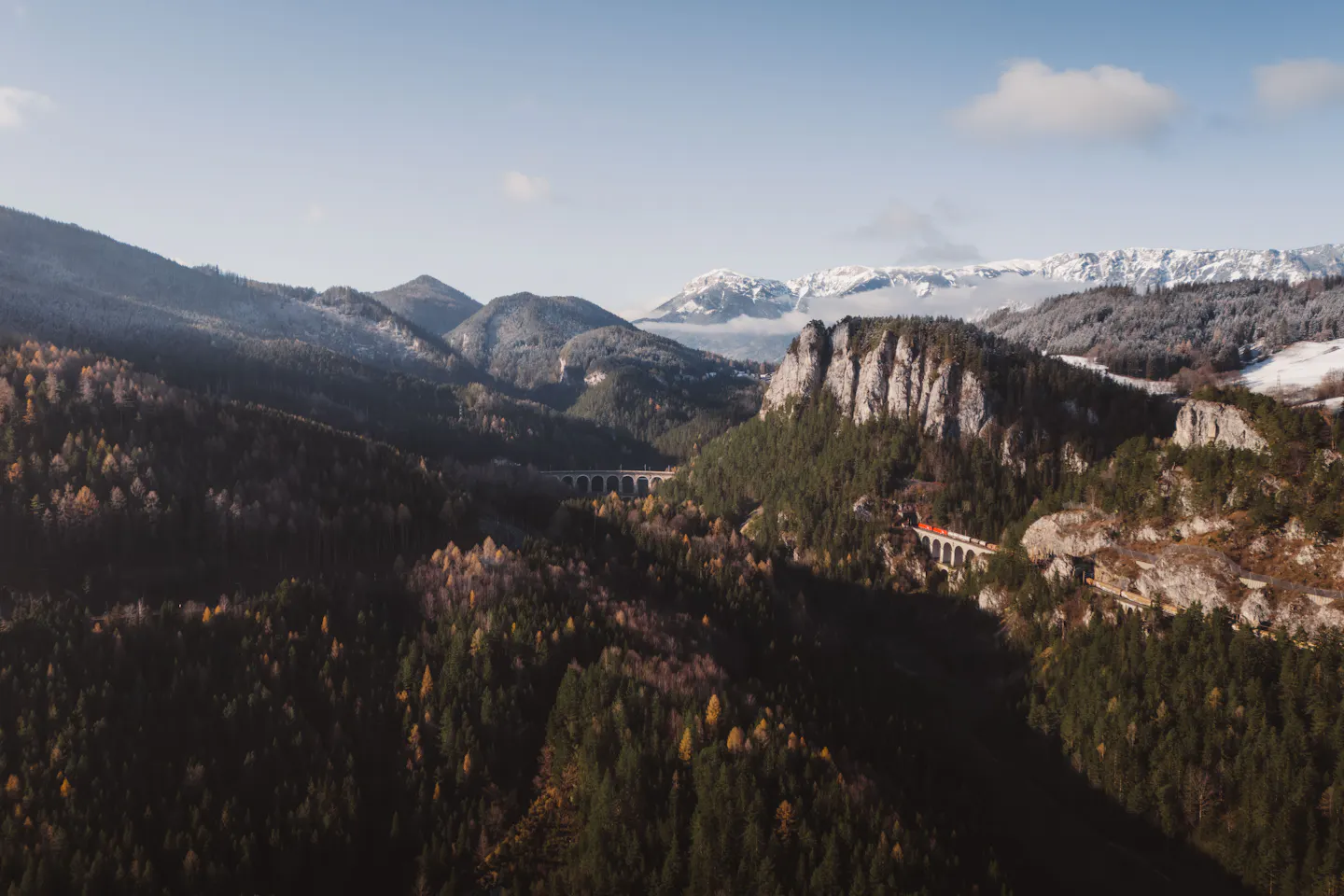
Route: Vienna to Graz via Semmering
Journey time: around 2.5 hours for the full Vienna–Graz trip
Best for: Vienna city breaks, architecture and railway history, easy winter day trips, travelers continuing to Graz
The Semmering Railway proves that a scenic train journey does not need panoramic tourist carriages to be worth taking.
This historic mountain railway crosses the Semmering Pass between Lower Austria and Styria, using tunnels, stone viaducts and sweeping curves through the mountains. The railway itself is UNESCO-listed and is considered one of the great achievements of early mountain railway engineering.
The easiest way to experience it is simply to take a train between Vienna and Graz that uses the Semmering route. Austria’s tourism board describes the journey as roughly two and a half hours, with regular connections.
Winter gives the forests, villages and mountain slopes a quieter, more atmospheric look. Snow is possible but not guaranteed at lower elevations, so think of this as a beautiful winter mountain journey rather than a guaranteed snow train.
Why take it in winter?
It works especially well if you are already visiting Vienna. You can turn a transfer to Graz into a scenic rail experience without buying a special tourist train ticket.
Brocken Railway, Germany: Best Winter Steam-Train Journey
Route: Wernigerode or Drei Annen Hohne to Brocken
Journey time: about 1 hour 40 minutes from Wernigerode; around 50 minutes from Drei Annen Hohne
Best for: Christmas trips, families, steam-train fans, old-fashioned winter atmosphere
For pure winter nostalgia, the Brocken Railway is difficult to beat.
The narrow-gauge railway climbs through the Harz Mountains to the Brocken, the highest peak in northern Germany. Many services are hauled by steam locomotives, and when snow covers the forests, the combination of white landscapes, smoke and old railway carriages feels almost unreal.
The Harz tourism board notes that the Brocken Railway has both summer and winter timetables. The summit station sits at 1,125 meters, so conditions can be much colder, windier and snowier than in Wernigerode below.
This route works particularly well as part of a December or January trip through central Germany. Wernigerode itself has colorful half-timbered buildings, making it a good base before or after the train ride.
Why take it in winter?
Because this is the route where winter is not just scenery. It changes the whole atmosphere of the journey. A steam locomotive climbing through a snowy forest is exactly the kind of experience people imagine when they think about a romantic European winter trip.
Which Winter Train Journey in Europe Should You Choose?
If you only have time for one, choose based on the kind of winter trip you want.
Choose the Glacier Express for the classic all-day Alpine experience.
Choose the Bernina route for the most dramatic high-mountain scenery and an easy Switzerland-to-Italy connection.
Choose the Bergen Line if you want a regular city-to-city train that still feels like a major scenic journey.
Choose the Flåm Railway if you want a short ride that is easy to combine with a Norway itinerary.
Choose the Rauma Line if you prefer quieter, less obvious routes.
Choose the West Highland Line for rugged landscapes and a distinctly Scottish atmosphere.
Choose the GoldenPass Express for comfort, lakes and pretty mountain towns.
Choose the Jungfrau Railway if reaching a high Alpine viewpoint is more important than distance.
Choose the Semmering Railway for history, engineering and an easy extension from Vienna.
Choose the Brocken Railway if you want steam trains, snow and old-fashioned winter charm.
What Is the Best Month for Scenic Train Travel in Europe?
For classic snow scenery, January and February are usually the safest choices on high-altitude routes in Switzerland and Norway.
December is excellent if you want to combine train travel with Christmas markets, festive towns and shorter city breaks. The trade-off is limited daylight, especially in Norway and Scotland.
March can be one of the best compromises. High mountain routes may still have plenty of snow, but the days are longer and the Christmas crowds are gone.
If snow is essential to your trip, prioritize higher-altitude routes such as the Glacier Express, Bernina route or Jungfrau region rather than assuming every European railway will look snowy in winter.
How to Plan a Winter Train Trip in Europe in 2027

Winter train travel is usually easier than driving, but it still needs a little planning.
Book panoramic trains early. Services such as the Glacier Express can require reservations, and the best seats around holiday dates may disappear first.
Check the exact 2027 timetable before booking hotels. Many operators publish schedules in stages, and engineering works or seasonal breaks can change service patterns.
Plan around daylight. This matters most in Norway and Scotland. A beautiful route is much less useful if half of it happens after sunset.
Leave some flexibility for mountain weather. High-altitude trips such as Jungfraujoch are much better in clear conditions.
Do not assume the tourist-branded train is your only option. On routes such as the Bernina line, regular trains can sometimes give you more flexibility and a more relaxed experience.
Build the trip around destinations, not only trains. The best rail itineraries connect places you actually want to stay in: Zermatt and St. Moritz, Oslo and Bergen, Glasgow and the Highlands, or Vienna and Graz.
Plan Your 2027 Winter Train Trip with EasyMiles
A scenic train ride is easy to save on a list. The harder part is turning several trains, hotels, sights, restaurants and winter activities into a trip that actually works.
EasyMiles helps you plan the whole journey in one place. Tell it where you want to go and what kind of trip you like, and it can build a realistic itinerary around travel time, opening hours and the places you want to visit.
You can use EasyMiles to organize a Switzerland rail trip, connect Oslo, Flåm and Bergen, build a Scotland itinerary around the West Highland Line, or combine Christmas markets with scenic trains across several European cities.
And once the trip starts, your AI travel concierge can help you adapt the plan when weather, timing or your energy changes.
Instead of saving ten beautiful train journeys and never figuring out how to connect them, build the trip around the ones you actually want to take.
Editorial note: Timetables, fares and reservation rules can change. This guide reflects information available in October 2026 for travel planning in 2027. Always check the official train operator before booking.
Research sources checked:
Glacier Express — https://www.glacierexpress.ch/en/timetable
Rhaetian Railway / Bernina Express — https://www.rhb.ch/en/panoramic-journeys/bernina-express/
Vy / Bergen Line — https://www.vy.no/en/train/routes/the-bergen-line
Flåm Railway — https://en.flamsbana.no/
Visit Norway / Rauma Railway — https://www.visitnorway.com/plan-your-trip/getting-around/by-train/rauma-line/
ScotRail — https://www.scotrail.co.uk/
GoldenPass Express — https://www.gpx.swiss/en/
Jungfrau Railways — https://www.jungfrau.ch/en-gb/
Semmering Railway tourism — https://semmering.at/en/tourism/world-cultural-heritage-semmering-railway/
Harz Tourism / Brocken Railway — https://www.harzinfo.de/en/pure-nature/mount-brocken/brocken-railway