
The best winter road trips in Europe in 2027 are the Dolomites in Italy, the Austrian Alps, Iceland’s South Coast, Tromsø and Senja in Norway, Finnish Lapland, Switzerland’s lakes and Alps, the Black Forest and Alsace, the Scottish Highlands, Slovenia’s Julian Alps, Transylvania in Romania, Andalusia in Spain, and Portugal’s Algarve and Alentejo.
If you want deep snow and mountain scenery, choose the Dolomites, Austria, Finland, Norway, or Switzerland. If you want dramatic landscapes without needing to drive high mountain passes, Iceland’s South Coast is one of the best options. For castles, villages, and a more relaxed winter route, try Transylvania, the Black Forest, or Slovenia. And if you want a European road trip in winter without freezing temperatures, Andalusia and southern Portugal are the strongest choices.
Here is the quick overview:
• Dolomites, Italy — best overall for snowy mountain scenery.
• Salzburg to Innsbruck, Austria — best for Alpine towns, skiing, and classic winter atmosphere.
• Reykjavík to Jökulsárlón, Iceland — best for waterfalls, black beaches, glaciers, and wild landscapes.
• Tromsø to Senja, Norway — best for Arctic scenery and Northern Lights.
• Rovaniemi to Inari, Finland — best for a true Lapland winter.
• Lucerne to Interlaken and Montreux, Switzerland — best for mountain views with comfortable infrastructure.
• Black Forest and Alsace, Germany and France — best for cozy villages and a romantic winter trip.
• Scottish Highlands — best for rugged scenery, castles, and quiet roads.
• Ljubljana to Bled and Kranjska Gora, Slovenia — best for a short, easy Alpine road trip.
• Brașov to Sibiu and Sighișoara, Romania — best for castles, medieval towns, and value.
• Málaga to Granada and Ronda, Spain — best for winter sun with mountains.
• Lisbon to Alentejo and the Algarve, Portugal — best for a mild-weather winter road trip.
These routes work especially well from January to March 2027, but several are also great in December if you want Christmas markets and festive towns.
Dolomites, Italy: Best Overall Winter Road Trip in Europe

Best for: snowy peaks, scenic drives, ski towns, dramatic views
Suggested route: Bolzano → Ortisei → Val Gardena → Canazei → Cortina d’Ampezzo
Ideal length: 5–7 days
The Dolomites are one of the easiest places to picture when someone says “winter road trip in Europe.” Huge pale mountains rise almost straight above the road, ski villages sit in snowy valleys, and every short drive seems to end at another viewpoint.
Start in Bolzano, then move into Val Gardena. Ortisei makes a good base for a night or two, even if you do not ski. From there, continue toward the Val di Fassa area and finish around Cortina d’Ampezzo.
The biggest advantage of a Dolomites road trip is that you do not need to drive huge distances. You can spend more time stopping for mountain views, cable cars, cafés, spa hotels, and short winter walks instead of sitting in the car all day.
In winter, some high passes can close or become difficult after heavy snow, so build the trip around the main valley roads rather than assuming every scenic summer pass will be open. Check local road conditions every morning and make sure your rental car has the winter equipment required for your route.
Why go in winter?
The Dolomites feel completely different under snow. Towns are lively because of ski season, restaurants and mountain huts are open, and the landscapes look much more dramatic than they do on a typical summer drive.
Salzburg to Innsbruck, Austria: Best for Classic Alpine Winter

Best for: Christmas-card villages, ski resorts, lakes, cafés, mountain scenery
Suggested route: Salzburg → Zell am See → Kitzbühel → Innsbruck
Ideal length: 5–7 days
Austria is one of the best countries in Europe for a winter road trip because the infrastructure is built for winter. Roads between major towns and ski areas are usually well maintained, and there are plenty of hotels, restaurants, and indoor stops if the weather turns bad.
Begin in Salzburg, then drive south toward Zell am See. The lake surrounded by snowy mountains gives you one of the prettiest winter settings in the country. Continue toward Kitzbühel for a polished Alpine-resort atmosphere, then finish in Innsbruck, where you can combine a proper city break with mountain views.
This route is especially good for first-time winter road trippers who want snow without feeling too remote.
Austria has seasonal winter-equipment rules, so do not treat winter tyres as an optional extra when renting a car. Confirm the car is correctly equipped before you leave the airport or rental office.
Reykjavík to Jökulsárlón, Iceland: Best for Wild Winter Landscapes

Best for: waterfalls, black-sand beaches, glaciers, ice caves, dramatic weather
Suggested route: Reykjavík → Seljalandsfoss → Skógafoss → Vík → Skaftafell → Jökulsárlón
Ideal length: 5–7 days
For winter, Iceland’s South Coast is a smarter choice than trying to complete the entire Ring Road on a tight schedule.
Leave Reykjavík and follow Route 1 toward the south. You can stop at Seljalandsfoss and Skógafoss, walk on the black sand near Vík, continue through the huge open landscapes around Skaftafell, and finish at Jökulsárlón glacier lagoon and Diamond Beach.
In winter, the scenery can change completely in a few hours. A green or black landscape can become white after snow, and clear skies can turn into strong wind or poor visibility quickly.
That is exactly why this road trip is so memorable, but it is also why you should keep the itinerary flexible. Do not schedule every day too tightly. Check official road and weather conditions before setting out, and be ready to stay an extra night if conditions make driving unsafe.
For a first winter trip to Iceland, five to seven days on the South Coast is usually more realistic than racing around the whole island.
Tromsø to Senja, Norway: Best for Northern Lights and Arctic Scenery

Best for: Northern Lights, fjords, snowy coastlines, Arctic beaches
Suggested route: Tromsø → Sommarøy → Senja
Ideal length: 4–6 days
Northern Norway gives you one of the most cinematic winter road trips in Europe. You get mountains dropping into dark fjords, small fishing villages, snow-covered roads, and long stretches with very little traffic.
Tromsø is the easiest starting point because it has a major airport, plenty of car-rental options, and a wide choice of hotels. From there, drive toward Sommarøy and then continue to Senja.
The point of this route is not to cover as many kilometres as possible. Winter daylight is limited, especially in the far north, so plan short driving days and leave time for stops.
If the sky is clear at night, you may see the Northern Lights without joining a tour. But do not build the whole trip around aurora chasing from the car. Weather and road safety come first.
Norway requires vehicles to have enough grip for the conditions, and winter tyres are standard on suitable rental cars in the north. Still, always check what your rental includes.
Rovaniemi to Inari, Finland: Best for a True Lapland Winter
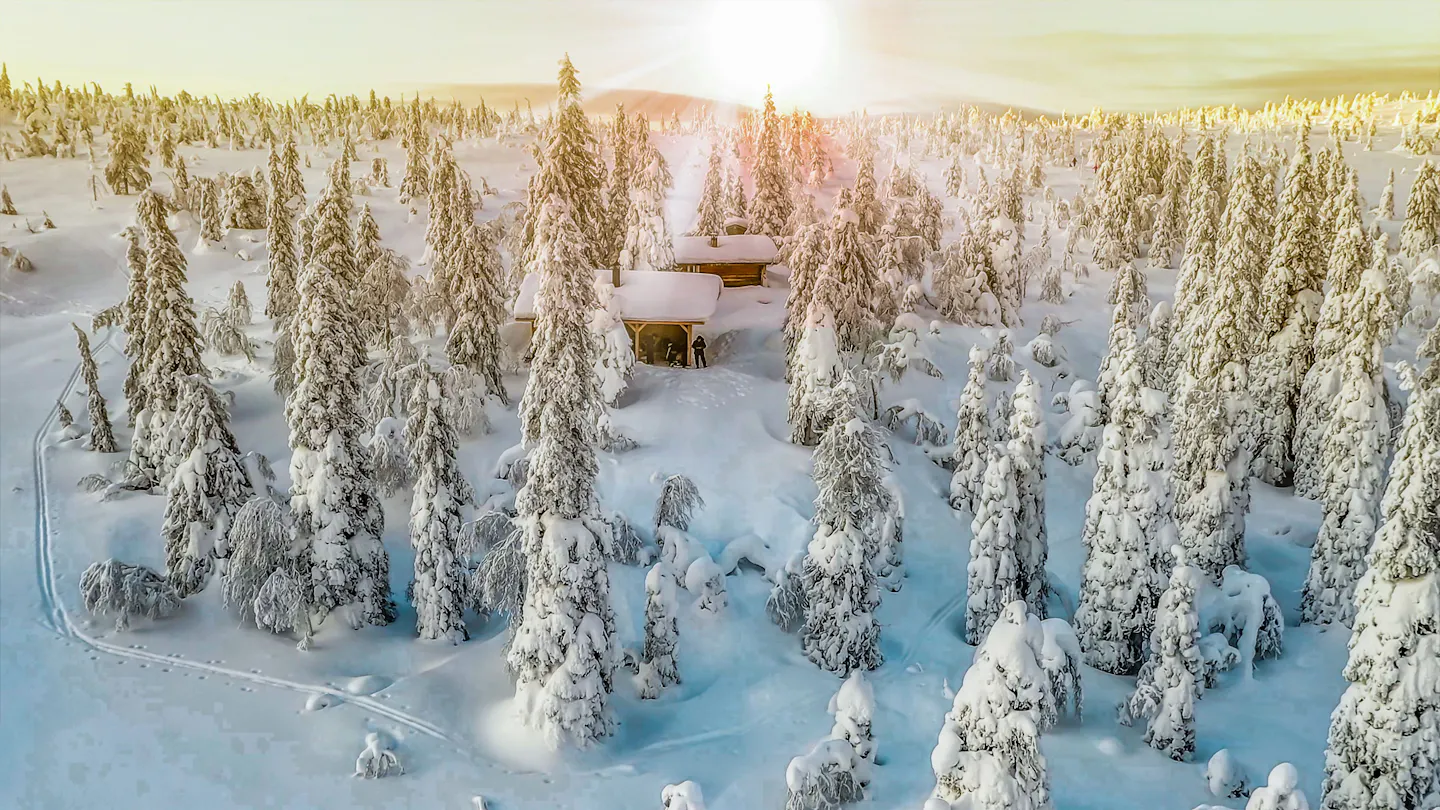
Best for: deep snow, frozen forests, reindeer, saunas, Northern Lights
Suggested route: Rovaniemi → Levi → Saariselkä → Inari
Ideal length: 7–9 days
If you want a winter road trip that feels genuinely Arctic but is still easy to organize, Finnish Lapland is hard to beat.
Start in Rovaniemi, then head north toward Levi. From there, continue through long stretches of forest toward Saariselkä and Inari.
The roads are often snow-covered rather than completely clear, but Finnish drivers and road services are used to these conditions. Good winter tyres make a huge difference, and rental cars are normally prepared for the season.
What makes this trip special is the feeling of space. You can drive for long periods through forests and frozen landscapes, then stop for a sauna, a glass-roof cabin, a reindeer experience, or a night under the aurora.
Do not underestimate distances. Finland looks simple on a map, but Lapland is large. Keep daily drives manageable and avoid trying to add too many stops.
Lucerne to Interlaken and Montreux, Switzerland: Best for Easy Alpine Views
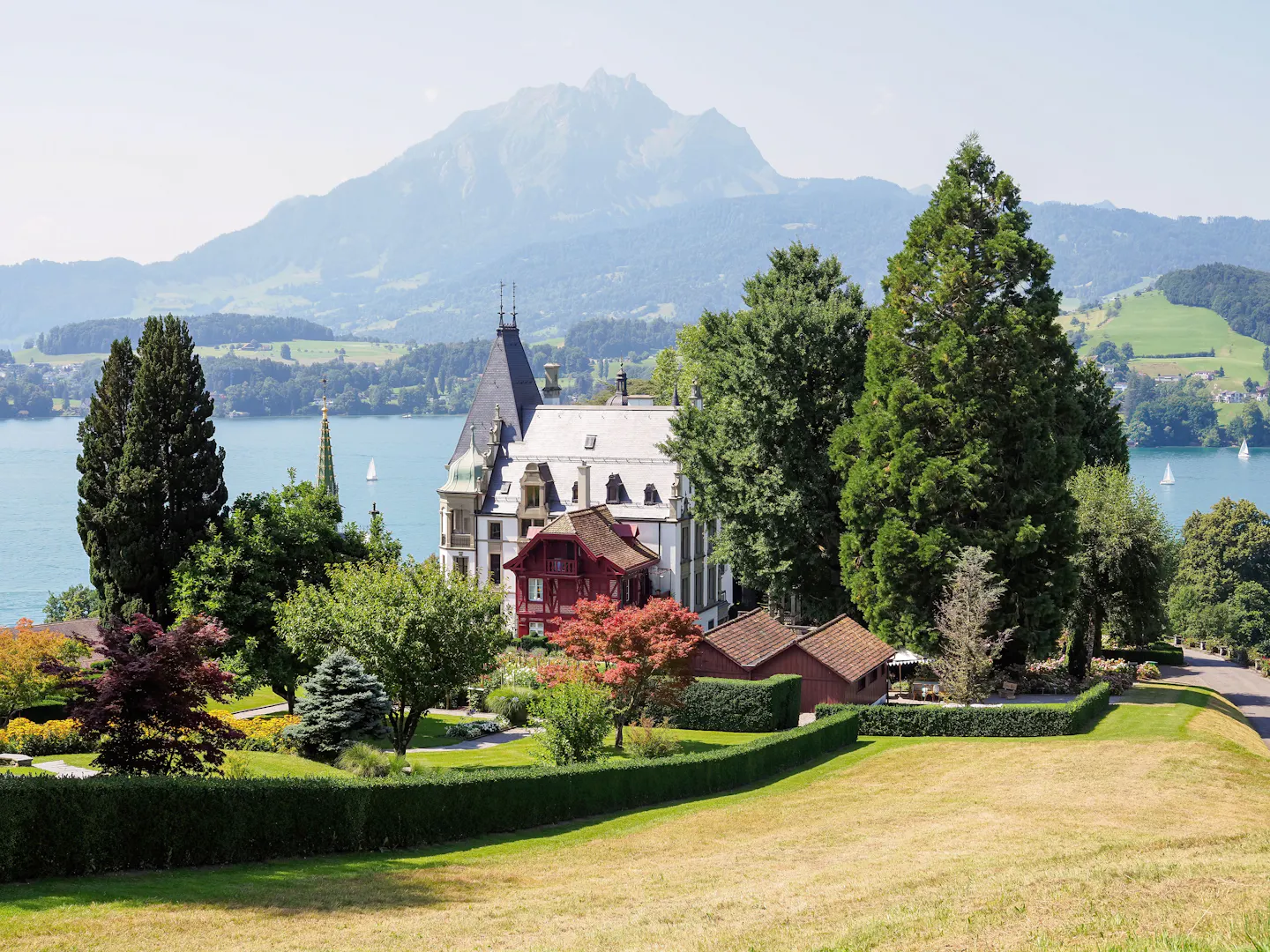
Best for: lakes, mountain trains, scenic towns, comfortable winter travel
Suggested route: Lucerne → Interlaken → Lauterbrunnen → Montreux
Ideal length: 5–7 days
Switzerland is expensive, but it is one of the easiest places to combine a road trip with world-class winter scenery.
Start in Lucerne, then drive toward Interlaken. Use Interlaken as a base for Lauterbrunnen, Grindelwald, or mountain railways rather than trying to drive onto high roads. Finish around Montreux on Lake Geneva for a softer climate and a different side of the country.
The smart way to do Switzerland in winter is not to copy a summer road trip. Many famous mountain passes can be closed for the season. Use main roads, tunnels, and valley routes, then reach higher viewpoints by train or cable car.
This makes Switzerland a good option for travelers who want snow and mountains but do not want every day to feel like an extreme winter-driving challenge.
Black Forest and Alsace: Best for Cozy Villages and a Romantic Road Trip

Best for: half-timbered towns, spas, forests, food, Christmas atmosphere
Suggested route: Baden-Baden → Triberg → Freiburg → Colmar → Strasbourg
Ideal length: 4–6 days
This is one of the most relaxed winter road trips in Europe. You can combine Germany’s Black Forest with Alsace in France without covering huge distances.
Start in Baden-Baden if you want thermal baths and a slow first day. Drive south through the Black Forest toward Triberg and Freiburg, then cross into France for Colmar and Strasbourg.
In December, this route is all about Christmas markets and lights. In January and February, it becomes quieter and often cheaper, with a more local feel.
Snow is possible in the Black Forest, especially at higher elevations, but the route also works when the weather is cold and clear rather than fully snowy.
This is a strong choice for couples or anyone who wants a winter road trip where food, wine, cafés, and beautiful towns matter just as much as the driving.
Scottish Highlands: Best for Rugged Scenery and Quiet Roads

Best for: mountains, lochs, castles, moody landscapes, photography
Suggested route: Inverness → Loch Ness → Fort William → Glencoe → Cairngorms → Inverness
Ideal length: 5–7 days
Scotland in winter is not guaranteed to be snowy, but it is almost guaranteed to be atmospheric.
A loop from Inverness through Loch Ness, Fort William, Glencoe, and the Cairngorms gives you the Highland experience without forcing you to complete the full North Coast 500 in difficult winter conditions.
The famous NC500 is around 500 miles and is one of Scotland’s best-known scenic driving routes, but winter is not the time to rush it. Single-track roads, short daylight hours, strong wind, ice, and sudden weather changes can make a full loop much slower than expected.
For most travelers, a shorter Highland route is more enjoyable in January or February.
Keep fuel in the tank, download offline maps, and leave extra time between stops. If severe weather is forecast, change the plan instead of trying to “complete” a route.
Ljubljana to Bled and Kranjska Gora, Slovenia: Best Short Winter Road Trip
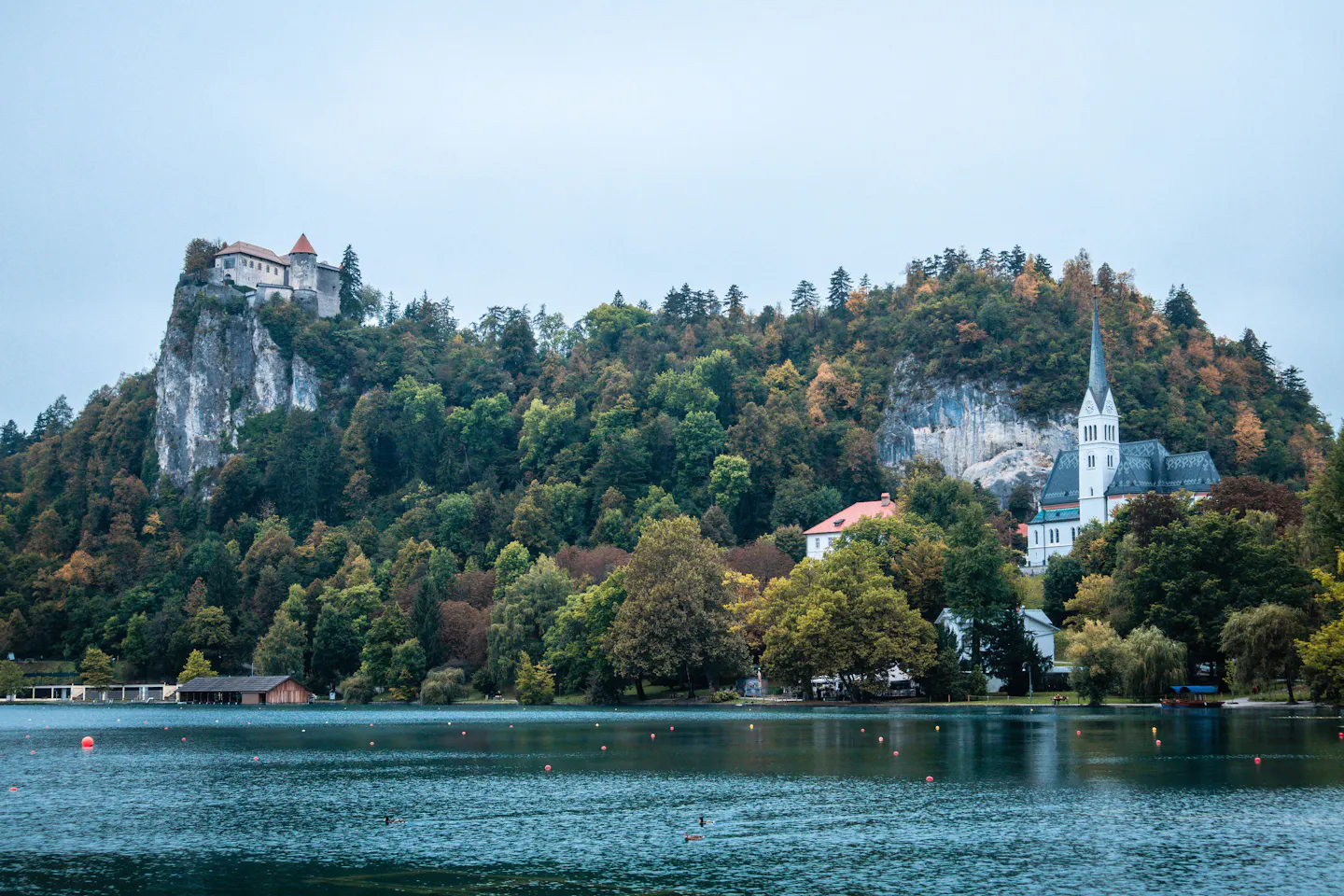
Best for: a 3–5 day trip, Alpine scenery, lakes, small distances
Suggested route: Ljubljana → Lake Bled → Lake Bohinj → Kranjska Gora
Ideal length: 3–5 days
Slovenia is a great winter road-trip country if you want Alpine scenery without spending an entire week driving.
Start in Ljubljana, then head to Lake Bled. Continue toward Lake Bohinj and finish in Kranjska Gora near the Julian Alps.
Distances are short, so you can keep plans flexible. If the weather is good, spend more time outdoors. If it is snowing heavily, you can slow down without losing half the trip.
One important point: do not build your winter itinerary around the Vršič Pass. High mountain roads can be closed in winter. Use open main roads and check conditions locally.
Slovenia requires prescribed winter equipment from November 15 to March 15 and during winter conditions. That makes it especially important to confirm the tyres and equipment on a rental car.
Brașov to Sibiu and Sighișoara, Romania: Best for Castles and Medieval Towns
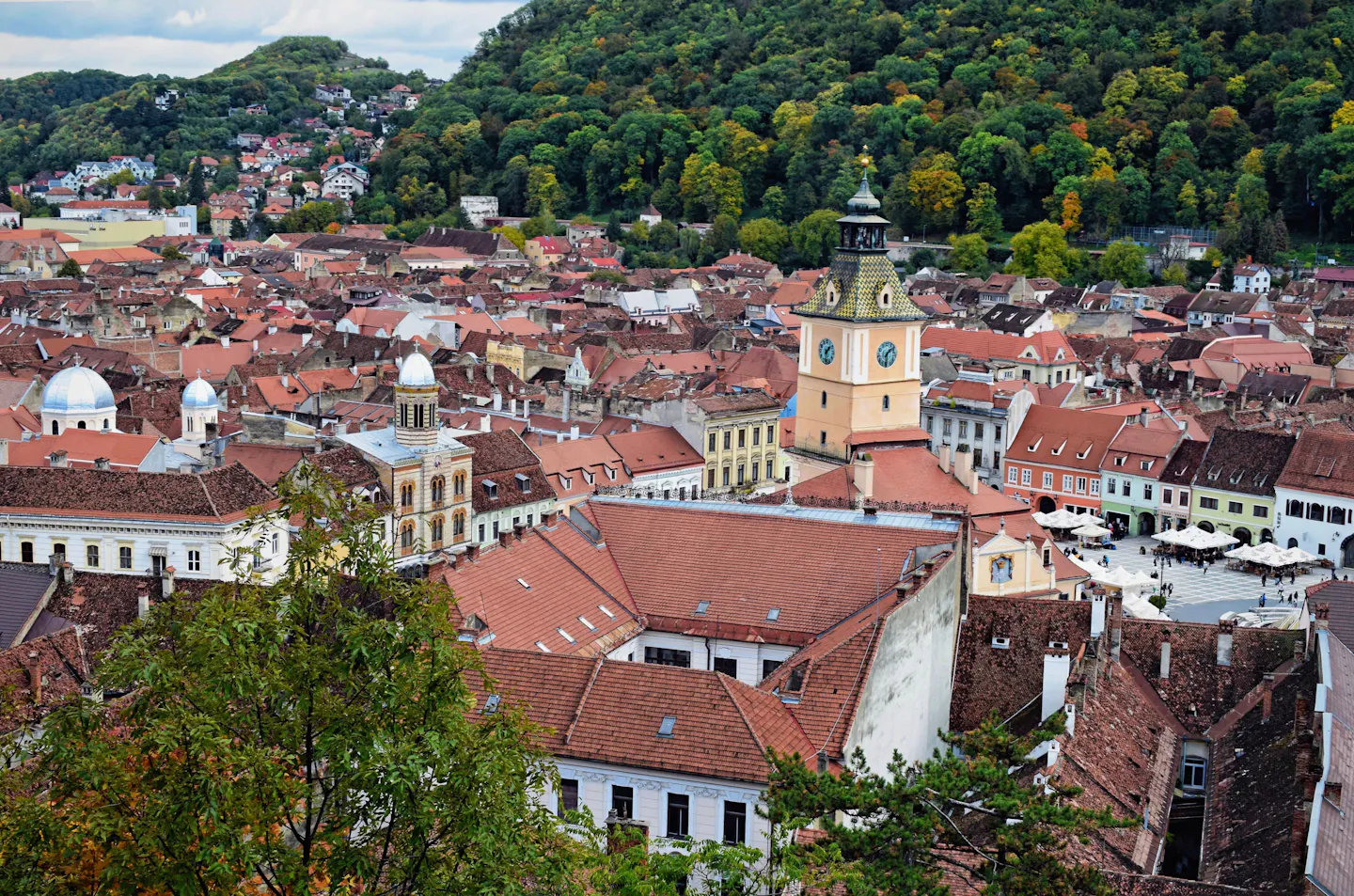
Best for: castles, old towns, value, Carpathian scenery
Suggested route: Bucharest → Sinaia → Brașov → Sighișoara → Sibiu
Ideal length: 5–7 days
Romania is one of the best-value winter road trips in Europe.
Start in Bucharest, then drive north to Sinaia and Peleș Castle before continuing to Brașov. From there, go to Sighișoara and finish in Sibiu.
The landscape is beautiful in winter, especially when the Carpathians are covered in snow. You also get a good balance between driving and sightseeing, so the trip still works when the weather is too cold for long outdoor days.
The key is to stick to realistic winter routes. The Transfăgărășan is famous in summer, but high sections are normally closed in winter. Do not plan the trip around it.
Instead, focus on the towns, castles, and main roads through Transylvania. You will still get mountain scenery without relying on seasonal high passes.
Málaga to Granada and Ronda, Spain: Best Winter Road Trip for Sun and Mountains

Best for: mild weather, food, historic cities, white villages, mountain views
Suggested route: Málaga → Ronda → Granada → Nerja → Málaga
Ideal length: 5–7 days
Not every winter road trip needs snow.
Andalusia is one of the best choices in Europe if you want to drive in January or February without dealing with constant freezing temperatures. Málaga makes an easy starting point, while Ronda gives you dramatic cliffs and mountain scenery. Granada adds the Alhambra, tapas, and views of the Sierra Nevada.
You can finish along the coast around Nerja before returning to Málaga.
The big advantage is variety. You can have sunny lunches outside near the coast and still see snow on the mountains.
If you drive into higher elevations, remember that winter conditions are still possible. Southern Spain is mild, but it is not summer everywhere.
Lisbon to Alentejo and the Algarve, Portugal: Best for a Mild Winter Escape

Best for: ocean views, quiet beaches, food, small towns, winter sun
Suggested route: Lisbon → Évora → Vila Nova de Milfontes → Lagos → Tavira → Faro
Ideal length: 7–10 days
For a European winter road trip without the usual winter-driving stress, head south in Portugal.
Start in Lisbon, spend a night in Évora, then move toward the Alentejo coast. Continue south to Lagos for cliffs and beaches, then drive east through the Algarve toward Tavira and Faro.
January and February are much quieter than summer. Some beach businesses may have shorter hours, but the roads are calmer and accommodation can be easier to find.
This route is less about classic winter scenery and more about escaping it. You still get a proper road-trip feeling, but your stops are coastal walks, seafood restaurants, whitewashed towns, and Atlantic sunsets rather than ski villages.
Which Winter Road Trip in Europe Is Best for You?
Choose the Dolomites if you want the most dramatic snowy mountain scenery.
Choose Austria if you want an easy mix of Alpine towns, skiing, and good winter infrastructure.
Choose Iceland if landscapes matter more to you than towns.
Choose northern Norway if your dream trip is Arctic scenery and Northern Lights.
Choose Finnish Lapland if you want reliable snow, frozen forests, and a slower winter-wonderland trip.
Choose Switzerland if you want mountain views with excellent infrastructure and do not mind a higher budget.
Choose the Black Forest and Alsace if you want cozy towns, food, and romance.
Choose Scotland if you like wild landscapes, castles, and moody weather.
Choose Slovenia if you want a short and easy road trip.
Choose Romania if you want castles, mountains, and better value.
Choose Andalusia or southern Portugal if you want a winter road trip without serious cold.
What Is the Best Month for a Winter Road Trip in Europe?
January is best for deep winter atmosphere, lower post-holiday crowds, and good chances of snow in Alpine and Nordic regions.
February is often the strongest month for a snow-focused road trip because daylight is increasing in northern Europe while winter conditions are still well established. It is also a busy ski month in the Alps, so accommodation around resorts can be expensive.
March is better if you want longer days and a slightly easier driving experience. Snow is still common in the mountains and far north, but lower elevations can start to feel like early spring.
December is best for Christmas markets, festive towns, and early-season snow, but the period around Christmas and New Year can be expensive.
How to Plan a Winter Road Trip in Europe Safely
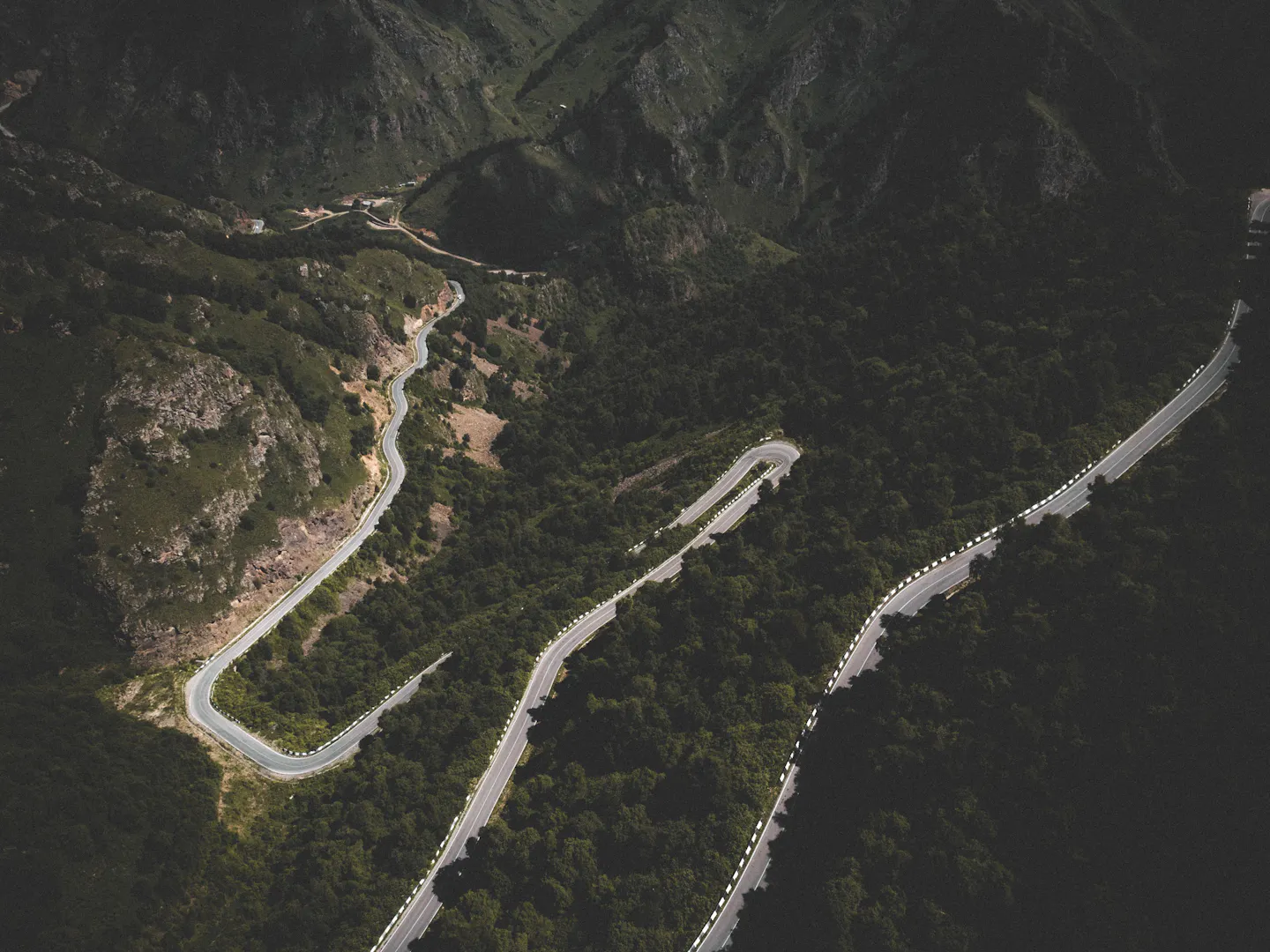
Winter road trips need more flexibility than summer ones. A route that looks easy on Google Maps can feel very different after snow, ice, wind, or heavy rain.
Before booking, check the winter-equipment rules for every country on your route. Requirements for winter tyres, snow chains, and seasonal equipment are not the same across Europe.
When you rent a car, confirm what is actually included. Do not assume that “winter ready” means the same thing in every country.
Keep driving days shorter than you would in summer. In northern Europe, daylight can be limited. In mountain areas, average speeds can drop quickly after snow.
Avoid making high mountain passes essential to your itinerary. Famous roads in the Alps, Romania, Iceland, and Slovenia can close seasonally or temporarily because of weather.
Check road conditions each morning. This matters especially in Iceland, Norway, Finland, Scotland, and mountain regions.
Finally, leave some empty space in the itinerary. The best winter road trip is not the one where you force yourself to reach every hotel on schedule. It is the one where you can adapt when the weather changes.
Do You Need Winter Tyres for a European Road Trip?
Often, yes, but the exact rules depend on the country, date, and road conditions.
Some countries require winter tyres or approved winter equipment during defined periods. Others require suitable tyres only when winter conditions are present. Mountain areas can also have additional signs requiring snow chains.
For example, Slovenia requires prescribed winter equipment from November 15 to March 15 and in winter conditions. Other countries have their own rules.
Because laws can change, always check the official transport or road authority for each country shortly before your 2027 trip. If you are renting a car, ask the rental company to confirm in writing that the vehicle is legal for your planned route.
Should You Rent a 4x4 for a Winter Road Trip in Europe?
Usually, no.
A front-wheel-drive or all-wheel-drive car with proper winter tyres is more useful than a large 4x4 on unsuitable tyres. For most maintained roads in the Alps, Finland, Norway, Switzerland, Slovenia, and Central Europe, the tyres and your driving decisions matter more than having a huge vehicle.
A 4x4 can still be useful for remote accommodation, deep snow, or rural roads, but it should not give you false confidence. If a road is closed or conditions are unsafe, the correct decision is still to wait or change route.
What Should You Pack for a Winter Road Trip in Europe?
Bring warm layers, waterproof shoes, gloves, a hat, sunglasses, a phone charger, water, snacks, and an ice scraper if the rental company does not provide one.
For remote Nordic routes, it is smart to carry extra warm clothing in the car rather than packing everything in the boot. Keep your phone charged and download offline maps.
Snow chains may be required on certain roads or in specific conditions, depending on the country. If your route enters mountain regions, make sure you know whether your rental car includes them and how to fit them before you need them.
FAQ: Winter Road Trips in Europe 2027
What is the best winter road trip in Europe for first-time visitors?
The Salzburg-to-Innsbruck route in Austria is one of the easiest first winter road trips. You get mountains, snow, attractive towns, good infrastructure, and relatively short driving distances.
What is the best snowy road trip in Europe?
The Dolomites are the best all-around choice for dramatic snow-covered mountain scenery. Finnish Lapland is better if you want deeper snow, Arctic forests, and a more remote feeling.
What is the best winter road trip for Northern Lights?
Northern Norway and Finnish Lapland are the strongest choices. A route around Tromsø and Senja gives you dramatic coastal scenery, while Rovaniemi, Saariselkä, and Inari give you classic snowy Lapland landscapes.
Where can you take a warm winter road trip in Europe?
Andalusia in southern Spain and Portugal’s Algarve and Alentejo are among the best options. They are not guaranteed to be hot, but daytime conditions are generally much milder than in northern or central Europe.
Is Iceland good for a road trip in winter?
Yes, if you keep the itinerary flexible. The South Coast is a better choice for many winter visitors than trying to drive the entire Ring Road. Always check official road and weather conditions before leaving each day.
Is the North Coast 500 good in winter?
It can be beautiful, but winter is not the easiest time to complete the full route. Short daylight, ice, wind, single-track roads, and changing weather can slow the trip down. A shorter Highlands loop is often a better winter choice.
Can you drive through the Alps in winter?
Yes, millions of people do, but you should use routes that are open and maintained for winter traffic. Do not assume high scenic passes are open. Check road conditions, carry any legally required equipment, and use tunnels or valley roads where necessary.
Plan Your 2027 Winter Road Trip with EasyMiles
A winter road trip can be amazing, but it is also one of the easiest trips to overplan.
You need to think about driving time, daylight, opening hours, weather, road conditions, attractions, restaurants, and backup options if the original route no longer makes sense.
EasyMiles helps you bring the whole trip into one place. You can build a day-by-day route, organize the places you want to visit, add recommendations you found on social media, keep bookings and activities together, and adjust the plan when your day changes.
Instead of jumping between maps, saved posts, notes, and booking tabs, you can use EasyMiles as your travel workspace for the entire road trip.
For a winter trip, that flexibility matters even more. If bad weather means you need to skip a mountain stop, change the order of the day, or find something better nearby, your itinerary can adapt instead of falling apart.