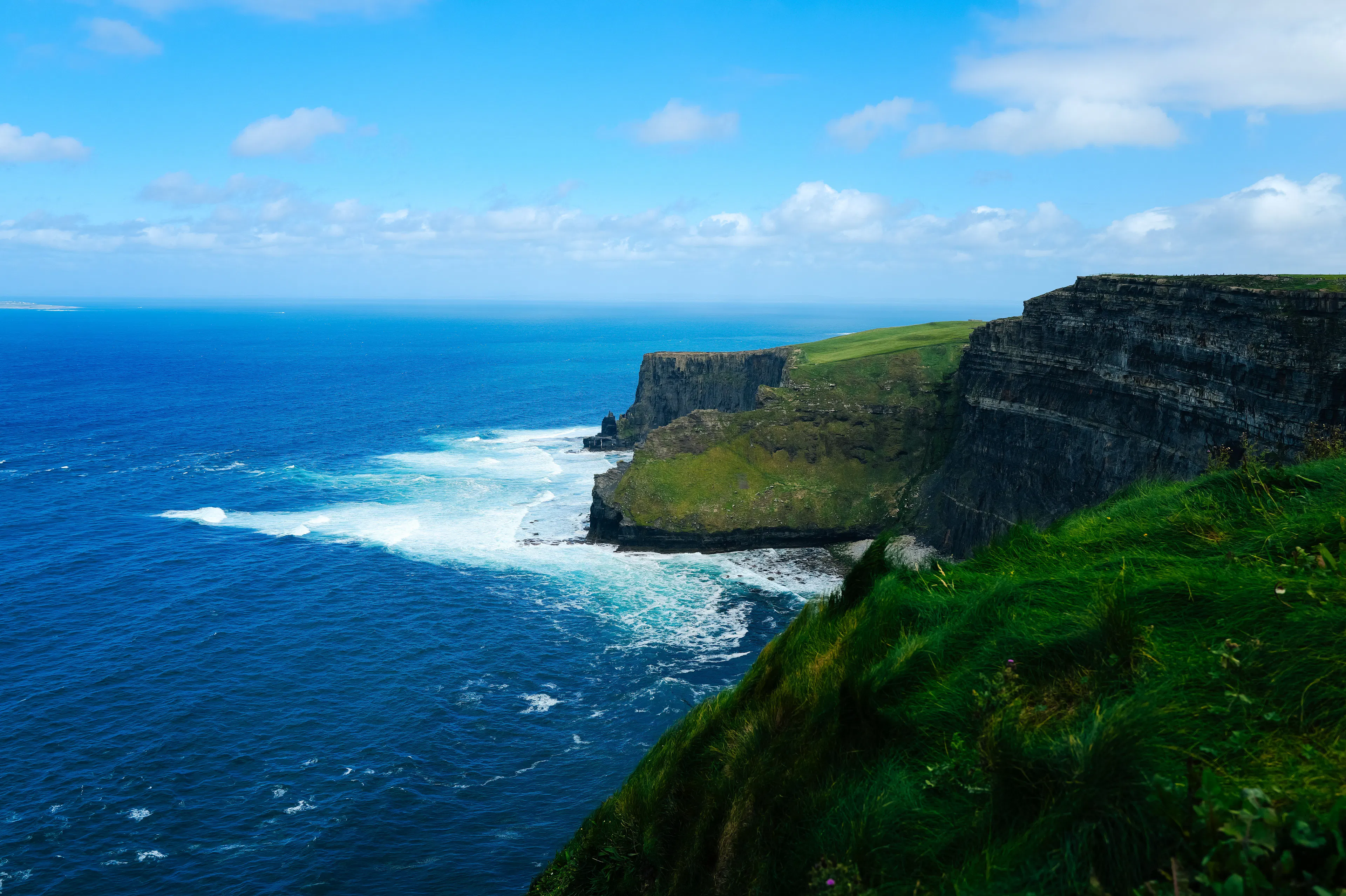
The best places to visit in Ireland are Dublin, Galway, the Cliffs of Moher, Killarney National Park, the Ring of Kerry, the Dingle Peninsula, Cork, Kilkenny, Connemara, the Aran Islands, Donegal, the Wicklow Mountains, Skellig Michael, Belfast, and the Giant’s Causeway.
Together, they give you the Ireland most travelers hope to find: lively cities, colorful small towns, dramatic Atlantic cliffs, green mountains, castle ruins, traditional pubs, ancient sites, and road trips where the drive is part of the experience.
This guide covers the whole island of Ireland, including Northern Ireland. If this is your first trip, you do not need to see all 15 places. A much better plan is to choose three or four regions that fit your time and travel style, then leave enough space for scenic stops and slower days.
- Dublin is best for history, pubs, museums, and an easy first stop.
- Galway is best for live music, food, and a lively west-coast base.
- The Cliffs of Moher are best for classic Atlantic scenery.
- Killarney National Park is best for lakes, forests, waterfalls, and easy outdoor days.
- The Ring of Kerry is best for one of Ireland’s most famous scenic drives.
- The Dingle Peninsula is best for rugged coast, small villages, and a slower road trip.
- Cork is best for food, markets, and a relaxed city break.
- Kilkenny is best for medieval streets, castles, and an easy overnight stop.
- Connemara is best for wild landscapes, mountains, and quiet roads.
- The Aran Islands are best for traditional island life, cycling, and sea views.
- Donegal is best for remote beaches, high cliffs, and fewer crowds.
- The Wicklow Mountains are best for hikes, lakes, and a nature escape close to Dublin.
- Skellig Michael is best for a once-in-a-lifetime island experience and early Christian history.
- Belfast is best for modern history, culture, and a different side of the island.
- The Giant’s Causeway is best for unusual geology and the Causeway Coast.
Dublin
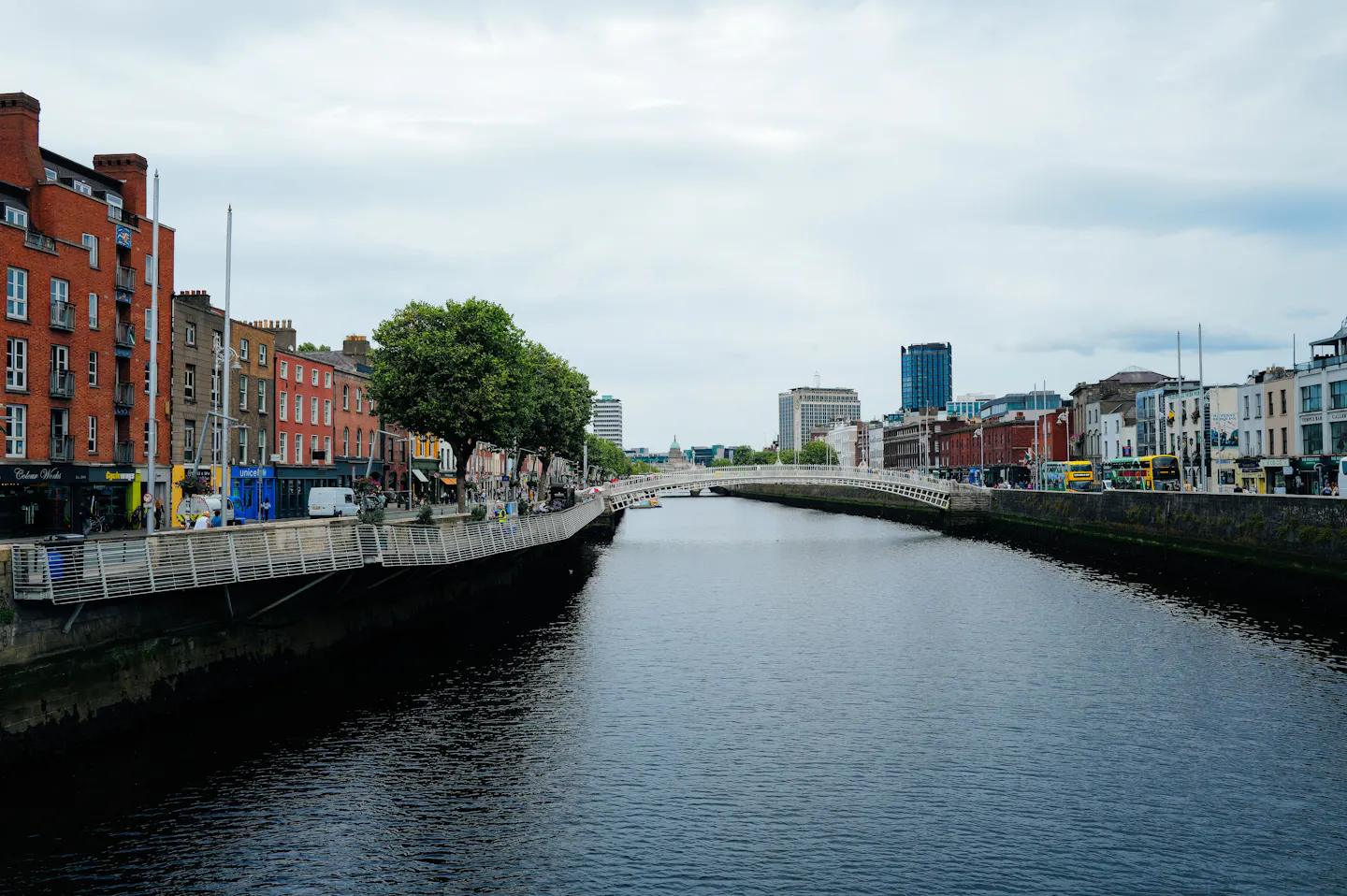
Best for: first-time visitors, history, museums, pubs, and a city break.
Dublin is the easiest place to begin an Ireland trip. It is compact enough to explore on foot, full of recognizable sights, and well connected to the rest of the country by train, bus, and road.
Start around Trinity College and the historic center, then walk toward Dublin Castle, St Patrick’s Cathedral, or the Georgian streets around Merrion Square. The Book of Kells experience is one of the city’s best-known cultural stops, while the Guinness Storehouse gives you a more modern version of Dublin’s history and identity.
Do not spend your whole visit checking off attractions. Dublin is at its best when you leave time for a pub, a neighborhood walk, a good dinner, and a little wandering. Temple Bar is worth seeing, but you will often find a more relaxed evening if you go beyond its busiest streets.
If you have an extra half day, head to Howth for a coastal walk and seafood without leaving the Dublin area.
How long to stay: 2 to 3 days.
Galway
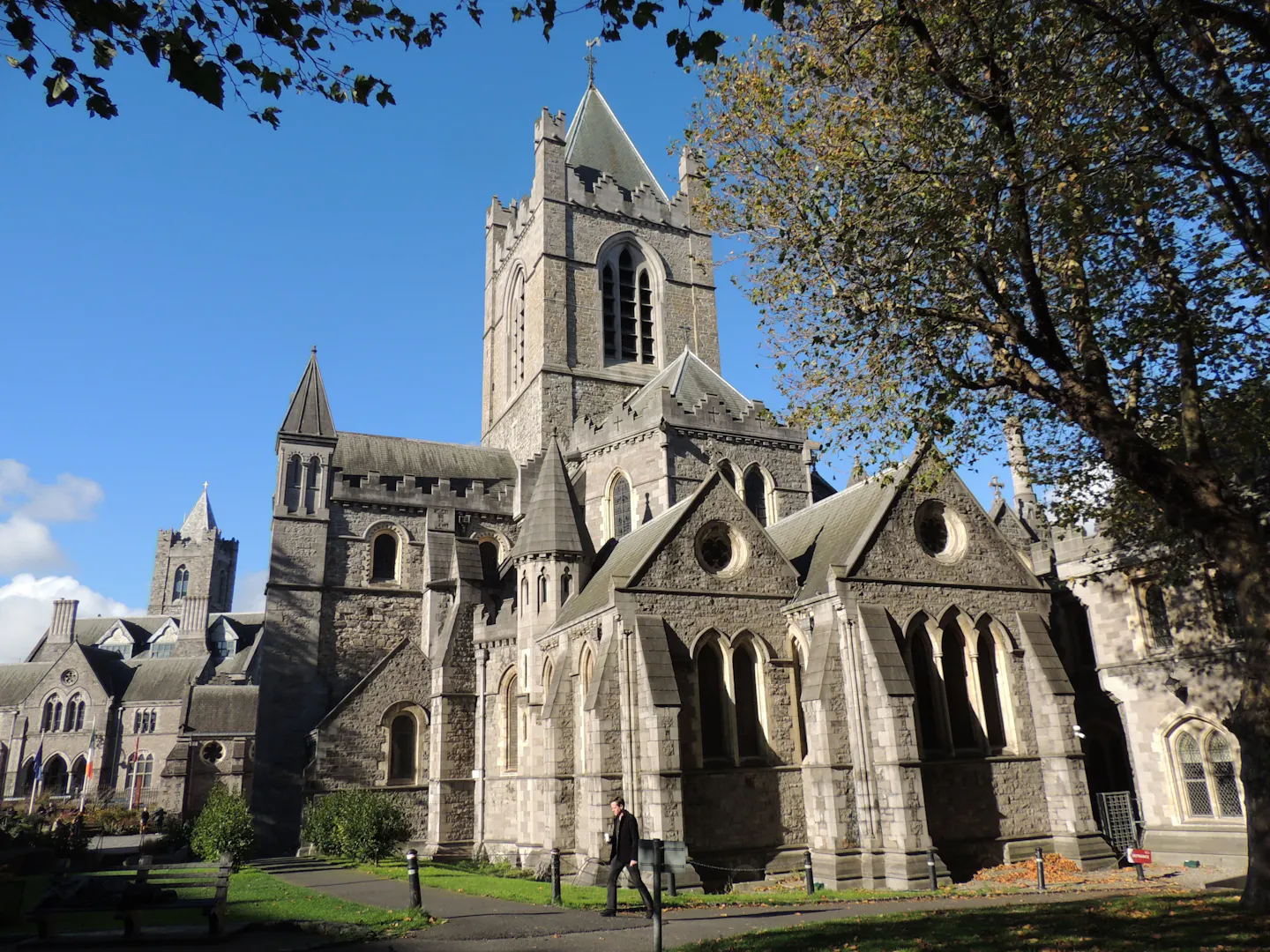
Best for: traditional music, food, nightlife, and exploring western Ireland.
Galway feels smaller and more spontaneous than Dublin. The center is easy to walk, colorful shopfronts fill the Latin Quarter, and live music seems to appear everywhere once the evening starts.
Spend time around Quay Street and the Spanish Arch, walk along the water toward Salthill, and make dinner part of the plan. Galway has a strong food scene, especially for seafood, bakeries, casual restaurants, and modern Irish cooking.
The biggest reason to include Galway, however, is location. It is one of the best bases for day trips to Connemara, the Aran Islands, and the Cliffs of Moher. If you do not want to drive every day, you can stay in Galway and still see a large part of the west.
How long to stay: 2 to 3 days.
Cliffs of Moher
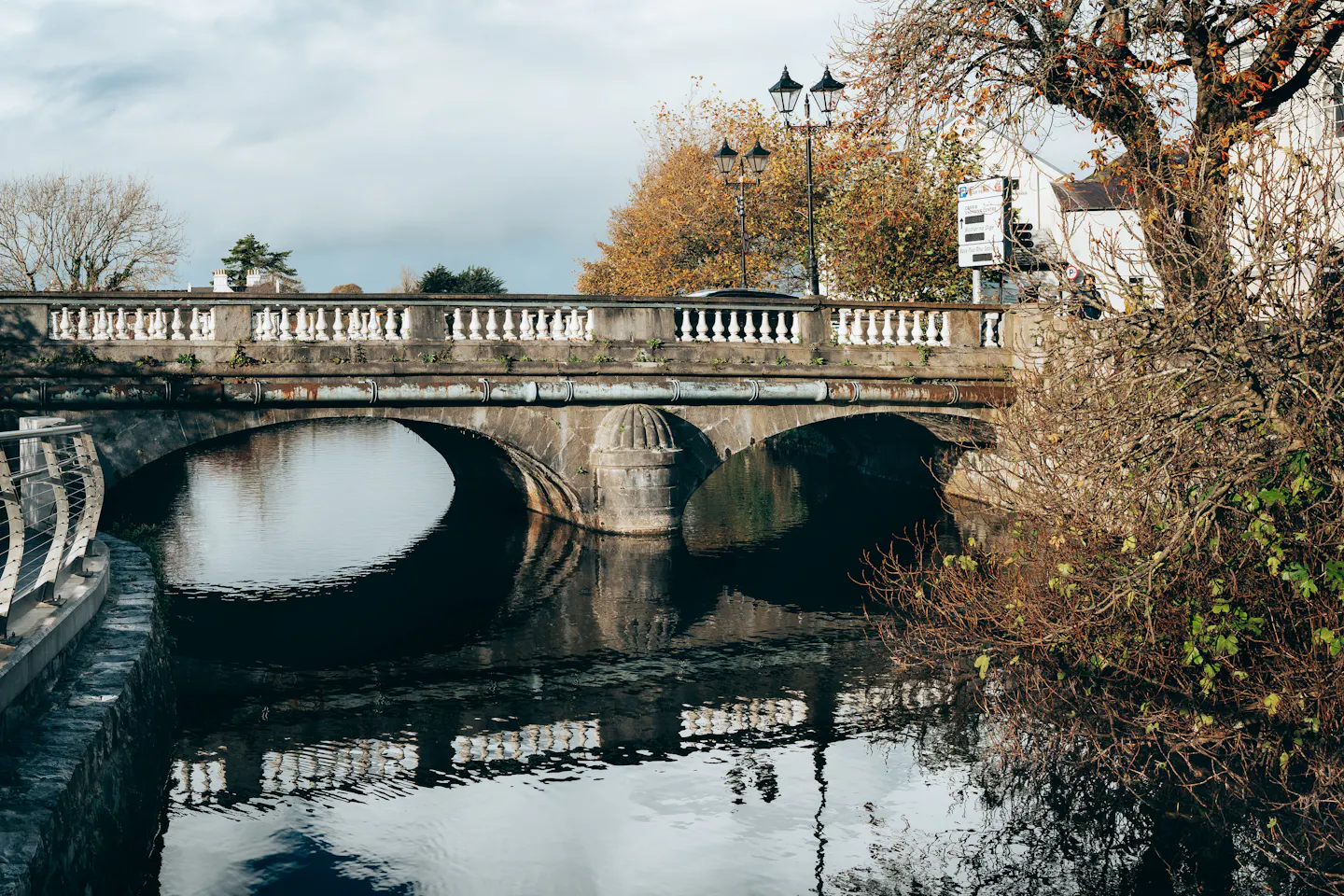
Best for: dramatic coastal views and one of Ireland’s most iconic landscapes.
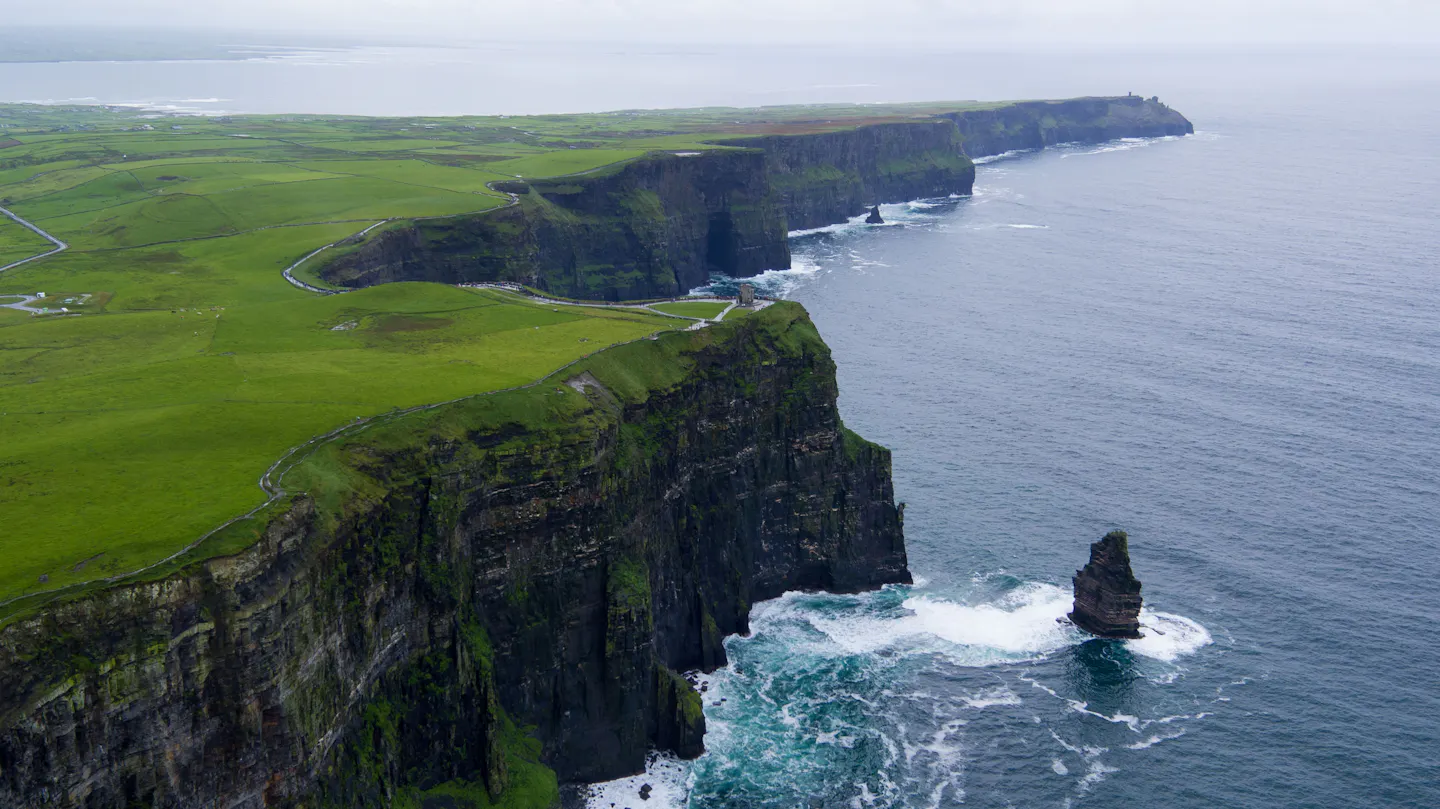
The Cliffs of Moher are one of those famous places that still make sense once you arrive. The Atlantic stretches out below you, green fields run almost to the cliff edge, and the scale is much bigger than it looks in photos.
The main visitor area is convenient, but the experience improves if you give yourself time to walk rather than only stopping for a viewpoint. Weather changes quickly here, so a clear morning can become misty and windy within an hour. That is part of the west-coast experience, but it also means you should keep your schedule flexible.
You can visit the cliffs as a day trip from Galway or Dublin, but they fit more naturally into a west-coast route through County Clare, especially if you also want to see Doolin or the limestone landscape of the Burren.
How long to stay: a half day, or one night nearby if you are road-tripping.
Killarney National Park
Best for: lakes, forests, waterfalls, walking, cycling, and easy access to County Kerry.
Killarney National Park is one of the best places in Ireland when you want nature without needing a difficult expedition. The park combines lakes, woodland, mountain views, historic estates, and well-known stops such as Muckross House and Torc Waterfall.
You can explore by foot, bicycle, boat, or traditional jaunting car. A simple day might include Muckross House, a walk around the lake, Torc Waterfall, and time in Killarney town for dinner.
Killarney also works extremely well as a base. From here, you can continue around the Ring of Kerry, head toward the Gap of Dunloe, or make a longer trip toward the Dingle Peninsula.
How long to stay: 2 to 3 nights in Killarney if you are exploring Kerry.
Ring of Kerry

Best for: scenic driving, viewpoints, beaches, villages, and a classic Irish road trip.
The Ring of Kerry is one of Ireland’s most famous driving routes for a reason. The loop around the Iveragh Peninsula takes you past mountains, Atlantic coastline, beaches, small towns, stone ruins, and viewpoints that make it hard to stick to a strict schedule.
Killarney is the most convenient starting point, but the route becomes more memorable when you stop often. Kenmare, Sneem, Waterville, Cahersiveen, and the Skellig Coast all give you reasons to slow down rather than treat the drive as one long photo stop.
You can technically do the loop in a day, but two days is much better if you want short walks, lunch by the coast, beach stops, or detours. Ireland rewards extra time more than aggressive mileage.
How long to stay: 1 to 2 days.
Dingle Peninsula

Best for: coastal roads, small towns, beaches, traditional culture, and a slower pace.
The Dingle Peninsula is smaller than the Ring of Kerry but can feel even more atmospheric. Dingle town gives you colorful streets, pubs, restaurants, and a good base, while Slea Head Drive brings you along one of the most beautiful stretches of coast in the country.
Expect narrow roads, stone walls, green hills, beaches, islands on the horizon, and plenty of places where you will want to pull over. Parts of the peninsula are in a Gaeltacht area, where Irish remains a community language, adding another layer to the trip.
Dingle is a good choice if you want to stay in one pleasant town and take scenic drives from there instead of changing hotels every night.
How long to stay: 2 nights.
Cork

Best for: food, markets, pubs, and a relaxed southern city break.
Cork has enough city energy to keep you busy, but it feels more local and less formal than many capitals. The center sits around the River Lee, with bridges, hills, independent shops, pubs, and one of Ireland’s best-known food markets.
The English Market is the obvious place to start if you like food. Then walk through the city center, stop for coffee, visit a gallery or museum, and treat Cork as a place to eat and wander rather than rush.
Cork is also a practical base for nearby trips. Blarney Castle is close, Cobh has a strong maritime history and colorful waterfront, and Kinsale is one of the best small-town stops in the south for restaurants and harbor views.
How long to stay: 1 to 2 days, or 3 days with nearby day trips.
Kilkenny

Best for: medieval architecture, castles, compact streets, and an easy overnight stop.
Kilkenny is one of the easiest places to add to an Ireland itinerary because the historic center is compact and immediately rewarding. Kilkenny Castle anchors the city, while the Medieval Mile connects churches, old lanes, historic buildings, pubs, and shops.
It is the kind of place where you do not need a complicated plan. Walk the center, visit the castle, stop for lunch, see St Canice’s Cathedral, and stay for the evening when the day-trippers have gone.
Kilkenny works particularly well between Dublin and the south or southwest, so it can break up a longer drive without feeling like a stop chosen only for convenience.
How long to stay: 1 night.
Connemara

Best for: wild landscapes, quiet roads, hiking, photography, and a slower side of Ireland.
Connemara is where Ireland starts to feel especially open and untamed. The landscape mixes dark lakes, bogs, mountains, stone walls, empty beaches, and small villages, with weather that can change the mood of the scenery in minutes.
Clifden is a useful base, and the Sky Road nearby is one of the region’s most scenic drives. Kylemore Abbey is another popular stop, while Connemara National Park gives you walking routes and mountain views if you want to spend more time outside.
The best approach here is not to fill every hour. Drive slowly, stop when a view looks good, have lunch in a small town, and leave room for weather changes.
How long to stay: 1 to 2 days, or longer for hiking.
Aran Islands

Best for: cycling, cliffs, stone landscapes, traditional culture, and a break from the mainland.
The Aran Islands sit off Ireland’s west coast and offer a very different rhythm from the mainland. Inis Mór is the largest and most visited island, and it is a great place to rent a bicycle and explore at your own pace.
The main sight is Dún Aonghasa, a prehistoric stone fort set beside dramatic sea cliffs. But the island itself is the real experience: narrow roads, stone walls, small beaches, scattered houses, and long stretches where the Atlantic is never far away.
Ferries operate from the Galway and Clare sides of the coast, and services can depend on weather and season. If the islands are a priority, give yourself some flexibility rather than attaching the trip to a tight connection later the same day.
How long to stay: a full day, or one night for a slower visit.
Donegal

Best for: wild coast, beaches, cliffs, national parks, and travelers who want fewer crowds.
Donegal is one of the best places to visit in Ireland if you want the scenery without feeling that every viewpoint is part of the same tourist circuit. It is farther from the classic Dublin-Galway-Kerry route, which is exactly why it feels different.
Slieve League offers some of the island’s most dramatic sea-cliff scenery. Glenveagh National Park brings mountains, lakes, woodland, and a historic castle, while the county’s coastline is full of beaches and small roads that make a road trip feel genuinely exploratory.
Do not add Donegal as a quick detour from Galway. It deserves its own time, especially because driving distances can look shorter on a map than they feel on Irish roads.
How long to stay: 2 to 3 days.
Wicklow Mountains

Best for: hiking, lakes, mountain scenery, and an easy nature trip from Dublin.
The Wicklow Mountains are one of the simplest ways to add nature to a Dublin-based trip. In less time than it takes to cross many major cities, the scenery changes to wooded valleys, open mountains, lakes, and quiet roads.
Glendalough is the most famous stop, combining an early monastic site with lakeside and mountain walks. Powerscourt Estate and Waterfall are also popular, and the wider Wicklow area works well for scenic drives and longer hikes.
You can visit on a day trip, but staying overnight gives you a much quieter experience and lets you explore before or after the busiest hours.
How long to stay: 1 day, or 1 night if hiking.
Skellig Michael

Best for: history, dramatic scenery, seabirds, and a truly unusual day trip.
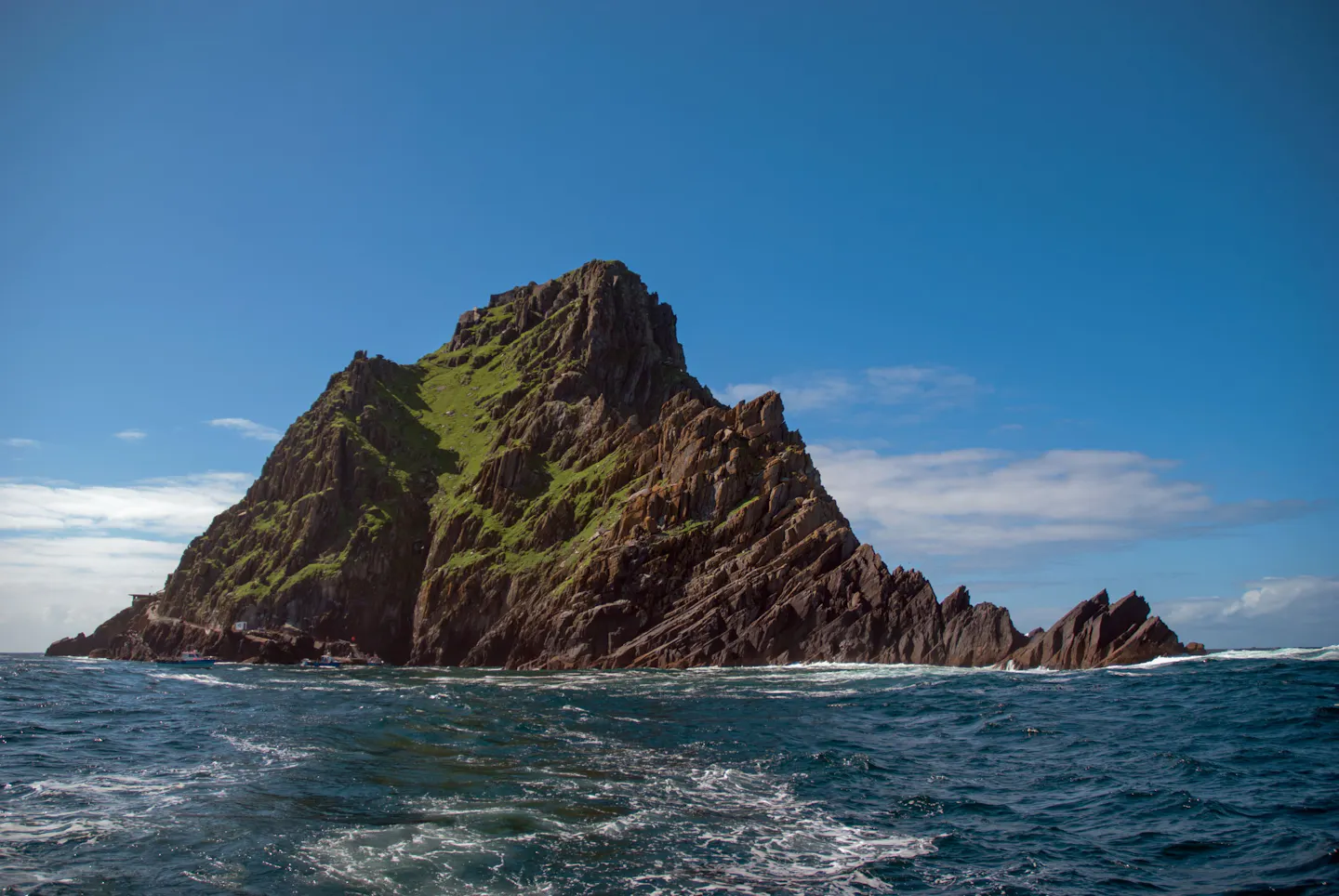
Skellig Michael, or Sceilg Mhichíl, rises from the Atlantic off County Kerry and is one of Ireland’s two UNESCO World Heritage Sites. Early Christian monks established a remote settlement on the island, and the surviving stone structures sit high above the sea.
Getting there is part of the experience. Landing trips are limited, seasonal, and highly dependent on sea conditions, so this is not a stop to plan casually. Book well ahead, keep some flexibility in your Kerry itinerary, and be prepared for steep stone steps and exposed terrain.
If you cannot land, boat trips around the Skelligs can still give you dramatic views of the islands and their seabird colonies.
How long to stay: a full day from the Kerry coast.
Belfast
Best for: modern history, museums, food, nightlife, and exploring Northern Ireland.
Belfast gives you a completely different city experience from Dublin or Galway. Its industrial history, political history, architecture, neighborhoods, and modern food scene all make it worth more than a quick stop on the way to the north coast.
Titanic Belfast is the headline attraction and tells the story of the ship in the city where it was built. The Cathedral Quarter is good for pubs, restaurants, and street art, while City Hall and the city center are easy to explore on foot.
If you want to understand Belfast’s more recent history, a guided tour can add useful context to places and murals that are difficult to interpret on your own.
Northern Ireland uses pound sterling rather than the euro, so keep that in mind if your trip crosses the border.
How long to stay: 1 to 2 days.
Giant’s Causeway

Best for: geology, coastal scenery, photography, and a Northern Ireland road trip.
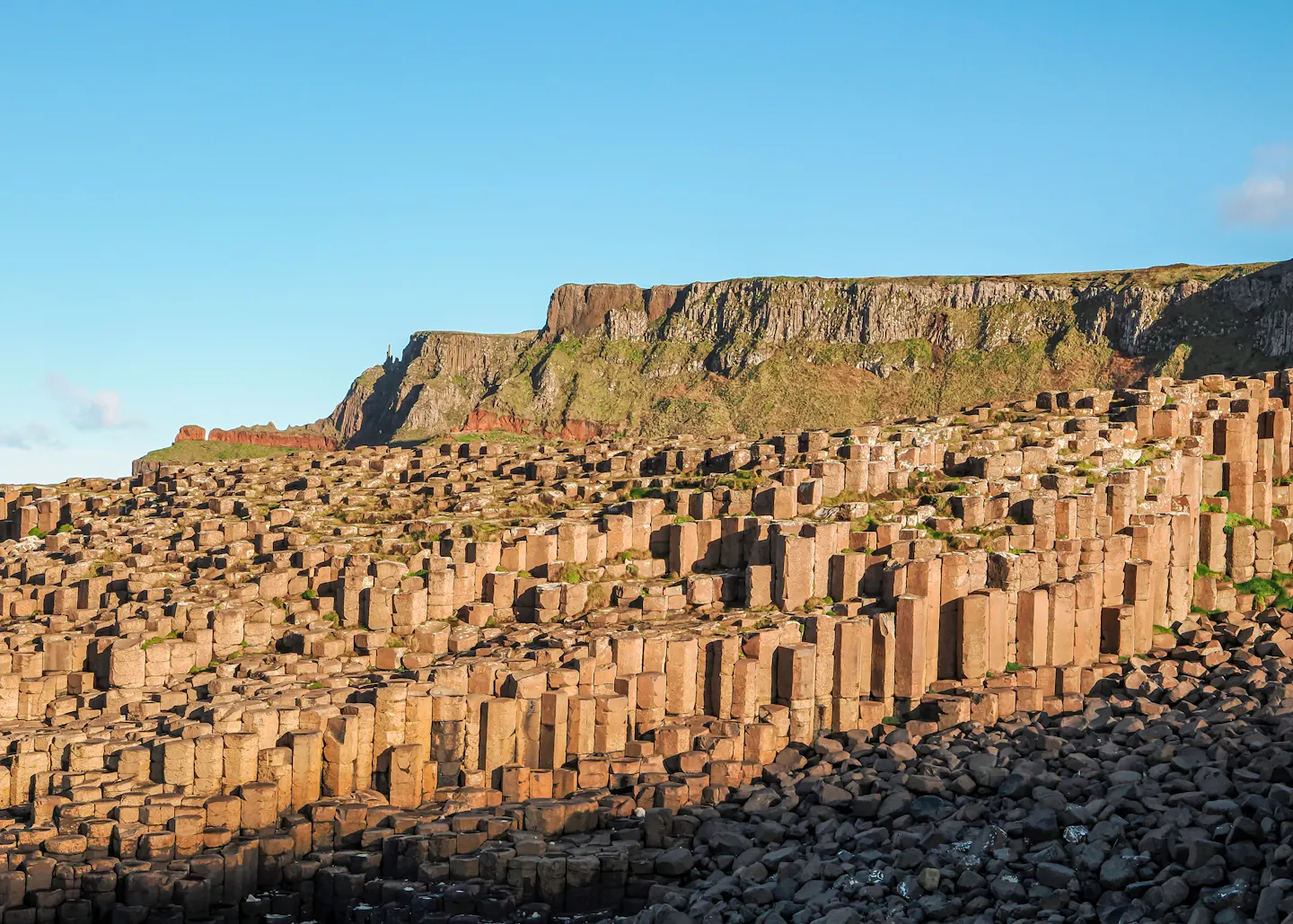
The Giant’s Causeway is made up of tens of thousands of basalt columns on the County Antrim coast, formed by ancient volcanic activity. It is a UNESCO World Heritage Site and one of the most recognizable natural landmarks on the island.
The stones are impressive, but the surrounding Causeway Coast is what makes the trip feel complete. Combine the site with cliff walks, Dunluce Castle, small coastal villages, and other stops along the Causeway Coastal Route.
Belfast works as a day-trip base, but staying on the north coast gives you more time and makes it easier to visit early or later in the day.
How long to stay: a half day for the site, or 1 to 2 days for the coast.
How to choose the best places in Ireland for your trip
For a first trip
Choose Dublin, Galway, the Cliffs of Moher, and County Kerry. This gives you a city, a lively west-coast base, a major natural landmark, and some of Ireland’s best road-trip scenery without trying to cover the entire island.
For the best road trip
Focus on Killarney, the Ring of Kerry, the Dingle Peninsula, and perhaps Cork. If you have more time, continue north through the Cliffs of Moher, Galway, and Connemara.
For nature and scenery
Prioritize Donegal, Connemara, Killarney National Park, the Dingle Peninsula, the Cliffs of Moher, and the Wicklow Mountains. These are the places where the landscape becomes the main reason for the trip.
For food and pubs
Dublin, Galway, Cork, and Belfast give you the strongest mix of restaurants, pubs, markets, live music, and easy evenings without driving.
For fewer crowds
Donegal and parts of Connemara are the best choices on this list. The Dingle Peninsula can also feel calmer if you stay more than one night and explore beyond the busiest stops.
For history
Choose Dublin, Kilkenny, Belfast, and Skellig Michael. You can also add Brú na Bóinne near Dublin if prehistoric Ireland is a major interest.
FAQ: best places to visit in Ireland
What is the number one place to visit in Ireland?
There is no single best place for every traveler, but County Kerry is one of the strongest all-round choices because it combines Killarney National Park, the Ring of Kerry, coastal scenery, small towns, and access to Skellig Michael.
For a first trip, the best overall route is usually Dublin plus Galway, the Cliffs of Moher, and Kerry.
How many days do you need in Ireland?
Seven days is enough for a good first trip if you keep the route focused. Choose around three main bases instead of trying to cross the island every day.
With 10 to 14 days, you can combine Dublin, Galway, Clare, Kerry, Cork, and one additional region such as Donegal or Northern Ireland without turning the trip into a race.
Do you need a car to travel around Ireland?
Not everywhere. Dublin, Galway, Cork, and Belfast are easy to visit without a car, and organized tours can take you to major sights such as the Cliffs of Moher or the Giant’s Causeway.
A car becomes much more useful for Connemara, Kerry, Donegal, the Dingle Peninsula, and smaller villages where public transport is limited or less frequent.
What is the best time to visit Ireland?
Late spring and early autumn are excellent for many travelers because you can get long enough days for sightseeing without the busiest summer crowds. Summer has the longest daylight and the widest choice of tours, but it is also the most popular period.
Ireland’s weather is changeable in every season, so the best plan is to pack layers and build some flexibility into outdoor days.
What are the most beautiful places in Ireland?
The Cliffs of Moher, Dingle Peninsula, Connemara, Killarney National Park, Ring of Kerry, Donegal, Wicklow Mountains, Skellig Michael, and the Causeway Coast are among the strongest choices for scenery.
The best one depends on the landscape you prefer: cliffs, beaches, mountains, lakes, or quiet rural roads.
Is it worth visiting Northern Ireland on the same trip?
Yes, especially if you have at least 10 days or are particularly interested in Belfast and the Causeway Coast. Northern Ireland is part of the United Kingdom and uses pound sterling, and entry requirements can differ depending on your passport, so check the rules for both Ireland and the UK before your trip.
If your trip is only five to seven days, staying focused on one part of the island usually creates a better experience.
Plan your Ireland trip with EasyMiles
Choosing the best places to visit in Ireland is the easy part. The harder part is turning Dublin, Galway, Kerry, Connemara, coastal drives, restaurant stops, ferry times, and changing weather into a trip that actually makes sense day by day.
EasyMiles creates a complete travel itinerary around your destination, dates, interests, food preferences, and preferred pace. Instead of giving every traveler the same list of famous sights, it helps you combine the places you genuinely want to see into realistic days, with restaurants, activities, local tips, and travel time considered together.
That is especially useful in Ireland, where the route matters. A place can look close on the map but take longer to reach on smaller roads, a boat trip may depend on weather, and a rainy afternoon can completely change what feels worth doing.
Use EasyMiles to plan the whole trip in one place: decide which parts of Ireland fit your time, build the route, find places to eat and things to do, and adjust the itinerary when your plans change. You spend less time moving pins around a map and more time enjoying the trip.