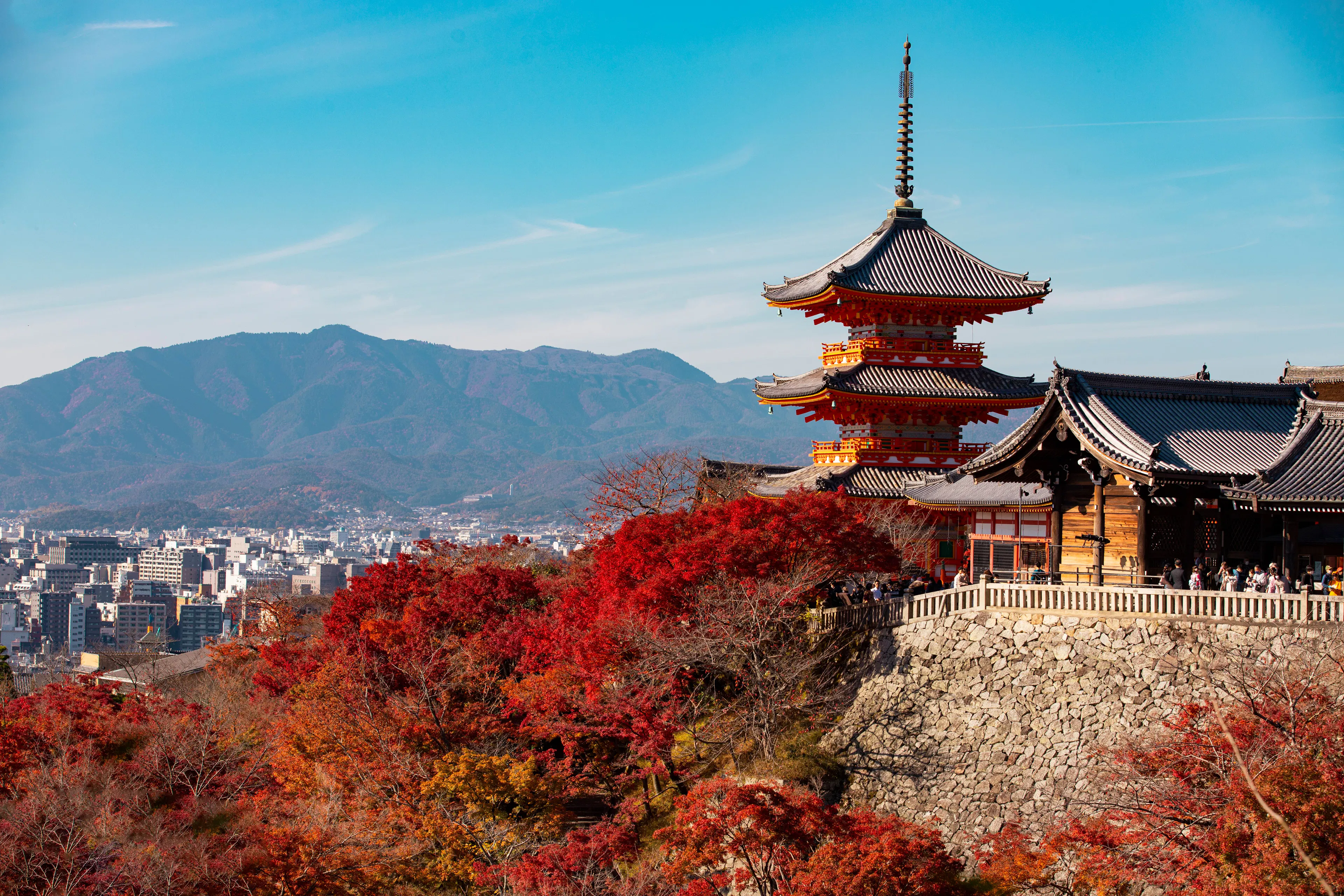
If you are planning your first autumn trip to Japan, Kyoto is the best all-round choice for red maples around temples and gardens, Nikko is ideal for mountain scenery close to Tokyo, and Lake Kawaguchi gives you the classic view of Mount Fuji framed by autumn leaves. For earlier foliage, head north to Hokkaido or Tohoku. For the easiest city-based trip, Tokyo and Kyoto usually work best later in the season.
Japan’s autumn foliage season is long because the colors move gradually from the colder north and higher mountains toward warmer cities in central and southern Japan. The first leaves can start changing in Hokkaido in September, while Tokyo, Kyoto, Nara, and other warmer destinations often look their best in November and sometimes into early December.
Here are the best places to see autumn leaves in Japan, when to go, and what makes each one worth adding to your route:
- Kyoto — the classic temple-and-garden autumn, best from mid-November to early December.
- Nikko — mountains, waterfalls and shrines within reach of Tokyo, best from mid-October.
- Lake Kawaguchi — red maples with Mount Fuji behind them, best in early to mid-November.
- Daisetsuzan National Park — Japan’s earliest colors, from September in Hokkaido.
- Oirase Gorge and Lake Towada — a forest walk beside a stream, best from late October.
- Tateyama Kurobe Alpine Route — dramatic mountain foliage, best from late September through October.
- Hakone — autumn leaves with onsen and ryokan stays, through October and November.
- Tokyo — golden ginkgo avenues and city gardens, best from mid-November.
- Nara — temples, deer and mature trees, best from mid-November.
- Koyasan — a quieter mountain temple town, best around early November.
When is the best time to see autumn leaves in Japan?
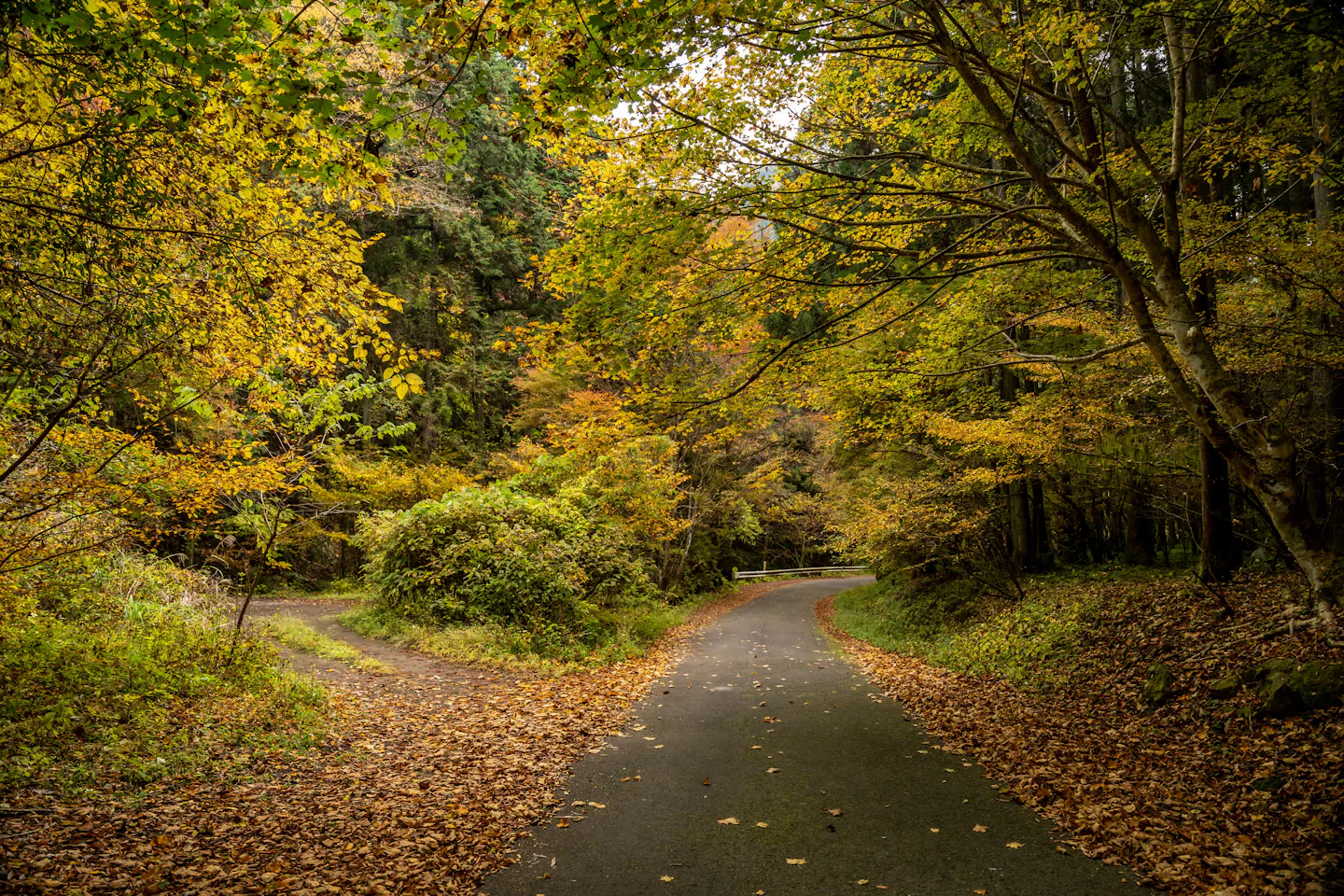
For most first-time travelers, November is the easiest month to plan around. It gives you a good chance of seeing autumn colors in Tokyo, around Mount Fuji, Kyoto, Nara, and other popular parts of central and western Japan.
The season starts much earlier in the north and in high mountain areas. Daisetsuzan in Hokkaido can already be colorful in September. Tohoku, Nikko, and the Japanese Alps are usually better in October or early November. Kyoto and Tokyo tend to come later, often from mid-November into early December.
A useful rule is to think about Japan’s autumn leaves as a moving wave rather than one fixed week. Higher elevations change first. Lower cities change later. Weather can also move peak color earlier or later from year to year, so treat all dates as planning windows rather than guarantees.
Quick autumn foliage calendar for Japan
- September: Daisetsuzan National Park and other high-altitude areas of Hokkaido.
- October: Hokkaido, Tohoku, Nikko, the Japanese Alps, and higher mountain areas.
- Early November: Nikko, Oirase Gorge, Koyasan, Hakone, Lake Kawaguchi, and lower parts of the Japanese Alps.
- Mid to late November: Kyoto, Tokyo, Nara, Lake Kawaguchi, Hakone, and many parts of central Japan.
- Early December: Late color can still be possible in Kyoto, Tokyo, Nara, and warmer parts of western Japan.
Kyoto: best overall place for classic Japanese autumn scenery
Best time: Mid-November to early December
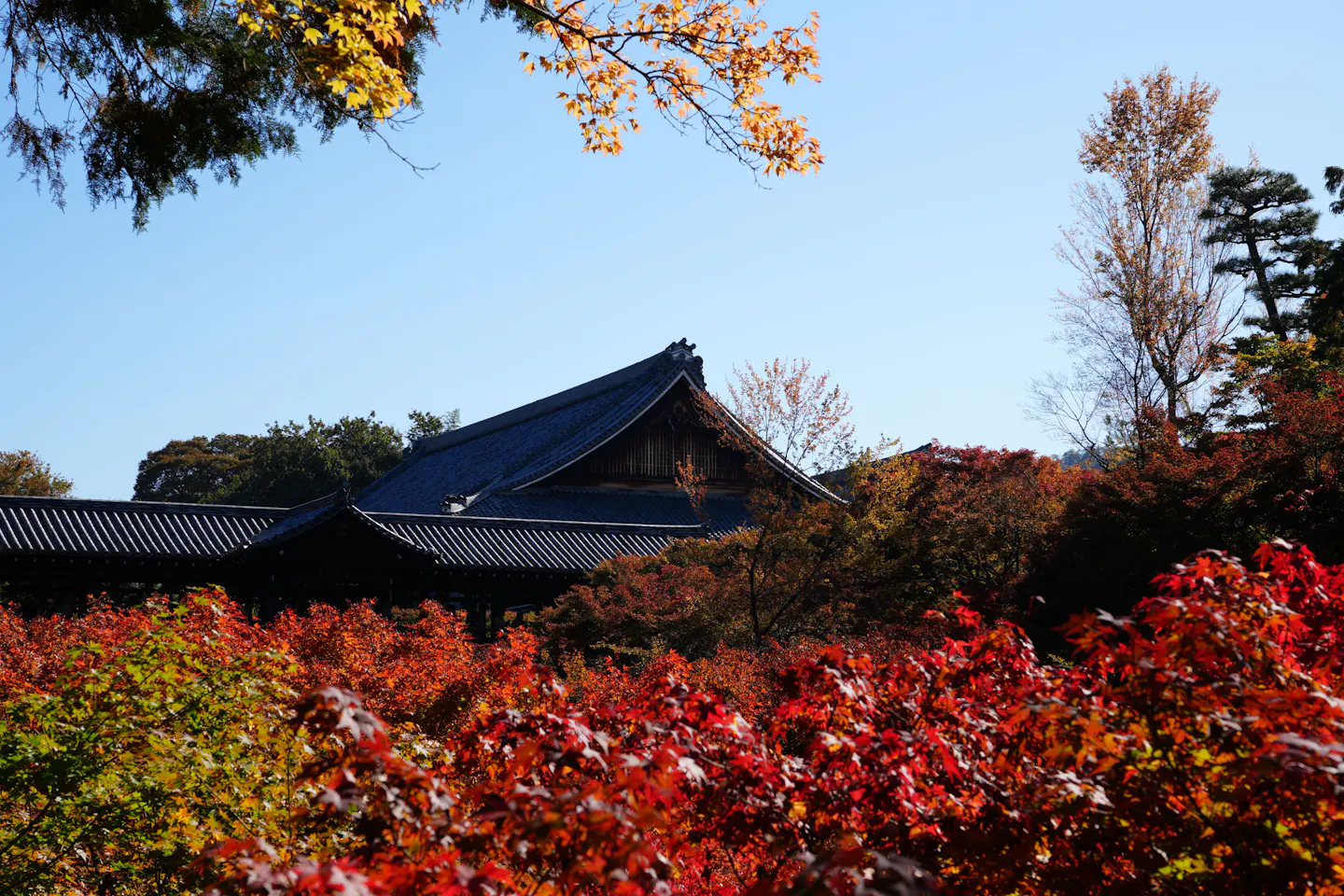
Kyoto is probably the first place most travelers imagine when they think about autumn in Japan, and for good reason. Red maple leaves surround wooden temples, stone paths, ponds, pagodas, and traditional gardens, so the foliage feels like part of the architecture rather than just a nice background.
Kiyomizu-dera is one of the most famous choices. The temple sits above a wooded hillside, which turns red and orange later in November. Some years there are also evening illuminations during the autumn season, which give the area a completely different atmosphere after dark.
Eikando is another favorite for maple leaves, while Tofuku-ji is famous for views over a valley of red foliage from its bridges. In Arashiyama, you can combine autumn colors with the river, mountain scenery, temples, and the bamboo grove.
Kyoto is also one of the busiest autumn destinations in Japan. If foliage is a major reason for your trip, stay for several nights instead of trying to fit the city into one rushed day. Start early in the morning, visit one or two major autumn spots, then spend the rest of the day exploring quieter neighborhoods, gardens, and restaurants.
Best for: first-time visitors, temple lovers, couples, photographers, and travelers who want the most iconic autumn-in-Japan experience.
Nikko: best autumn day trip or overnight trip from Tokyo
Best time: Mid-October to early November in the higher areas, with color continuing later at lower elevations
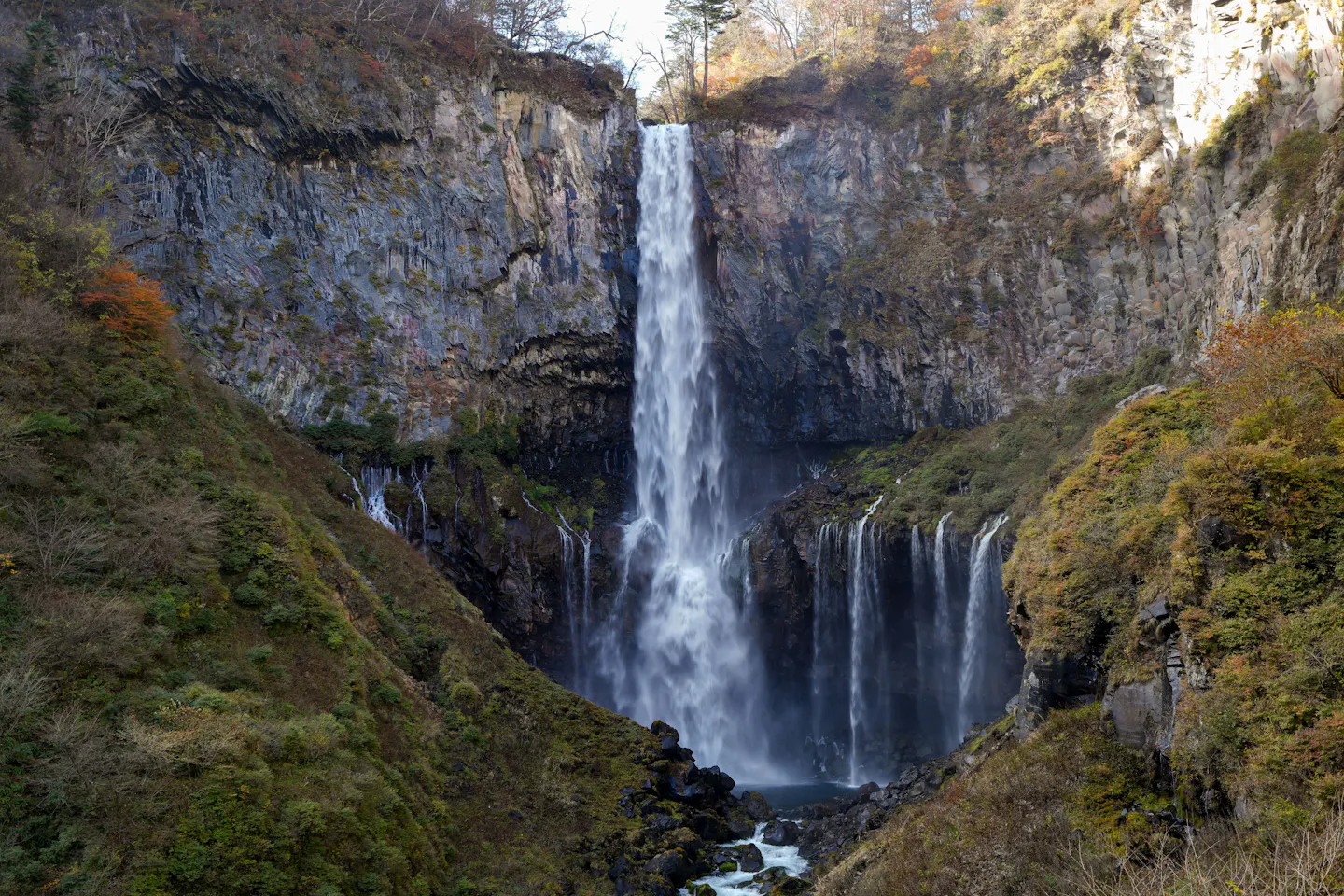
Nikko is one of the best places to see autumn leaves without traveling too far from Tokyo. The area combines mountains, forests, waterfalls, lakes, winding roads, and some of Japan’s most famous shrines.
The best-known autumn route climbs from central Nikko toward Lake Chuzenji along the Irohazaka road. The road is surrounded by forest and is famous for its many hairpin turns. In autumn, the mountainsides become a mix of red, orange, yellow, and green.
Around Lake Chuzenji, you can continue to Kegon Falls, Ryuzu Falls, and lakeside viewpoints. Lower down, the temple and shrine area gives you a different kind of scenery, with autumn leaves around historic buildings including Nikko Toshogu.
Nikko works as a day trip, but autumn traffic can be heavy, especially around Irohazaka. Staying overnight gives you more time and makes it easier to start before the biggest crowds arrive.
Best for: nature, waterfalls, temples, scenic drives, and travelers visiting Tokyo in October or early November.
Lake Kawaguchi: best autumn leaves with Mount Fuji views
Best time: Early to mid-November
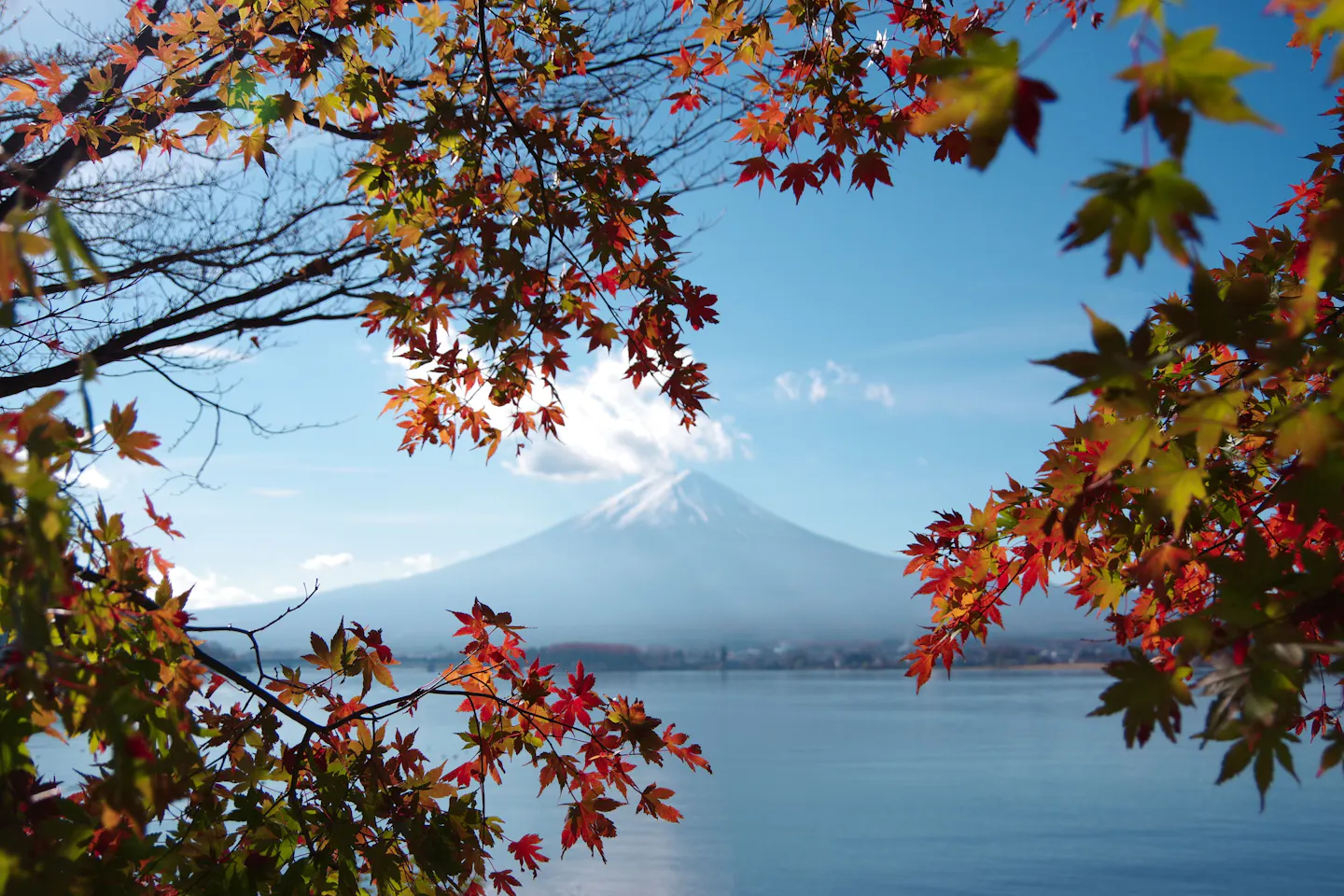
If you want the postcard version of autumn in Japan, Lake Kawaguchi is hard to beat. On a clear day, you can see Mount Fuji across the lake with red maple leaves in the foreground.
The northern shore is especially popular during autumn. The Momiji Corridor, or Maple Corridor, is lined with maple trees that turn deep red and orange. The wider lake area also has cycling routes, viewpoints, museums, cafes, hot-spring hotels, and places where you can stop for different Fuji views throughout the day.
The main challenge is weather. Mount Fuji can disappear behind clouds even when the foliage is perfect. If the view matters a lot to you, staying one night is smarter than relying on a single afternoon from Tokyo. Early morning also tends to give you a better chance of clear mountain views.
Lake Kawaguchi is an easy place to combine with Tokyo, Hakone, or a longer route toward Kyoto.
Best for: Mount Fuji views, couples, photographers, onsen stays, and first-time visitors.
Daisetsuzan National Park: best place for the earliest autumn leaves in Japan
Best time: September to early October, depending on elevation
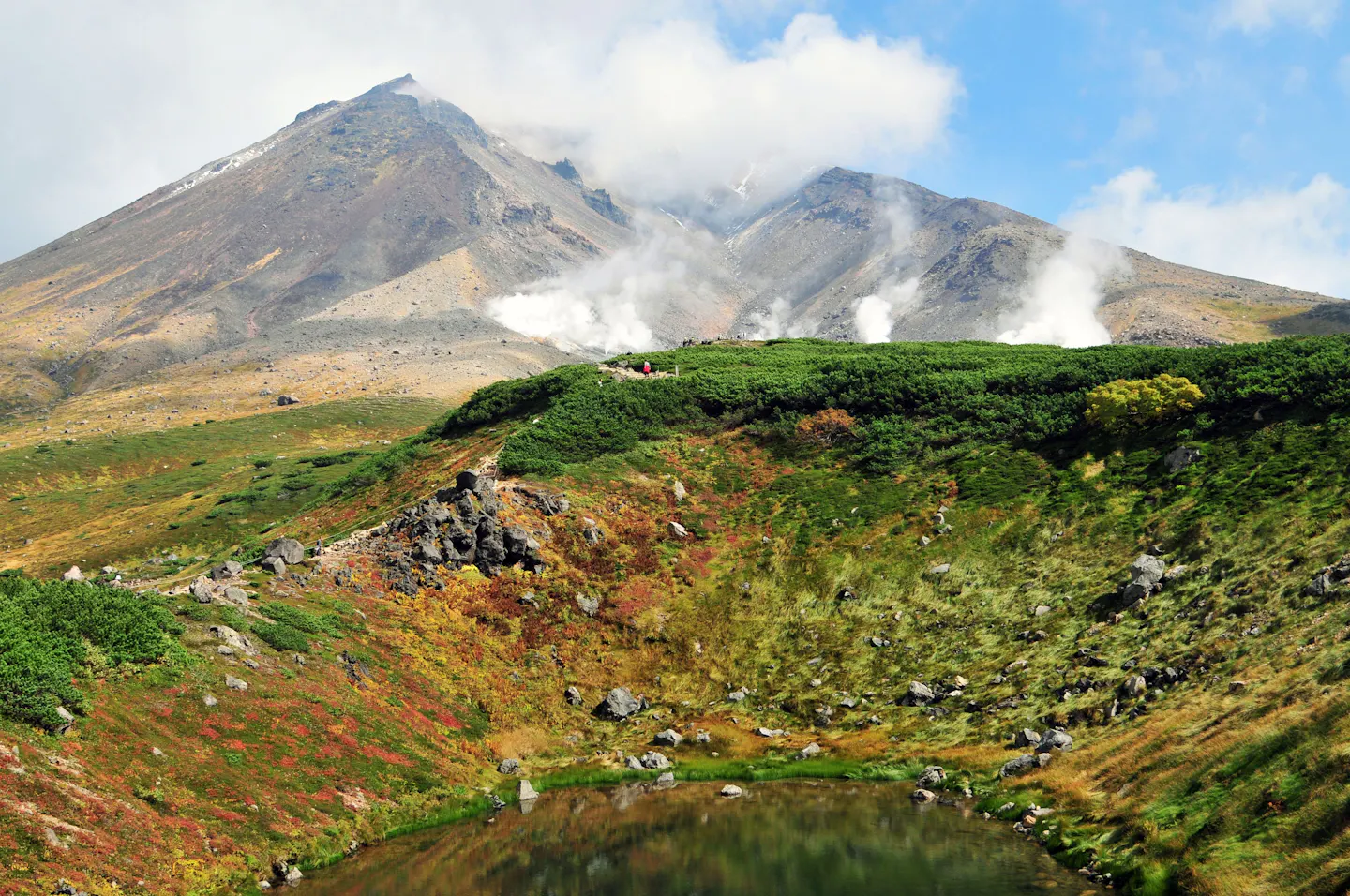
Daisetsuzan National Park in Hokkaido is one of the first places in Japan to change color. If your trip is in September and you are too early for Kyoto or Tokyo, this is where to look.
The landscape here feels very different from the temple-and-garden version of autumn. Daisetsuzan is about wide mountain views, alpine plants, volcanic scenery, forests, hiking trails, and ropeways.
Around Asahidake and Kurodake, the colors can begin appearing at high elevations while much of the rest of Japan still feels like late summer. The mix of red rowan, yellow foliage, dark evergreens, and mountain terrain creates some of the most dramatic autumn scenery in the country.
This is a proper outdoor destination, so plan for colder temperatures and quickly changing mountain weather. Snow can arrive surprisingly early at higher elevations.
Best for: hikers, photographers, nature lovers, and travelers visiting Japan in September.
Oirase Gorge and Lake Towada: best for a forest walk beside waterfalls
Best time: Late October to early November
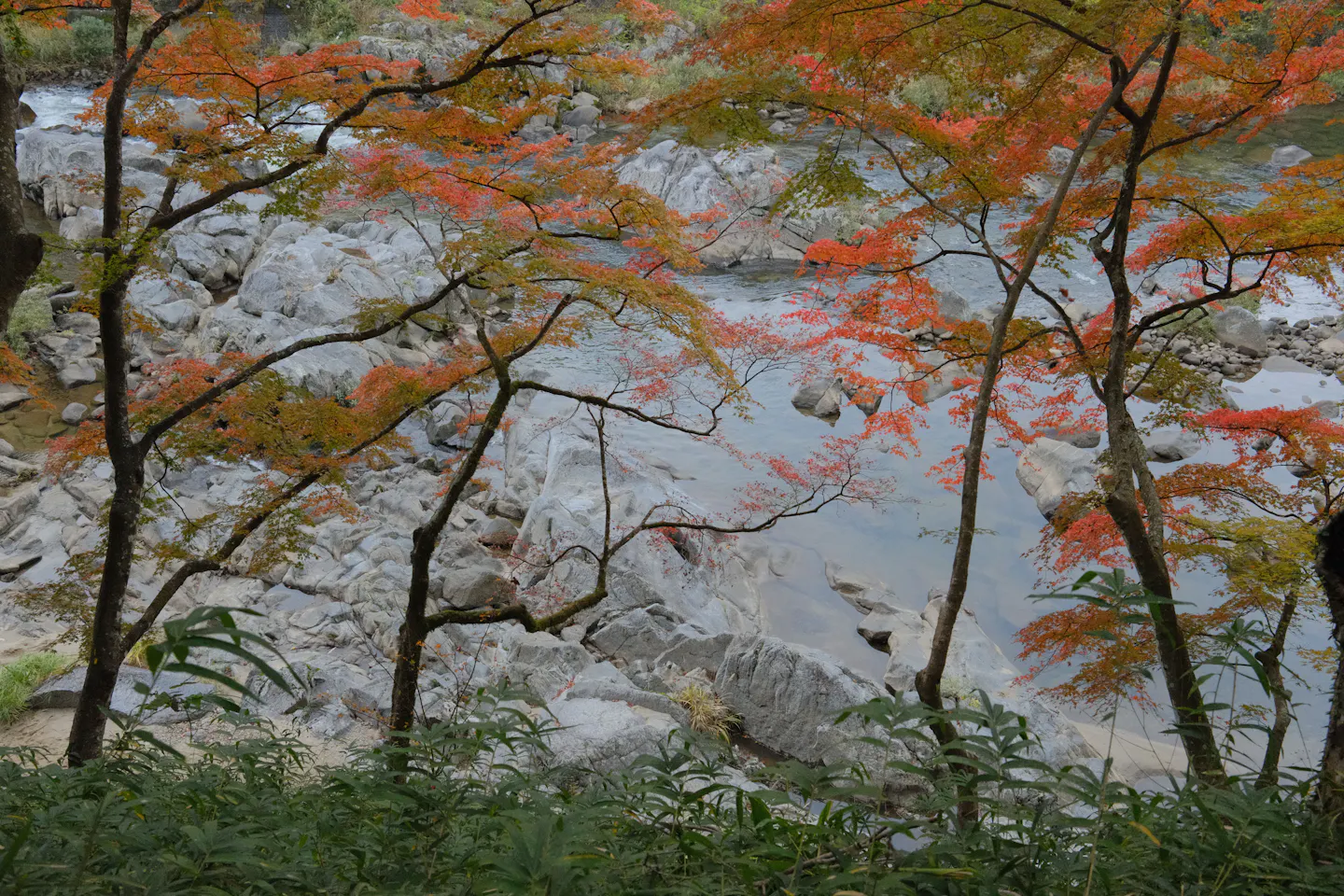
Oirase Gorge in Aomori Prefecture is one of the most beautiful places to experience autumn at walking level. Instead of looking at the forest from a distant viewpoint, you walk through it beside a clear stream, mossy rocks, small rapids, and waterfalls.
The walking route follows Oirase Stream toward Lake Towada. During peak foliage, yellow and red leaves hang over the water while fallen leaves collect along the path and riverbanks.
It is a slower kind of autumn experience than a famous temple or city viewpoint. The main attraction is simply walking, stopping, and letting the scenery build around you.
Combine Oirase with Lake Towada if you have time. The lake gives you wider views and makes the area worth at least one full day. Tohoku is also a good choice if you want autumn colors earlier than Tokyo and Kyoto and do not mind going farther off the standard first-time route.
Best for: walking, waterfalls, quiet nature, photography, and travelers who want to explore northern Japan.
Tateyama Kurobe Alpine Route: best for dramatic mountain foliage
Best time: Late September through October at higher elevations, later at lower elevations
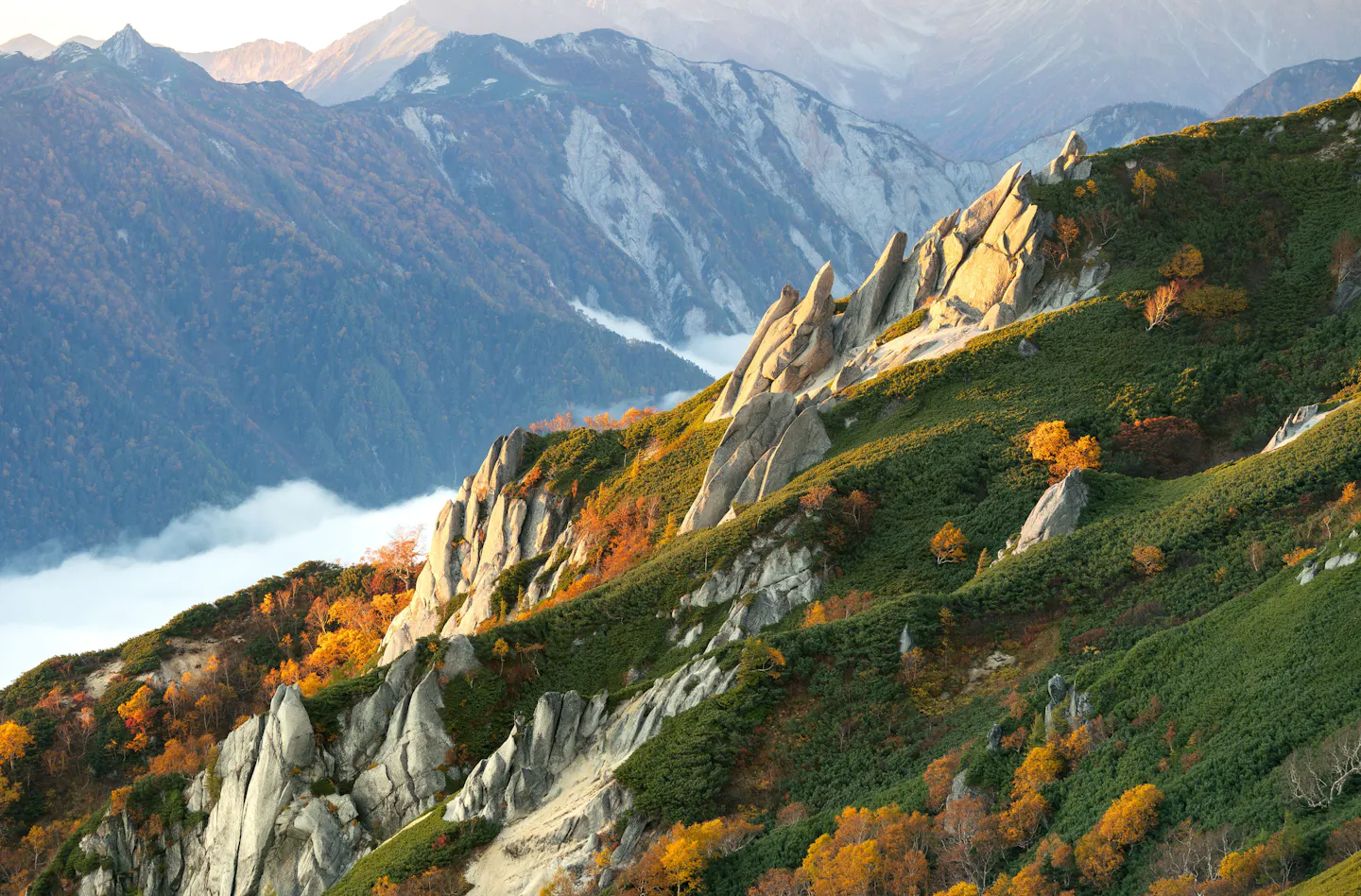
The Tateyama Kurobe Alpine Route crosses the Japanese Alps between Toyama and Nagano. Because the route climbs through a huge range of elevations, autumn arrives in stages.
That is what makes it special. You can see bare rocky peaks, patches of early snow, red and yellow mountain vegetation, and greener forest lower down, sometimes within the same journey.
The route uses a combination of buses, cable cars, ropeways, and other mountain transport. Murodo is the highest major point and one of the best stops if you want short walks and big alpine views. Lower sections around the dam and forested valleys change later.
This is not the best option for someone who wants a relaxed city trip. It takes planning, the weather can change quickly, and the transport route has a defined operating season. But if you want Japan’s autumn leaves on a much larger scale, it is one of the most impressive choices.
Best for: mountain scenery, scenic transport, hikers, photographers, and repeat visitors to Japan.
Hakone: best for autumn leaves, onsen, and an easy escape from Tokyo
Best time: October through November, with timing depending on elevation
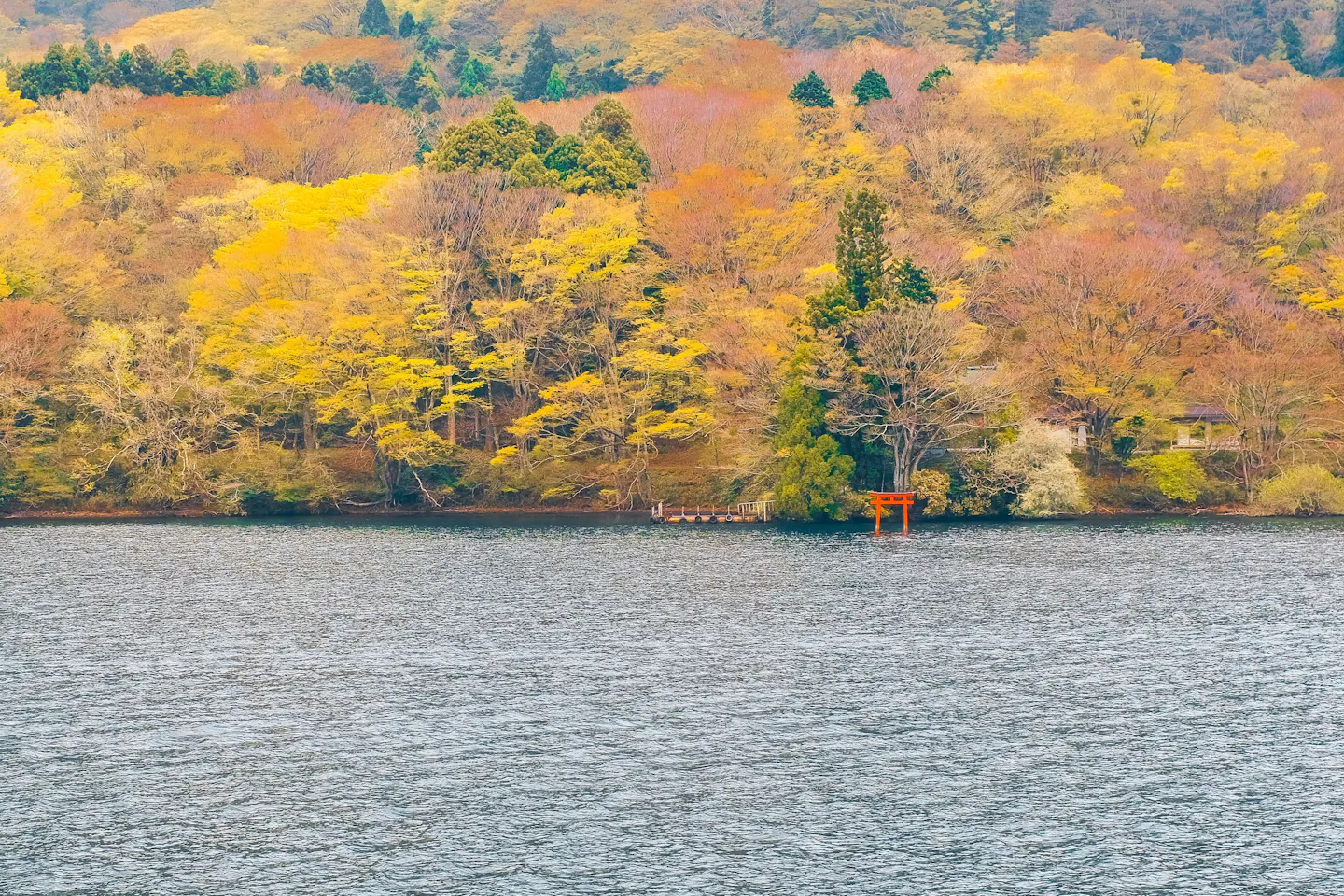
Hakone is a good choice if you want autumn scenery without building your whole trip around leaf viewing. You can stay in a ryokan, soak in an onsen, visit museums, ride mountain transport, and see forested hills that gradually turn red and yellow.
Gora is one of the easiest bases, with access to Gora Park, the Hakone Open-Air Museum, cable cars, ropeways, and nearby hotels. On clear days, parts of Hakone also offer views toward Mount Fuji.
Because Hakone covers different elevations, the leaves do not all turn at once. This can actually help if you are slightly early or late for peak color in one part of the area.
For a relaxed trip, stay overnight rather than trying to rush through the full Hakone loop in a few hours.
Best for: couples, onsen, ryokan stays, art, and travelers who want autumn scenery close to Tokyo.
Tokyo: best for easy autumn foliage without leaving the city
Best time: Mid-November to early December
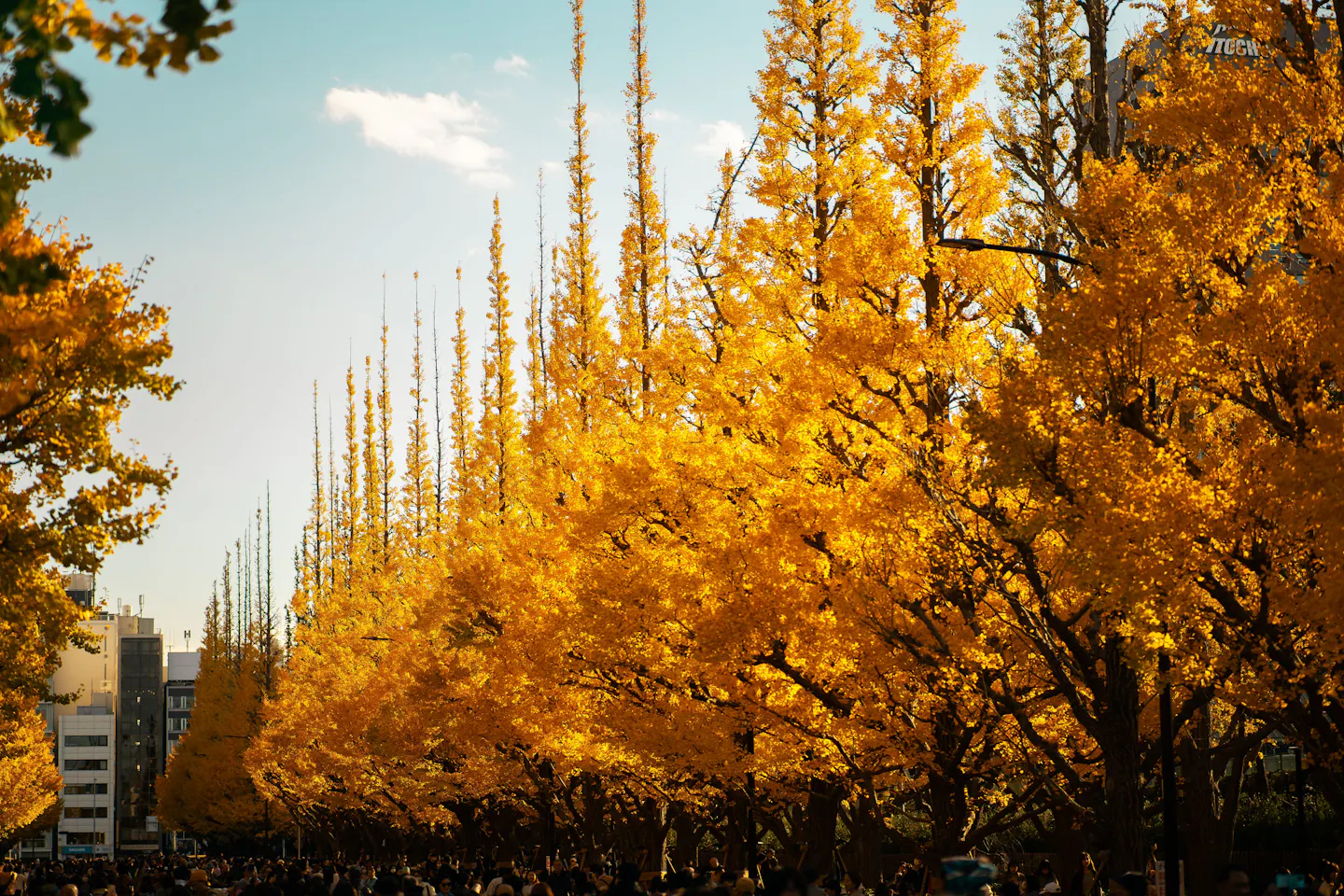
You do not need to leave Tokyo to see strong autumn colors. The city has excellent gardens, parks, temple grounds, and long avenues of golden ginkgo trees.
Meiji Jingu Gaien is one of the most recognizable autumn spots, with a straight avenue of ginkgo trees that turn bright yellow. Rikugien is better if you want a traditional Japanese garden with maples around ponds, bridges, and landscaped hills.
You can also look at Shinjuku Gyoen, Koishikawa Korakuen, or head toward Mount Takao for a more natural day trip from the city.
Tokyo is especially useful if your dates are late in the season. While northern mountain areas may already be past peak, city gardens can still be colorful in late November and sometimes into early December.
Best for: short trips, first-time visitors, city breaks, and travelers arriving later in autumn.
Nara: best for autumn leaves with temples and deer
Best time: Mid-November to early December
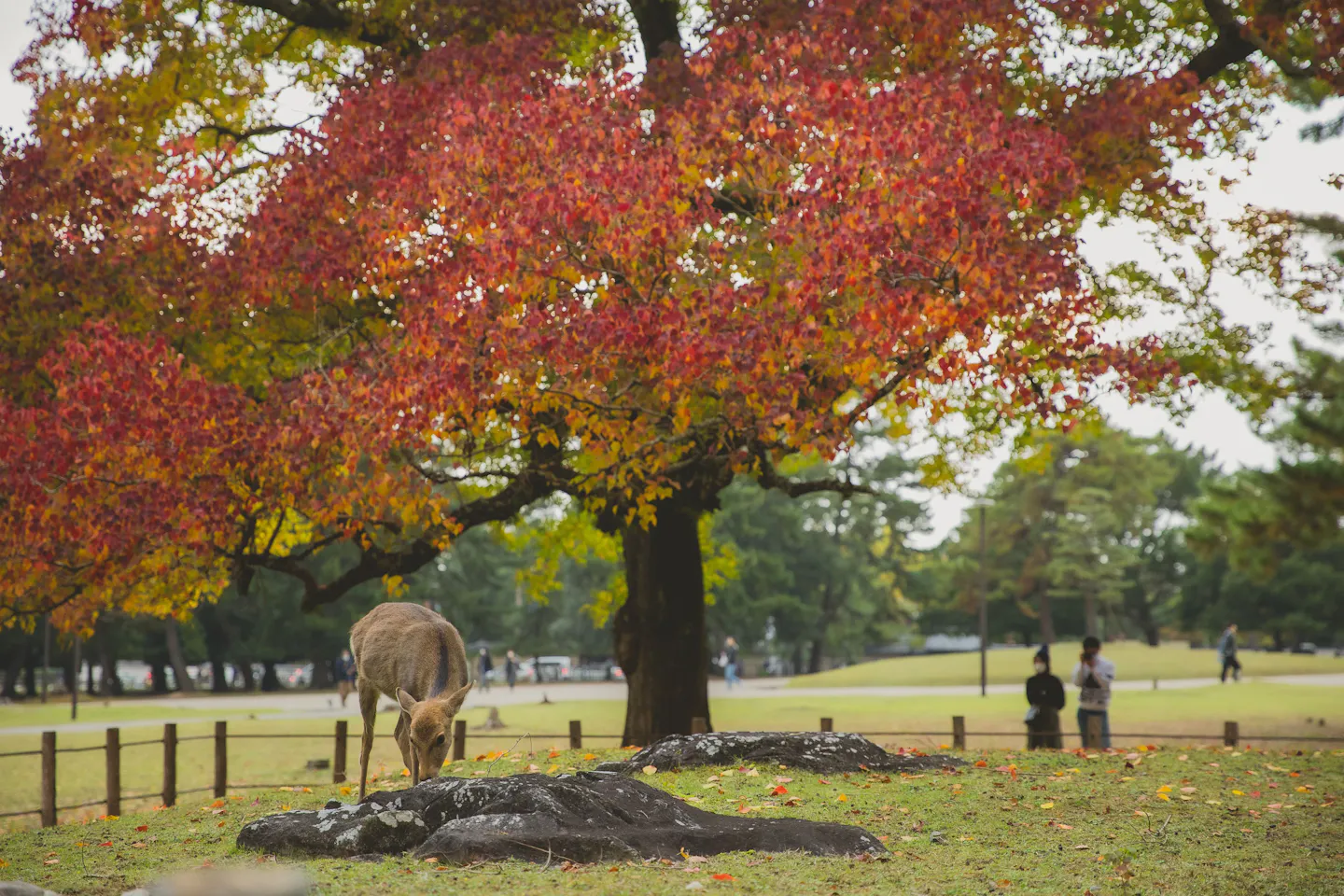
Nara is an easy addition to a Kyoto or Osaka trip and works especially well in autumn. Nara Park, Todaiji Temple, Kasuga Taisha, and the surrounding walking paths are filled with mature trees, so you can see golden ginkgo and red maple leaves while moving between major sights.
The deer make the experience feel very different from Kyoto. You are not only walking through formal gardens or temple grounds. You are moving through a large park where historic buildings, forest, lawns, and wildlife all blend together.
For more dramatic scenery, you can go beyond central Nara to places such as Mount Yoshino, Hasedera Temple, or Tanzan Shrine.
If you are already staying in Kyoto, Nara is one of the easiest autumn day trips to add without changing hotels.
Best for: temples, families, photography, day trips, and travelers combining Kyoto and Osaka.
Koyasan: best for a quieter spiritual autumn trip
Best time: Around early November
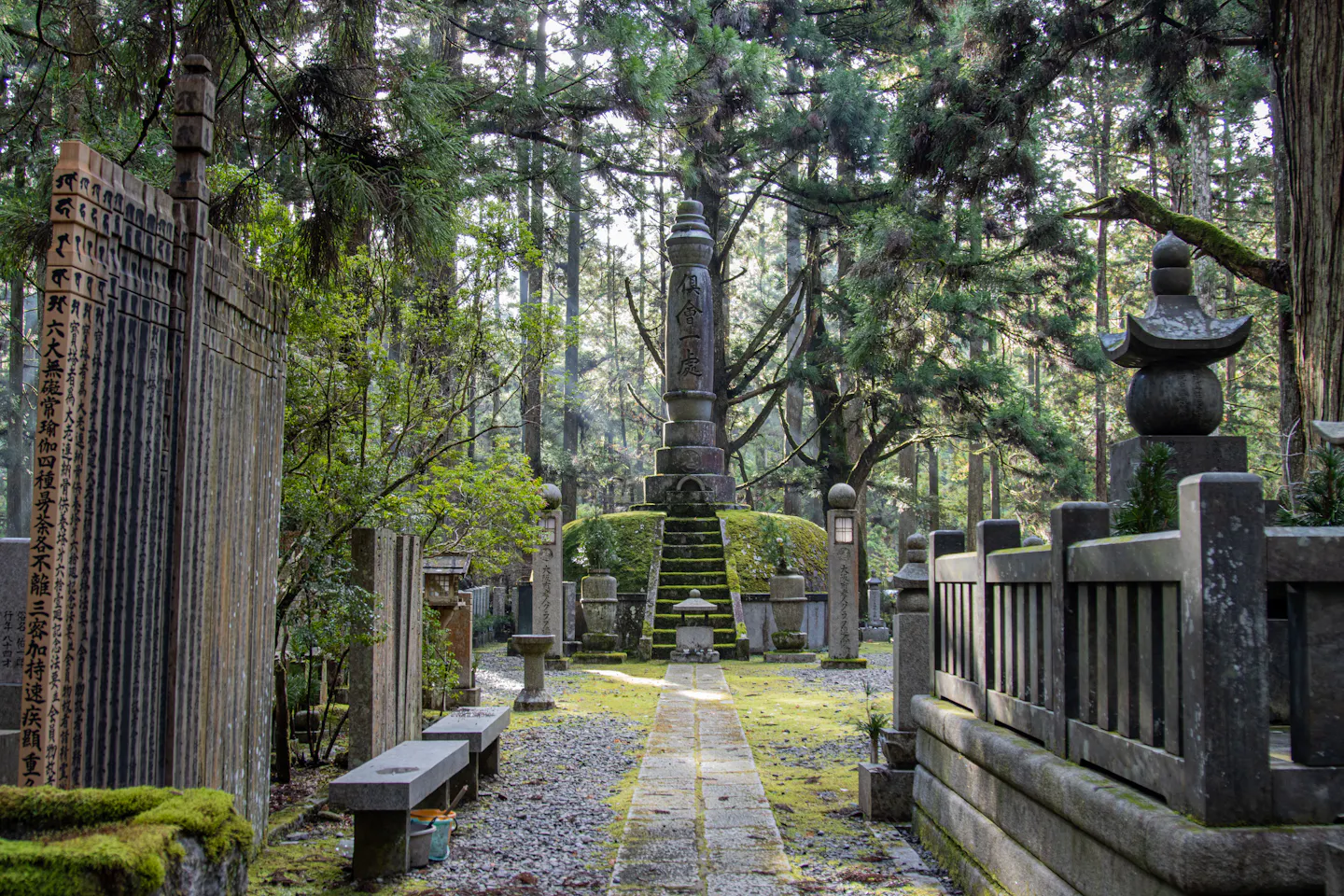
Koyasan sits high in the mountains of Wakayama Prefecture and usually changes color earlier than Kyoto. It is a great option if you are traveling in early November and want somewhere quieter and more atmospheric.
The town is one of Japan’s most important Buddhist centers. You can walk through temple grounds, stay overnight in a temple lodging, eat shojin ryori vegetarian cuisine, and visit the Okunoin cemetery through a forest of huge cedar trees.
Autumn adds red and yellow foliage around the temples and streets, but Koyasan is not only worth visiting for the leaves. The spiritual atmosphere, mountain setting, and chance to stay in a working temple make it feel like a completely different part of the trip.
Best for: culture, temple stays, quieter travel, couples, and travelers visiting Kansai in early November.
A simple first-time Japan autumn itinerary
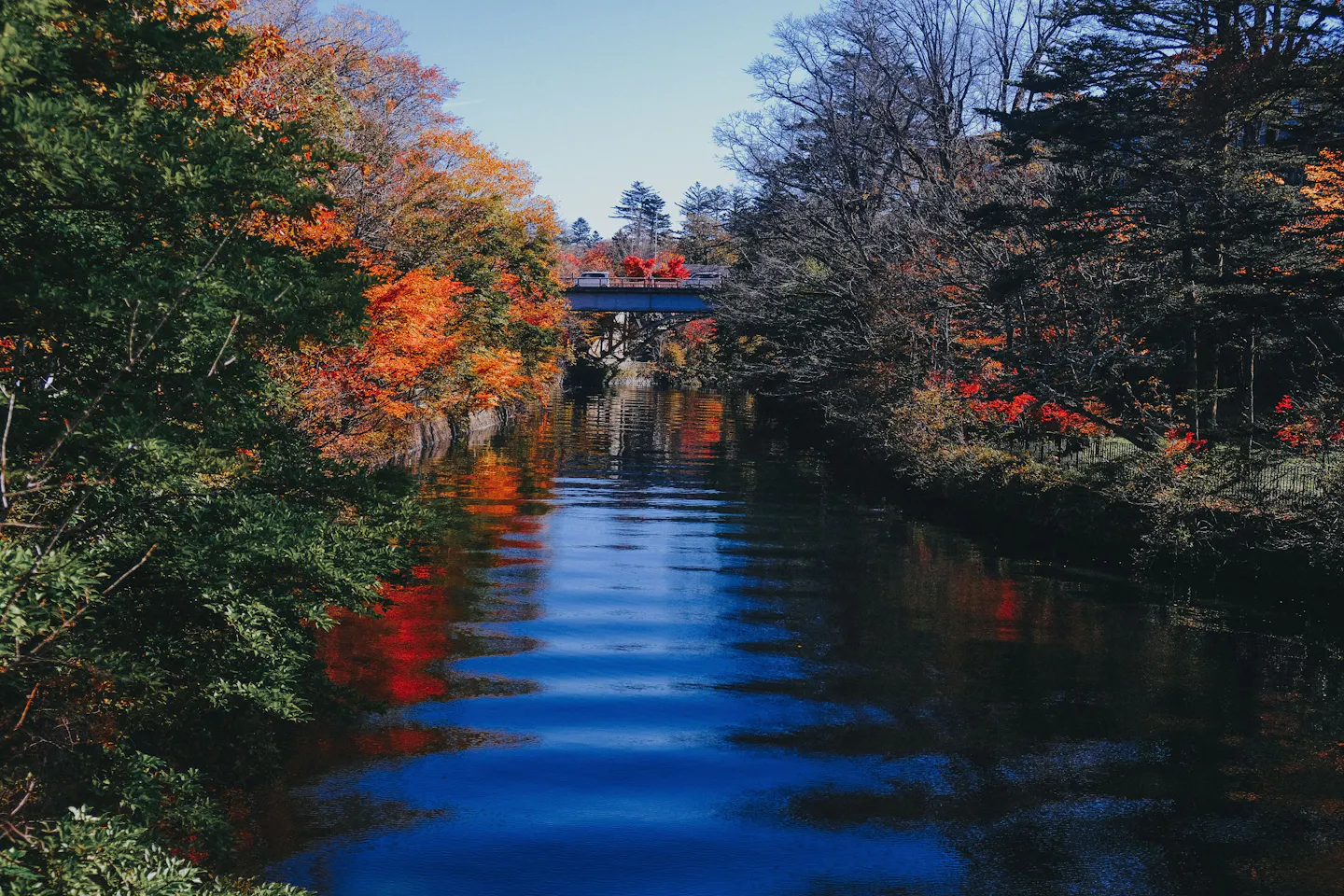
For a 10 to 14-day trip in mid-to-late November, a practical route could look like this:
- Tokyo: 3 to 4 days for neighborhoods, food, museums, Rikugien, Meiji Jingu Gaien, and possibly Mount Takao.
- Lake Kawaguchi: 1 night for Mount Fuji views, the Maple Corridor, and an onsen stay.
- Kyoto: 4 days for Kiyomizu-dera, Eikando, Tofuku-ji, Arashiyama, gardens, food, and slower neighborhood walks.
- Nara: 1 day as an easy trip from Kyoto.
- Osaka: 2 days for food, nightlife, and a change of pace before flying out.
If you are going earlier, swap parts of the route. In October, add Nikko or Tohoku. In September, build the trip around Hokkaido and Daisetsuzan instead of expecting peak leaves in Kyoto.
Tips for planning an autumn trip to Japan
- Do not plan around one exact “peak day.” Autumn color depends on temperature, elevation, and weather, and a destination can look very different from one week to the next.
- Check the foliage forecast close to your trip. Historical timing is useful for booking flights and hotels, but local forecasts are more useful for deciding exactly which garden, mountain, or day trip to visit once you are in Japan.
- Book popular autumn destinations early. Kyoto, Nikko, Lake Kawaguchi, and famous ryokan can fill up quickly during peak weekends.
- Start early. Major autumn temples and viewpoints are much easier to enjoy before tour groups arrive.
- Leave some flexibility. If the leaves are late in Kyoto, you may still find better color at a higher elevation nearby. If they are early, you can move toward a warmer city or lower area.
- Do not underestimate travel time. Japan’s trains are excellent, but mountain areas often require buses, ropeways, or local connections after the main train journey.
- Pack layers. A warm afternoon in Tokyo can turn into a cold evening, and mountain destinations can be much colder than the cities.
FAQ: autumn leaves in Japan
What is the best month to see autumn leaves in Japan?
November is the best all-round month for most travelers because many popular destinations in central Japan, including Tokyo, Kyoto, Nara, Hakone, and the Mount Fuji area, are usually entering or approaching their main foliage season. If you are visiting Hokkaido or high mountain areas, September or October is better.
Is October too early for autumn leaves in Japan?
Not at all. October is a very good month for Hokkaido, Tohoku, Nikko, and the Japanese Alps. It is usually too early for peak foliage in central Tokyo and Kyoto, but you can still build an excellent autumn trip by choosing northern or higher-altitude destinations.
Is December too late for autumn leaves in Japan?
Early December can still work well in warmer cities such as Kyoto, Tokyo, and Nara, especially after a late autumn. By then, northern and high-altitude regions are usually past their foliage season and may already have snow.
Where is the best place to see autumn leaves near Tokyo?
Nikko, Lake Kawaguchi, Hakone, and Mount Takao are all strong choices. Nikko is best for mountain scenery and waterfalls, Lake Kawaguchi for Mount Fuji, Hakone for onsen and a relaxed overnight trip, and Mount Takao for an easy nature escape from the city.
Where is the best place to see autumn leaves in Kyoto?
Kiyomizu-dera, Eikando, Tofuku-ji, and Arashiyama are among the classic choices. If you have several days, do not try to visit all of them at the busiest time of day. Pick one major spot early, then explore smaller temples and neighborhoods nearby.
What is momijigari?
Momijigari is the Japanese tradition of going out to admire autumn leaves. The word is often translated as “maple hunting,” but in practice it means enjoying seasonal foliage in parks, gardens, temples, mountains, and countryside areas.
Plan your Japan autumn trip with EasyMiles
Seeing autumn leaves in Japan is not difficult. Planning the timing and route is the harder part.
The best places change depending on your dates, and a good itinerary has to balance foliage, opening hours, transport, weather, restaurants, and how much you can realistically fit into one day.
EasyMiles can build the whole trip around your dates and travel style, turning places like Tokyo, Lake Kawaguchi, Kyoto, Nara, and Nikko into a realistic day-by-day itinerary. It can plan around opening hours, weather, and travel time, recommend restaurants and local places, and help you organize the trip without spending hours comparing maps, blogs, and train routes.
Choose your destination and dates, generate your trip, and spend more time enjoying Japan instead of planning every detail yourself.